Tag Archives: Christopher Cudworth

Grieving in dream time

We all know plenty of people dealing with loss in their lives. A friend loses a child in the latter stages of pregnancy. Another grieves over the death of their parent or a sibling. We lose people to cancer, or car accidents, suicide or heart attacks. All these losses are carried with us in many ways.

Most recently my father passed away. The day he died I entered his room and cried heavily over the man who raised me. I also cried for the relative valor with which he suffered 13 years of stroke disability. The loss of his ability to communicate robbed our family of valuable time with him. We also lost a share of family history since he was unable to tell stories of his youth or his experience.

And a few years ago, my wife died of cancer after eight years of survivorship. We had been married for 28 years. That’s a lot of shared history as well.

Just a year before my wife passed away, my father-in-law died from complications related to heart problems.

And ten years ago in 2005 my own mother passed away.

All these losses have been processed in different ways. Yet all of them have converged in some way in my dreams.

Shred of guilt

Whether we like to admit it or not, there is often a shred of guilt that goes with losing someone we love. Working through that brand of guilt alone can take years. We might wish we could have done something more for the person we loved, or been there more. We might have wanted to tell them with more urgency how much we loved them.

None of these feelings are foolish or unwarranted. They are the very real consequences of having loved, and having lived. It is simply impossible to have lived perfectly, of having never forgotten to say “I love you” when it counts. So it takes time to grieve through these feelings as well as the raw loss of someone in our lives.

Asking forgiveness

FamilyBefore my late wife passed away, I sat down by her bed and told her that I loved her and asked forgiveness for any wrongs or ways that I might have disappointed her over the years. All relationships have some degree of failure in their mix. I thought it important to let her know how much I appreciated our time together, and to apologize for my own shortcomings. Her doctor had advised me to be absolutely positive in her last few weeks. Yet we’d been through quite a few things together, and I positively wanted to tell her how I really felt. That included a bit of confession. We all try our best, but love requires that we admit some of our shortcomings along the way.

Recurring dream

Perhaps that is a brand of emotional w0rk we must always do on our own. The one recurring dream (every few months) that I have in relationship to my late wife is that she has returned somehow from the dead and I am in no way prepared to deal with that.

The dream typically finds her rising from apparent death at the funeral home to re-enter her life. I encounter her at parties or other events and don’t know how to engage. Awkwardly, I’m challenged in those moments to know what to do because I’m in a new relationship.

This is a painful dilemma in a dream world, much like those moments when you are trying to run away from some threat and are unable to move your feet. Dream interpreters say that not being able to run away in a dream… is a sign of general anxiety in your life.

That’s exactly how anxiety works, of course. It can focus on any topic, but it also invents its own realities. And so, in relation to grief, it brings that person back on the stage of your life as if they were alive again. “What do you think of this…” it wants to know?

Bad dreams and divorce

The anxiety of dealing with loss in a dream world is similar in some respects to a person living through a real life divorce. Rather than grieving through bad dreams, however, one is forced to grieve that relationship every time you encounter a former spouse in real time. That can seem like a bad dream in more than one way.

It takes just as much time to grieve through that kind of loss as it does to come to grips with the death of a sibling or a loved one. None of us can completely separate ourselves from the reality of a divorce any more than we can divorce ourselves from feelings of grief or loss with someone that has died. It’s part of your subconscious thoughts whether you like it or not.

Dealing with loss

In relation to our experience in loss, overall I feel our family has tried to deal with these experiences in healthy ways. Obviously, the pain of children grieving a lost parent is a different thing from a husband dealing with the loss of a wife. I think some of the guilt I am processing relative to my late wife is a shared empathy for my children in having lost their mother. The dream in which she returns to life reminds me that my work in helping them is not over. Nor should it be. She returns to me in dreams so that I remain sensitive to the fact that I am responsible as their living parent to keep her memory alive for all of us.

Rather than a nightmare, such dreams are instructive and healthy to the grieving process. In many ways, our family has found positives in our life celebrations together. We are not afraid to recall both joyful and amusing aspects of my late wife’s personality. She loved to tease but could also be petulant about certain subjects or beliefs. These dichotomous aspects of her personality do keep her memory alive. They can also be shared with others because they are honest. We can be unapologetically real about her memory.

Sharing burdens and friends

1509152_10204571857793222_4147884275556153224_nAlso, my companion Sue is respectful and loving toward our needs. Being a companion to a “widow,” as she has done,  is not always easy. For both the spouse and the new companion, it can be difficult living in the shadow of someone so loved. Sue has treated my children with respect for their mother’s memory. She has grown to understand them better as people as a result, because learning about their mother has helped her understand their own characteristics and values.  And in our relationship, I have been very honest with Sue about my feelings in the 2.5 years since my wife passed away.

We did not leap into categories of emotions too quickly. It has been a prolonged “honeymoon” if you want to call it that, since we met and starting dating. That’s a necessary fact of our respective situations.

Sue was working through pain from a previous relationship when I met her. I was in active grief from having lost a spouse. I believe we’ve helped each other through, and grown as people as a result. We treasure relationships with both our sets of friends, and some of these groups have merged successfully, to the point where we no longer define friends as “Mine” or “Hers.”

Protection and risk

11169852_10205615038072077_292278208289650118_nThat is the protection. The risk is the investment in time and love we have made in each other. We have discussed the weight of that investment on several occasions. Dating in your 50s is not like dating in your 20s or 30s, when there are families to build and children on the horizon. Yet there is still an investment in the future. Even during the few years we’ve been together, we’ve felt changes in our bodies, hearts and minds.

We’ve also ached in real time over the challenges our children face and have shared the ache across family ties as well.

Through all this shared experience, it’s never been my process to compare Sue to my late wife Linda. The relationship we now share is clearly built on its own foundations. As stated, however, these foundations do draw from our respective pasts.

And interestingly, Sue’s actual first name Linda. She’s simply gone by Suzanne, her middle name, for her entire life. I first learned this fact in the first few months of dating her when her bike slipped and we visited the Urgent Care facility to get her checked out. The registration desk asked for her name and she stated, “Linda Astra.” Then she spun around to say, “I forgot to tell you. Linda’s my real first name.”

That was an odd little moment. But it was not lost on me.

Caution signs

We likely all know situations where in which the deceased spouse can become something of a legend or a saint in the lives of those who carry on their memory. Sometimes that sainthood can produce dysfunction among stepchildren or in other relationships where the new person in the family formula is constantly measured against the parent or loved one who went before.

That can create a “bad dream” in which people refuse to accept or show love to others. It’s much better to acknowledge that we all need each other. Those relationships may be in new or different ways those in the past, but that can be a good thing.

We have this one life to live. It is best to make life better for one another every way you can. That’s almost better than the Golden Rule.


 

What to expect from a class reunion

For some people a class reunion is a joyous occasion and an opportunity to connect with long time friends. For others, class reunions are bring on the worst kind of trepidation. Dread of encountering people you don’t like, or who don’t like you. Being nervous about your popularity, present or past. Worries over looks, weight or success in life can bring about anxiety, even depression of fear. Justifying yourself in the eyes of others is not too pleasing to some.

It need not be that way of course. Most people come through reunions relieved and unscathed, because somewhere between the fear and joy lies reality.

Yes, there are almost always people who arrive at reunions prepared to judge the relative success and youth of others. Perhaps the most amusing movie of all about this process is the chick flick Romy and Michelle’s High School Reunion. The two slightly daft gals discover their true talents by the end of the movie, but not without some grievous pain in the process. One even finds true love.

Changing traditions

Reunions for both high school and college are designed to bring people back together. This long tradition is changing with the advent of social media where people now connect without benefit of a reunion of any sort. Every day of the week can be a reunion if you want it to be.

Even so, as the years go by perspectives about what it means to reunite typically tend to change. The vagaries of life almost demand it. My brother once offered this advice to me before the occasion of my 20th-year high school reunion. “You might actually like this one,” he observed. “By now everyone’s had their ass kicked at least once.”

Interestingly, that year I attended not just one but three separate 20th-year high school reunions. One was for my actual graduating class. The second was for the class with which I would have graduated had I not moved away from a high school out in cornfields of Illinois. And the last was a reunion for the class with which I would have graduated had I not moved from Pennsylvania to Illinois in the 7th grade.

Guess which reunion felt the most tangible? Perhaps you know. That reunion back home in Pennsylvania put me back in touch with kids that had shared grade school and middle school together. We all know those connections are earthy and real.

Yet the two actual high school reunions delivered on promises of old friendships as well. I actually served as emcee at the first reunion I attended. Frankly that was not much fun. Gaining the attention of people deep into discover of old friendships means you’re basically a distraction. It was pretty much an evening that felt like consistent rejection. I promised myself not to take it personally. Anyone else in charge could have had the same experience. But I’ll confess that it left a bitter taste in my mouth.

Life interventions

I missed the 25-year reunion because my late wife was sick with cancer. The milestones of life and death do not pay attention at times to our own plans and schedules. Missing that reunion served to instruct me how many years had actually passed.

It’s a strange feeling to so many people when the years come crashing down on you. As a high school product of the 1970s, it’s pretty easy to find song lyrics predicting the passage of time. Pink Floyd does both a service and a disservice to this topic of time passing with these lyrics:

“But you run and you run to catch up with the sun but it’s sinking…

And racing around to come up behind you again…

The sun is the same in a relative way but you’re older…

And shorter of breath, and one day…closer to death.”

It’s a humbling reality that none of us lives forever. We laugh and play through our 20s even into our 30s. We come to grips with financial and family realities in our 40s. By our 50s we either stay marriage or lose a spouse to divorce or death. The kids grow up and you feel exposed to the winds of life, and one more reunion can feel like the wind knows all your secrets.

New growth

But some of us ignore that wind and stick new seeds of self into the ground. We weed away concerns and learn what faith really means in the context of a full life. We forgive ourselves and others, if we’re lucky and smart. Women tend to choose close friends and confirm their sanity. Men learn to forsake their concerns over athletic prowess and begin to take pride in the facility of their negotiations over self and ego.

Humility is a grace in two forms. It takes grace to jump those hurdles of worry and distrust that trip us up in life. As the Bible says, the world is full of stumbling blocks to enlightenment.

Then there is the grace it takes to handle intentional and unintentional affronts to your character. Sometimes people can’t help themselves with their words. They say things that echo old habits of insecurity or arrogance. The words come out of their mouths as if they had not grown away from that long-ago character or situation lurking around in their sub conscience. Be it a class clown or a brilliant student, we all absorb character aspects that are not always easy to manage. Even as years pile up it only takes a word or two at times to bring bad associations to the surface.

Playing nice

That’s what makes it so difficult to know what to expect from a class reunion. Will people be nice or not? Will they accept the person you’ve become or impose some assumption of character upon you in awkward, even vicious ways?

Sometimes the opposite happens. While attending that reunion back in Pennsylvania I was taking a breather from encounters with long lost friends by nursing a drink in a far flung corner of the VFW hall where we gathered. Just then a quiet man walked up to me and said, “Chris Cudworth?”

“Yes,” I smiled. “It’s great to be back.”

We talked a bit and slowly we recalled details of our association together. I remembered sharing gym class and a few other experiences with the guy. He was not one of the so-called popular but we spent a lot of time together. “The thing I liked about you is that you treated everyone as equals,” he told me.

Values and insecurities

That’s a value that I’ve held from the earliest phases of my life. With insecurities of my own boiling around inside, it made sense in not to push others about their flaws. All people deserve respect. I have indeed forgotten that value at times and shamed myself and others in the process. That is my confession.

But a reunion is a great opportunity to make good on any of those transgressions in life. It’s amazing at times that people who have crossed us, or whom we have crossed on our own accord, can become friends when false pride and fear is relinquished. The right kind of pride enables us to look for these opportunities for reconciliation and forgiveness. It can also protect us when we try to make good and find people unaware or unwilling to find paths to healthy, mature relationships.

You can probably expect a little of both from most reunions. We all travel the same path in life, but every person has to actualize at their own pace in life.

The best thing you can do, and the best thing you can expect from any reunion is a forgiveness for any wrongs in the past and a joy at someone acknowledging the person you are in the present.

Christopher Cudworth is author of The Right Kind of Pride; Character, Caregiving and Community. 

On the gains of dealing positively with loss

IMG_8031This coming Wednesday, March 4th I am speaking about the subject of loss for Lenten Services at Bethlehem Lutheran Church. I have already met with the Pastor to orient the discussion, which will center on how our family dealt with the loss of my wife due to cancer. So the topic is fully on my mind.

Last night I woke up at 2:00 with thoughts rolling through my head. I grabbed my iPhone and entered them into the Notes app. If you don’t write these thoughts down somewhere it’s so easy to forget what they are.

This was stream of consciousness stuff, so it’s not grammatically correct. Not even complete sentences. In some respects it’s better that way.

Sometimes your gain is your loss (hiding cancer) and your loss is your gain (blessings from caregiving and community). Blessed to be a blessing to others. Loss of activity. Loss of identity. Careful to recognize loss of hope. Blessings are miracles in real time versus miracles out of time.

Here’s what it all this means.

I have a friend whose husband had cancer and chose to hide it from everyone for two years. She was imprisoned in this world where he suffered through treatments and she could not talk about it to anyone. His concerns over his own vulnerability were what motivated him. He did not want to be seen as a cancer patient. This approach was actually part of a larger pattern of controlling behavior stemming from his unwillingness to accept the very real fact of his underlying depression. His “gain” in protecting himself from outside scrutiny was actually a loss in terms of letting others truly help him and their family. That made it all the tougher for my friend to endure.

Sharing burdens

How different (and difficult) that approach was compared to choosing to share your burdens with others. The very first week my wife was diagnosed with ovarian cancer one of her friends (actually her boss) reached out to our family. We were so grateful to have that support. To her enormous credit this woman guided us through multiple rounds of treatment and needs over the next eight years. That was a gift that can never be repaid.

At times the blessings of that care were so great we felt compelled to share our blessings with others. That opened up channels of communication for people who confided in us. Some of these needs were simple. People actually apologized for expressing concerns about their situation. “I know my troubles are nothing compared to what you’re going through,” they’d often begin. “But I’m worried…”

Worry is almost always over losing something in our lives. We worry that we might lose our jobs with an illness or other difficulty. We worry about losing money. We worry about losing friends or relationships. We worry about losing the respect, trust or love of our friends and family members. The feeling of loss in our lives is almost constant. We’re always losing something, aren’t we? And we worry about it.

Recovering from loss

There’s a great passage in the Bible where a woman loses a coin and tears her house apart trying to find it. When she does recover the coin she calls her friends together to celebrate. That’s a metaphor for how God feels about lost souls. There is a universal tie that binds us when it comes to loss of spirit. We even speak of “losing our way” in life. That feeling of being lost and knowing loss is most difficult to transcend. Some people never pull free. They live with the feeling they are losing the battle. God doesn’t want us to live that way.

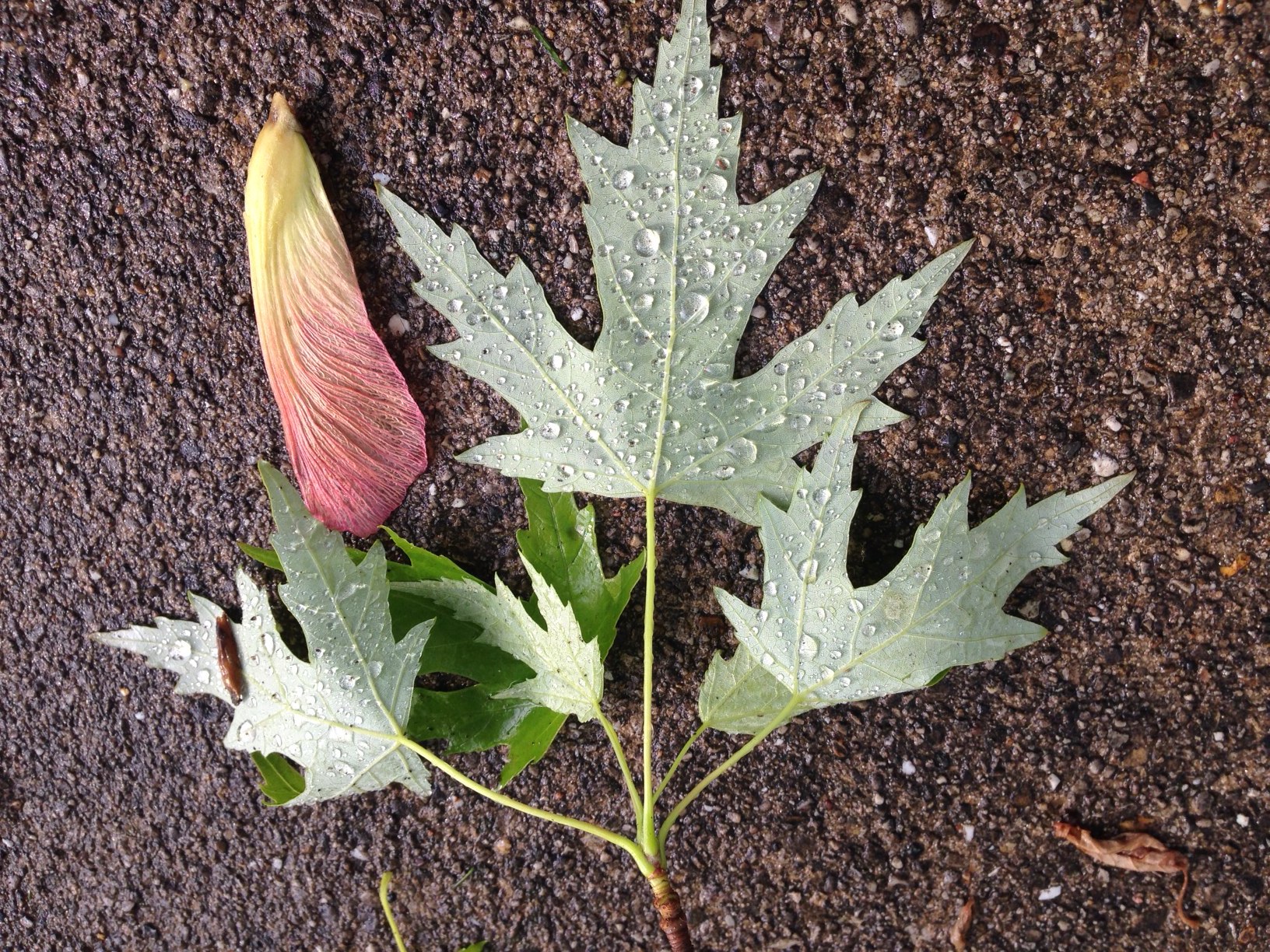
Maple leaf in rainBut even if you are not religious, there is sustaining hope in the very fact of life. You are here. You exist. You are the miraculous product of billions of years of evolution. You have free will. The choices you make do matter. You can choose to live in accord with all of human life and all of nature.

I choose to draw strength from both those scenarios. For me, the defining unity between God and material reality is love. It’s a very real thing, you know. It exists. It does great things. It sustains hope and heals wounds both physical and material. And as far as I can tell, God is love.

It is what it is

In our case we objectified our losses to gain some grasp of where the blessings still abided. Our phrase was “It is what it is,” That meant the cancer. The treatments. The loss of activities and joy in life. All that constituted loss

Cancer even caused us to lose insurance. Lose jobs.

But we never lost hope. That was the one thing we refused to lose.

Identifying with hope

Ultimately my wife lost her life to cancer. But she never lost her identity in the journey toward that moment. She retained her character. Refined it, in fact. At times it was something to witness. At other times it was something to support, encourage and even cajole. It was not always easy.

When she lay in bed after dying I touched her lips and told her that I was very proud of her. Hence the title of this blog and my book about our survivorship journey. The Right Kind of Pride.

Miracles happen

We’d seen miracles in our lives together. These were not miracles that necessarily broke the laws of nature. But they were miracles of love and beneficial consequence. Favors of love and care that transcended expectations. Money that arrived through gifts when we desperately needed it. All sorts of things transpired that left us in grateful, happy tears.

So you can see why that stream of consciousness at 2:00 in the morning feels rather profound. It may seem jumbled in the cold light of day. In fact it is clear that loss is real, but you can thrive in the face of it. We all must do that, for loss is everywhere. From small objects to entire dreams, hope and loss stand in delicate balance. Choose not to lose hope and loss becomes something you can handle.

Sometimes life does not seem fair. We still need to take responsibility and pride in our hope when facing difficult circumstances. Then loss does not possess us.

The Right Kind of Pride is available on Amazon.com.

RightKindofPridecover

Confessions of a hayseed and what it means to a life well-lived

As a kid who loved being outdoors there was never shortage of burrs in my socks or mud on my pants. My roots were rural. Both parents grew up on Upstate New York farms on the banks of the Susquehanna River near Bainbridge. We freuqently traveled back to visit those farms. That also meant time spent shoveling manure into troughs in the barn and hanging out in the upstairs of the barn where mountains of dusty hay made a great playground.

These rural experiences colored my worldview about what is valuable and true in life. My brothers and I developed a land ethic that led us to become avid birders. That led me into a life of painting birds, wildlife and landscapes.

Decidedly rural

In some ways that formatively rural background was vital to becoming who I am today. Yet there were drawbacks as well to the innocence and joy found in outdoor experiences. While my mother and father both attended college and were well educated (mom at Potsdam University in Music Education and my father at Cornell and electrical engineering) there was a certain simplicity to their worldviews in having come right from the farm into the larger world.

That is no criticism. But it is reality. Throughout my early years there were many times when I sensed a gap in my understanding about how the world really works versus the manner in which I believed it worked.

My brothers evolved a quite sophisticated understanding of music and social graces. We all excelled in athletics. But we also wrote poetry, produced art and loved insightful banter.

But there was always a bit of hayseed lurking in our past. I once even had a track teammate walk up to me and say, “You know what? You’re a hayseed.”

Hayseed mentality

He was right. There was so much about the world that was so hard for me to understand. There were social graces that escaped me. Even basic knowledge sometimes came as a revelation. I readily confess all that.

It’s not that the kids around me were much less rural in outlook than I. In fact the high school I attended was surrounded on all four sides by cornfields. Many of my classmates were farmers. Yet they also seemed to grasp the life ahead so much better. Business and such.

When I attended a small college my worldview grew some, but not that much. Back in Illinois for work as an admissions counselor, I was still shy and scared of the city. I didn’t know how it worked. I was still a hayseed.

Growth and change

Fortunately through years of reading and experiences the hayseed in me represents a percentage but not all of my worldview. But it’s still there in important ways as well. Never have I lost that connection between the natural world and its importance to all of us. It even infuses my religion and an appreciation that the faith we know as Christianity is deeply dependent on the same rural roots from which my own worldview has grown. The Bible is inextricably woven with organic symbols and metaphors that drive our knowledge of God. Our grasp of spiritual principles emanates from a long series of highly significant natural symbols from Genesis to Revelation. Jesus taught using these organic symbols because he knew that people need to be able to go back to basics to grasp the greatness of God.

That does not undermine the verity of science in any way. Nor does it defy our own lifelong journey to become educated or develop a sophisticated understanding of the world. Instead the confession of a hayseed understanding of the bible teach us that great wisdom can come from great humility.

Whether it’s a hayseed or a mustard seed, great faith can some from small things. That’s a lesson we should never ignore.

The important relationship between forgiveness and self-confidence

By Christopher Cudworth

In the midst of prolonged stress from caregiving to a wife with cancer a few years back, it occurred to me that dealing with the challenges definitely had an emotional cost. It was difficult finding balance between work challenges and trying to keep my spouse healthy and family life on track.

For a time I tried to go it on my own, coping with caregiving pressures with a low dose of anti-anxiety drug. That helped the “how” part of coping, but it left open the “why.”

If it seems obvious from the quick description given here “why” I was feeling anxious and a bit depressed, understand it’s really not a good idea to psychoanalyze and treat yourself when you’re under that kind of pressure. All types of latent emotions enter the formula and it’s hard to separate what is actually making you anxious. Is it present worries or past failures that make you feel less capable of coping?

Getting help

I put in a request to receive counseling through the Living Well Cancer Resource Center, a non-profit dedicated to providing services for cancer patients, caregivers and their support networks. The counselor took the time to review more than our present situation. She also asked what other issues I was facing, and that happened to included my role as primary executor and caregiver for my father, a longtime stroke victim.

The emotional helix of all that family need was drawing a tight knot around my self-confidence. On a daily basis everything was getting done, but it felt like I was nearly hanging myself from the emotional burden all that responsibility required. Old hurts seemed to surface with some regularity in caring for my father. These in turn angered my wife who saw him as a bit ungrateful given our situation. And so it went, like a maelstrom of emotional concerns.

Life-changing question

As we discussed all these relationships the counselor discovered a pattern emerging. “You seem pretty good at forgiving others. How are you at forgiving yourself?”

That was a question for which I was not prepared. All those years of training in personal faith had taught me the importance of forgiveness. I’d seen the very real benefits of forgiveness toward others.

Forgiving yourself is an entirely different dynamic. It requires both an admission that you have done things wrong in the past and a will to not blame yourself to the point of eroding your self-confidence. Those two attributes are very much like the two wheels on a bicycle. You arguably need both to make healthy emotional progress in life.

Personal history

In fact self-confidence had long been a challenge in my life. It’s a funny thing however. Low self-confidence and self esteem can come from many sources. It’s both a nature and a nurture issue, but an in-borne propensity for anxiety never helps.

Her question about my ability to achieve self-forgiveness set off an interesting process of self-examination. Actually it was self-revelatory. Acknowledging my flaws was no longer so devastating. That opened up a vein of self-confidence born not so much of bluster or pride, but of humility. The ability to look at your past and say, “I did my best” makes it so much more possible in the present to honestly say, “I will do my best.”

If that isn’t good enough now and then, you learn to forgive yourself and keep trying. That kind of persistence is really important in caregiving. it is also important in other pursuits from sports to business to creative ventures of all types.

The important relationship between forgiveness and self-confidence is not easy at times to understand, but it is worth knowing there is a connection and keeping your emotional eyes open to opportunities to forgive yourself. That can be life-changing.

Christopher Cudworth is author of the book The Right Kind of Pride, a chronicle of cancer survivorship and facing life challenges in a positive way. It is available on Amazon.com. 

Right Kind of Pride Image

On working under pressure

The little brick bungalow in which our family lived for 10 years when the kids were little had only 750 square feet of living space. The house was cute, in other words, but not spacious. It also had one bathroom. That meant that when repairs were needed it took some planning to make it happen without putting everyone in jeopardy.

The tub was old and we hired some contractor to coat it with some form of material popular at the time. The wall tile needed to be replaced as well. The vanity was rickety. The toilet was too. Even the floor tile was due for a change.

I scheduled the entire makeover for a single weekend. It was an ambitious plan for sure. My wife and kids went to grandma’s house from Friday through Sunday night. It was just me and the bathroom for the weekend.

Planning

The work went well. It was all planned out in my head. The wall tile was tough to do because the plaster came loose from the backing. That meant a major patchup with wallboard compound was necessary. I never knew whether that was advisable, but it worked. That’s what counts around the house. It worked.

The sink and vanity and toilet came out and the floor tile was torn up. Underneath were rotted floorboards. A quick trip to the lumber store fixed those, and a lot of nails.

Panic

Now that the entire bathroom was stripped down it was late at night. Midnight to be exact. I’d worked solid for 14 hours and was pretty tired. And then it hit me. I really had to go to the bathroom. Number two. There was no toilet now. Just a dark hole in a flat floor.

That was a humbling situation, but I made it happen. It struck me that for thousands of years in human history this is how people got it done. One way or another, it all came down to one thing. Squat and go. No need to flush. No modern plumbing. Just a lone sole over a dark hole.

Preparation

The next morning it was time to put in the wall tile and the floor tile. That took a few hours. The grout was done on the wall while the floor set. Then I put the seal down for the new toilet and put the new bowl into place. Like Tom Hanks in the movie Castaway I stood back and admired the modern contraption that plumbing really represents. All that to take care of our excrement. The world really is a humbling, confusing place at times.

All this work had to be done with care to avoid bumping into the new sealant on the tub, which was sprayed into place and therefore delicate for the first 48 hours.

It all got finished at exactly the moment my children came running back into the house yelling, “Daddy can we see the new bathroom!” Of course they also used it right way. That first flush of the toilet made me proud. Same with the working faucet on the sink. My wife walked in and said, “Is it safe?”

Pushing it

I secretly laughed but assured her that everything had worked out well. I shared the “poop in the dark hole” story and she just shook her head. No need for details, she told me. We all did our business while I kept reminding them to walk gingerly on the new floor. The grout was barely dry. But it held.

That’s not really a good way to do a bathroom makeover. It’s a simple truth that necessity demands a combination of determination and humility at times. The rewards of success outweigh the tough moments of personal doubt. In the end, that’s the right kind of pride.

Christopher Cudworth is author of the book The Right Kind of Pride, a chronicle of cancer survivorship and facing life challenges in a positive way. It is available on Amazon.com. 

Right Kind of Pride Image

Teaching is about more than the classroom

IMG_0806In my late 20s I visited the classroom of my eldest brother who was an English teacher for 30 years. He invited me to come talk about writing and marketing. He taught at a private school serving disadvantaged students. The institution was funded by a very large corporation where a nickel from every dollar of profit was dedicated to the school.

My brother was a masterful teacher with methods honed by years of working with students in the classroom. He was rightfully proud of all that he had learned about how students learn best. Many of his students returned years later to thank him for his contribution to their lives.

But I came into his classroom thinking I knew a few things about teaching myself. After all, my mother was a teacher for 20 years in the public school system. My late wife was a teacher for LD and BD students at a high school, and later moved to a preschool where she taught Pre-K.

Exhaustive learning

For an hour I led my brother’s classroom in a lecture and discussion. Only it was more me talking than them. By the time the hour was over, exhaustion had taken over. I was spent.

My brother issued a soft chuckle and told me to sit down for the next class. “Let me show you how it’s done,” he whispered. From that point he opened discussion with a few questions and let the students talk. He responded to their answers with even more questions. My brother only talked when necessary for instruction. The kids were learning through their own impetus and eagerness to learn.

There’s an art and a science to teaching. Some of my best friends served as teachers in a nearby public school system for 30 years. One of them earned the State Teacher of the Year Award. Another earned the Golden Apple award from their district. They both taught in the same school, often side by side, working with 4th graders. Their teaching methods were a combination of curriculum-guided instruction and well-considered creative learning strategies. They were the best imaginable teachers.

They recently retired a bit frustrated by how little control they had over their teaching methodologies. Federal programs like No Child Left Behind left them “teaching to the test” rather than teaching kids to learn.

Ready for life

My late wife taught at a Christian preschool that focused on the importance of socialization for the child. That started as young as two years old and continued all the way through the Pre-K program where children learned the basics of being ready for school. In other words, that foundational learning perspective was about much more than the classroom. It was teaching kids about how to be ready for life.

We’ve all seen those memes where people claim “Everything I need to know about the world I learned in kindergarten.” Respect others. Share. Don’t pick your nose in public. Right. And so on.

So it distresses me when I hear people attacking teachers like they’re lazy or earn too much. Because what’s more important, paying a teacher a fair wage for 12 hour days (and that’s typically a minimum) or paying some pro baseball player $20M a year when he has a lifetime 116-67 pitching record. Those are real facts. The dude hasn’t even won twice as many times as he’s lost and he’s being paid $20M a year.

Value of teaching

Teachers perform such vital functions for society. And yes, there are bad teachers out there. I’ve had a few of them, including one who told me that I’d fail his class because a cross country runner like me had once accidentally spit on his shoe during a race on campus. “You’re going to have a tough time in this class,” he warned.

Bad apples are everywhere. They can damage people. But that’s the point here. Only by recognizing and rewarding the best teachers can we encourage the best types of individuals to enter the classroom. Because teaching is about more than the classroom. It’s about knowing how to learn first, and then sharing that with others.

As I learned while standing up in front of that classroom years ago, it’s not about hearing yourself talk. It’s about hearing what others think, and helping them do more of that. Teaching is about far more than the classroom, and it seems like too many Americans have never learned that lesson at all.  Now that I’m out giving talks about my book, it is important to remember that people don’t only want to listen. They want to be heard as well. Often the important discussions take place after the real teaching is through. Because teaching is about more than the classroom.

The art of living

Christina's World
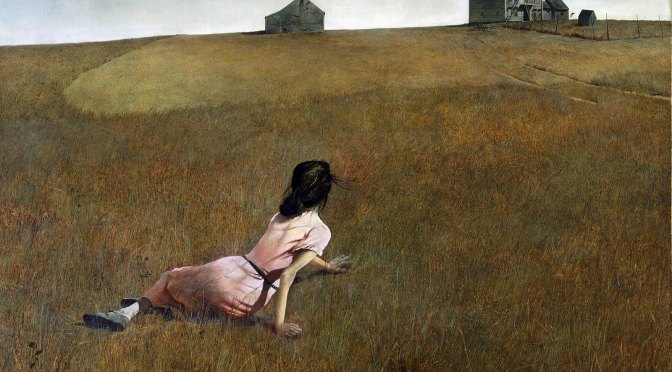
Christina’s World by Andrew Wyeth.

A year ago I was invited to teach one of those live painting classes where wine is served and people copy another artist’s work. Rather than choose some cheesy image I insisted we paint copies of the Andrew Wyeth painting known as Christina’s World. The people in the class started to freak out because it looked so austere and difficult. The panic got worse when I told them to first coat the canvas in bright red paint. Then we scuttled it over in green. And things turned brown. With the addition of a thin glaze of yellow the canvas started to look like a grassy hill. And that’s when the lights went on in all their heads.

We moved from a moment where everyone thought they would fail to a point where everyone knew they could succeed if they took a risk and followed along. By the end everyone had created a passable image of the Wyeth painting and more than one commented, “I never thought I could do this.”

That’s the real role of a teacher in this world. Helping people achieve things they never thought possible. And that’s the right kind of pride.

Right Kind of Pride Image

Christopher Cudworth is the author of the book The Right Kind of Pride on Amazon.com, a chronicle of cancer survivorship and meeting life’s challenges with practical and inspired purpose. This blog is in keeping with the philosophies of that book. Please give this a FOLLOW!