Tag Archives: faith

Humility and honesty in the face of hubris

I’ve learned the value of humility the hard way, just like everyone else. As a proud young athlete growing up, my main concern was winning every contest I could find. My older brothers challenged me daily in sports ranging from table tennis to basketball and all points between.

Having older brothers toughens you up. I transferred that sibling rivalry to competing with friends and then participating in competitive sports. At the age of ten, I pitched our Local 285 baseball team to victory in the second game of the Lancaster, Pennsylvania city championship.

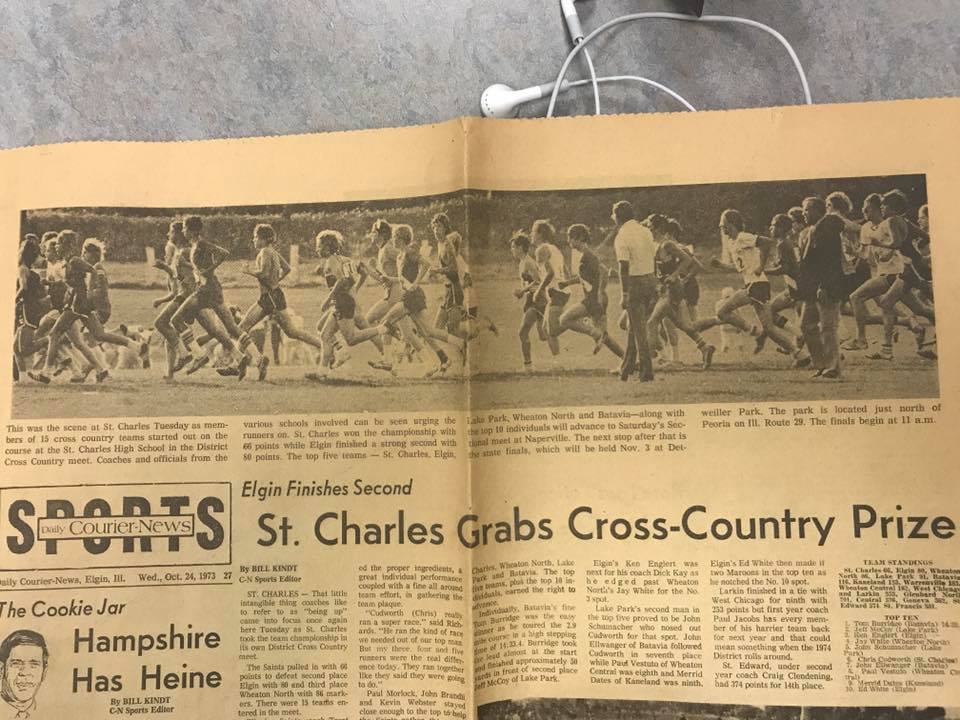
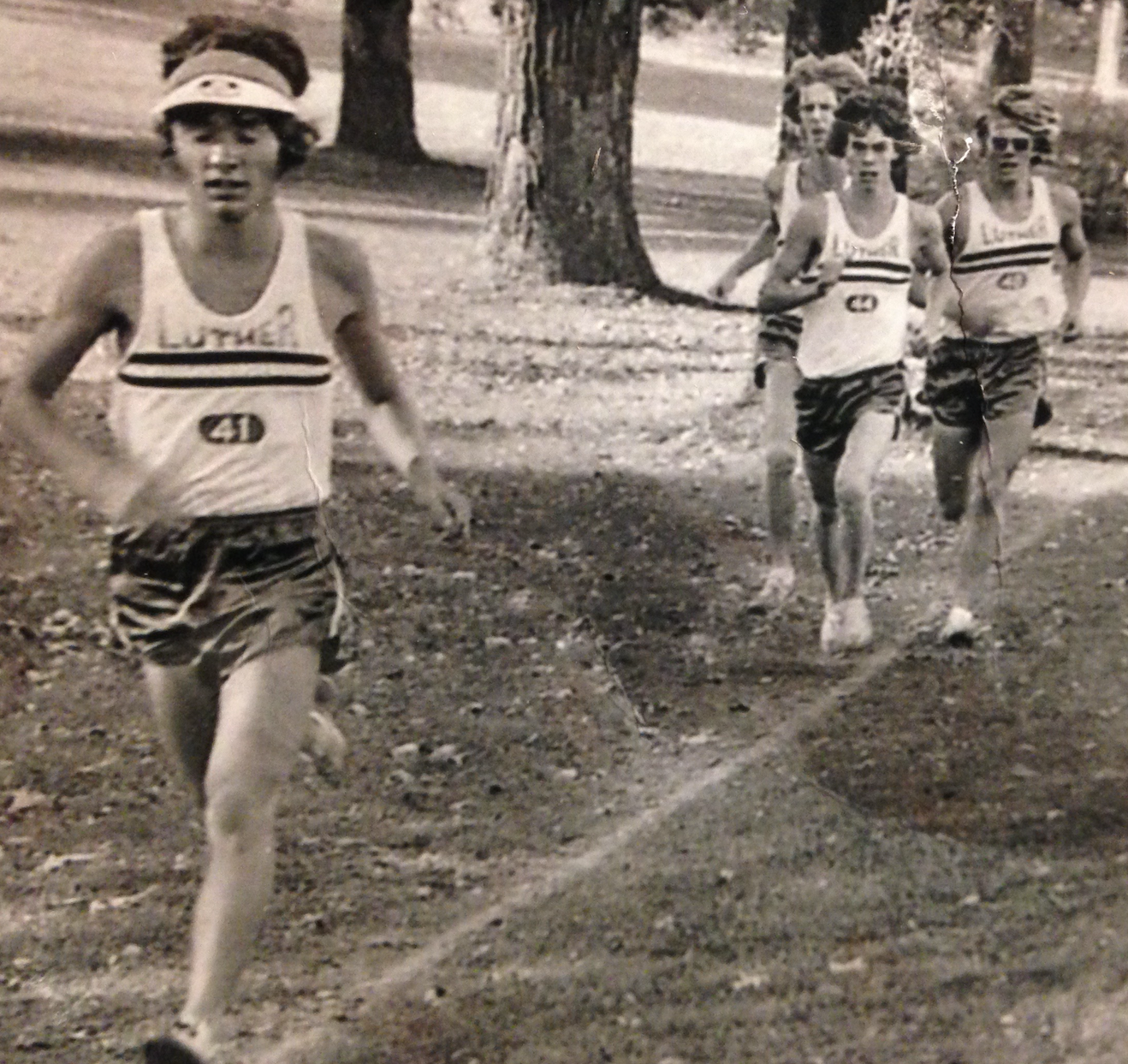
Throughout high school and college, I led the teams I played on, eventually turning to running full-time, where I ran as the first man on teams that won conference and district championships. In college, that success continued as I competed as a Varsity runner in a cross country program that won our conference all four years and as a senior captain ran in the Top Five all season, leading our team to 2nd in the NCAA Division III championship. In track I won conference three years and made Nationals three years in the steeplechase.

Even after college, I kept competing and set all-new personal records at distances from the mile (sub-4:20) 5K (14:45) 10K (31:10) 10-mile (53:30) and 25K (1:24:25). In my best year I raced 24 times and won 12 of those road and track races.

The reason I share this journey is to explain that all this training and perseverance was cited by my coach as having extreme value when my late wife was diagnosed with ovarian cancer in 2005. “Your whole life has been a preparation for this,” he told me.
But what I wasn’t prepared for was the degree of patience required to be a good caregiver. As a person with ADHD, I always struggled sitting still, waiting for things to happen, and not being able to “do anything” in the moment. Learning patience when you have to wait for hours to get results, sit in quiet (or noisy) hospital rooms at a bedside with your partner, and keeping track of important details day-to-day, these are all key requirements in a caregiver. I had to learn them. The hard way.

On top of my wife’s care I was caregiver to my father who suffered a stroke back in 2003. Through eight years of my late wife’s survivorship I tended to my father too. She lived through 2013. He lived through 2015.

I learned humility from all that caregiving. Never did I think that I was doing things perfectly. Mistakes are made no matter how hard you try. Sometimes, it’s emotional mistakes. Becoming impatient. Letting anger take over. Getting frustrated when the patient doesn’t seem to appreciate you. Feeling ‘put upon’ when relatives won’t or can’t step up to help.

And there’s money mistakes. Medical too. But you muddle through. But one thing that you learn from all that is practical humility. You don’t think of yourself as better than others. In fact, its possible to be too hard on yourself. One therapist called me on that one. “You seem to be good at forgiving others,” she reminded me. “How are you at forgiving yourself?”
Both of those traits require honesty. You have to “get real” in order to “truly feel” your purpose in the moment. Get to know where your weak points are, and understanding your strengths. Learning to lean on others when (and if) you can, and embrace vulnerability. It’s a superpower.

That brings us to the trouble with hubris. Once you’ve been a caregiver it’s easy to spot false pride in others. It’s painful sometimes to realize how insensitive and willfully ignorant people can be. In the United States, our healthcare system doesn’t favor the weak. It rewards the rich and employed and too often casually disregards those most in need. I read about how Black women can’t get a fair shake in medical offices because practitioner don’t take their word seriously. I’ve heard about other women than my wife feeling something’s wrong in their body and doctors just write off the bloating to water weight when in reality it’s tumors growing on their ovaries and spitting out fluids. By the time they’re discovered, cancer has advanced.

And when I see the callous way that certain political parties treat the healthcare system in America, it makes me angry. Now, I’ve been the beneficiary of non-profit forgiveness of medical debt, so I’m not personally complaining. One time AT&T even wrote off a $500 cellphone bill during one of my wife’s most tenuous cancer recurrences.
But the idea that rich people are now running around passing judgment on programs like Medicare without considering the life stories of those insured through it, or maligning folks counting on Social Security they’ve saved for decades to support them in elder years, it makes no sense why people vote for the hubris of these greedy freaks whose money obsession says more about their own fears in life than it does about their supposed success

Hubris is the opposite of humility, the quality that makes us all better people whether we’re caregivers or not. When you look to leaders, take stock of where their humility meter reads. If they’re arrogant and dishonest, don’t throw your trust their way. They’ll only use you and discard you as fodder for their selfish ways.
On the precociousness of November flowers

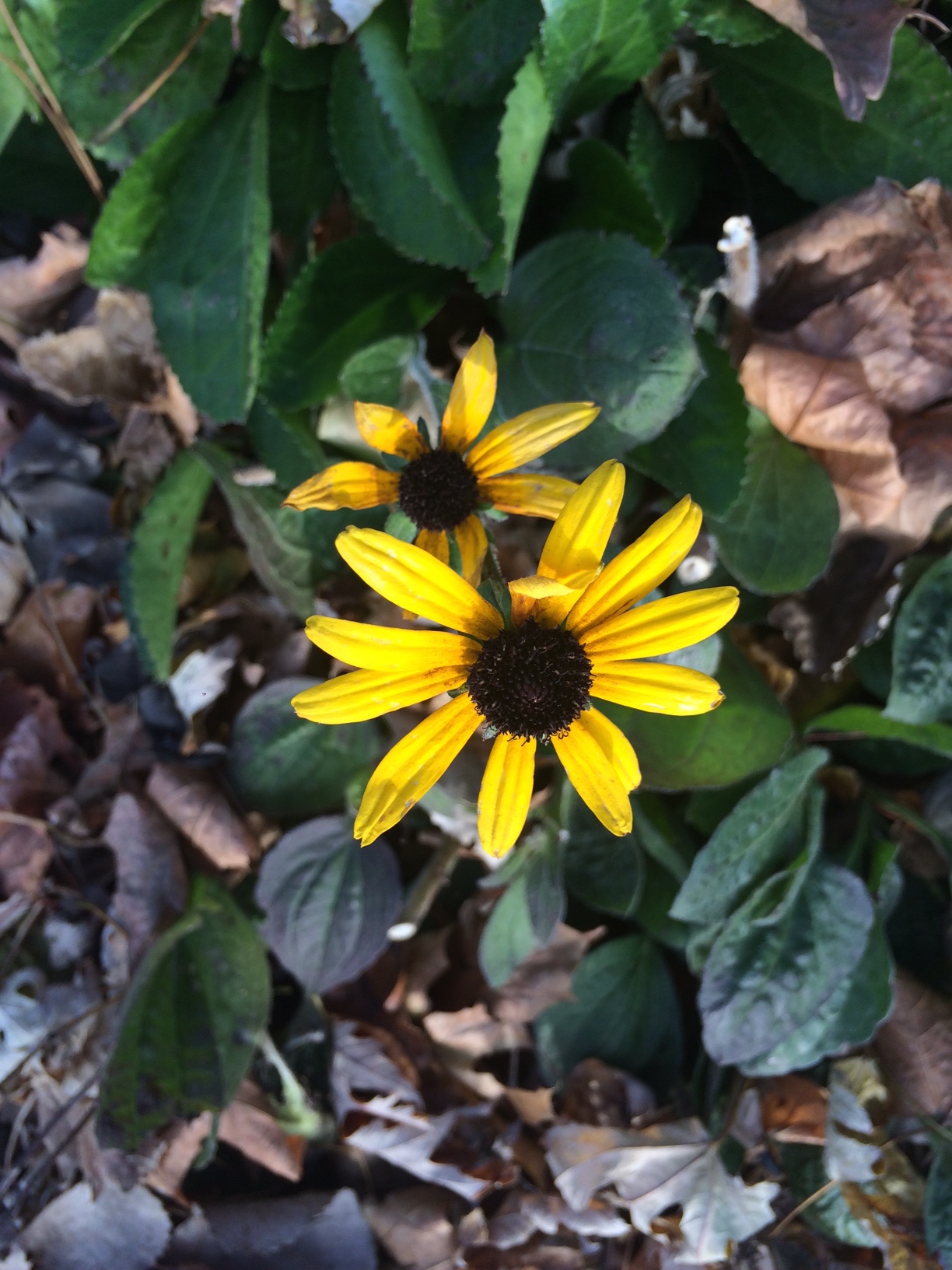
FlowersThis morning during my dog walk it was a bit surprising to find two yellow flowers blooming in the already pruned bed of a Master Gardener that lives nearby. She’s not one to pluck much of anything during the summer months. She prefers to leave her flowers out where everyone can admire them. But come autumn her garden beds get a full house-cleaning.
Yet up popped these two flowers.

Their species is not so much important as their precociousness. So I will not go on about their life cycles or why they might be giving it a second go this late in the season. All of nature perks and plays with warm fall days. Migrating warblers sing quiet versions of their springtime songs. Sparrows and robins too, and all birds in passage from north to south. It’s not so much about singing for territory as it is about communication of existence these days.

I’ve even heard chorus frogs singing from inside the prairie in mid-November. The temperature and humidity of a 55 degree fall day clearly resembles those dank March or April days when breeding begins for frogs. So the frogs sing.

Occasionally I will find the stiff remains of a snapping turtle that died during a frosty night while making its way from the uplands to the lake below. Mother turtles lay their eggs in holes dug into the dirt. Many of of these holes and eggs are proceedingly raided and eaten by marauding raccoons. The next morning all the leathery eggs lay strewn about the hole. If lucky, just one or two holes with their clutch of turtle eggs may survive. That’s how life’s competition works.

Nature depends on this precociousness to advance its cause. It is a long and random process in which we are all engaged. As human beings, call survival a “battle” when in fact it is often something far more subtle that takes us down. A set of mutant cells. A virus. Old age.

Having been through many such human “battles” in recent years with family and friends that have now gone before me, I am absolutely sensitive to the precociousness of life. When my father recently passed away, it was only after thirteen full years of existence following his massive stroke in 2002. At the time, no one really thought he’d live a year past that event. Yet he survived the death of my mother ten years ago, grieved and kept on going. A precocious man.

My father-in-law survived an apparent heart attack and lived another uneasy year in its wake. His persistence was evidence of his character, for the damage to his heart and body were profound. We all credited his hardscrabble Nebraska upbringing for his perseverance.

When my late wife passed away in 2013 after eight years of cancer treatment, it was not because she had given up hope. Quite the contrary. The woman put up with more pain and discomfort than anyone could bear during those years of treatment. Yet she precociously wanted to live. So she did, and saw her children through graduation from high school and attending college. I know they miss her deeply. But I also know we all admire her strength, humor and appreciation for all of life.

I know those flowers down the block will not last forever into the winter But their presence is a reminder that all of us are precocious beings. We all feel the warmth of the sun even when it deceives us a bit, bringing us out to turn our faces toward the sky and breathe in. We precociously feel alive in the face of all that might defeat us otherwise.

Let’s face it. The news is almost never good out there in the world. Even our religions reek with the stink of death, and always have. Only faith survives precociously like two small flowers in the November dirt.

In politics, our hopes of peace lie like road kill along the information superhighway. Twitter throws 140 characters of crap in our faces and Facebook ridicules sincere and liberal concerns for humankind while videos of cats startled by cucumbers at least make us laugh.

Yet is it is the face of two small flowers in November that remind us the precociousness of life is worth appreciating. And protecting.

On the gains of dealing positively with loss

IMG_8031This coming Wednesday, March 4th I am speaking about the subject of loss for Lenten Services at Bethlehem Lutheran Church. I have already met with the Pastor to orient the discussion, which will center on how our family dealt with the loss of my wife due to cancer. So the topic is fully on my mind.

Last night I woke up at 2:00 with thoughts rolling through my head. I grabbed my iPhone and entered them into the Notes app. If you don’t write these thoughts down somewhere it’s so easy to forget what they are.

This was stream of consciousness stuff, so it’s not grammatically correct. Not even complete sentences. In some respects it’s better that way.

Sometimes your gain is your loss (hiding cancer) and your loss is your gain (blessings from caregiving and community). Blessed to be a blessing to others. Loss of activity. Loss of identity. Careful to recognize loss of hope. Blessings are miracles in real time versus miracles out of time.

Here’s what it all this means.

I have a friend whose husband had cancer and chose to hide it from everyone for two years. She was imprisoned in this world where he suffered through treatments and she could not talk about it to anyone. His concerns over his own vulnerability were what motivated him. He did not want to be seen as a cancer patient. This approach was actually part of a larger pattern of controlling behavior stemming from his unwillingness to accept the very real fact of his underlying depression. His “gain” in protecting himself from outside scrutiny was actually a loss in terms of letting others truly help him and their family. That made it all the tougher for my friend to endure.

Sharing burdens

How different (and difficult) that approach was compared to choosing to share your burdens with others. The very first week my wife was diagnosed with ovarian cancer one of her friends (actually her boss) reached out to our family. We were so grateful to have that support. To her enormous credit this woman guided us through multiple rounds of treatment and needs over the next eight years. That was a gift that can never be repaid.

At times the blessings of that care were so great we felt compelled to share our blessings with others. That opened up channels of communication for people who confided in us. Some of these needs were simple. People actually apologized for expressing concerns about their situation. “I know my troubles are nothing compared to what you’re going through,” they’d often begin. “But I’m worried…”

Worry is almost always over losing something in our lives. We worry that we might lose our jobs with an illness or other difficulty. We worry about losing money. We worry about losing friends or relationships. We worry about losing the respect, trust or love of our friends and family members. The feeling of loss in our lives is almost constant. We’re always losing something, aren’t we? And we worry about it.

Recovering from loss

There’s a great passage in the Bible where a woman loses a coin and tears her house apart trying to find it. When she does recover the coin she calls her friends together to celebrate. That’s a metaphor for how God feels about lost souls. There is a universal tie that binds us when it comes to loss of spirit. We even speak of “losing our way” in life. That feeling of being lost and knowing loss is most difficult to transcend. Some people never pull free. They live with the feeling they are losing the battle. God doesn’t want us to live that way.

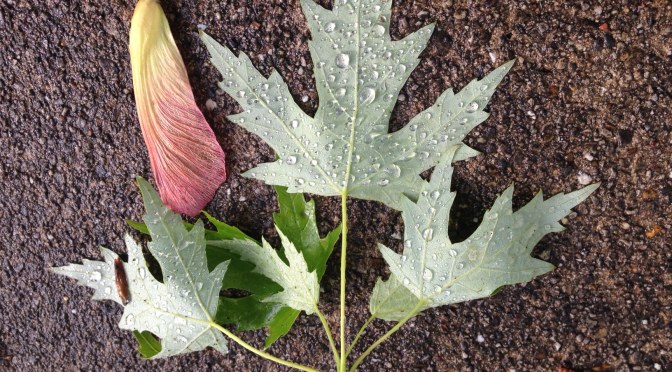
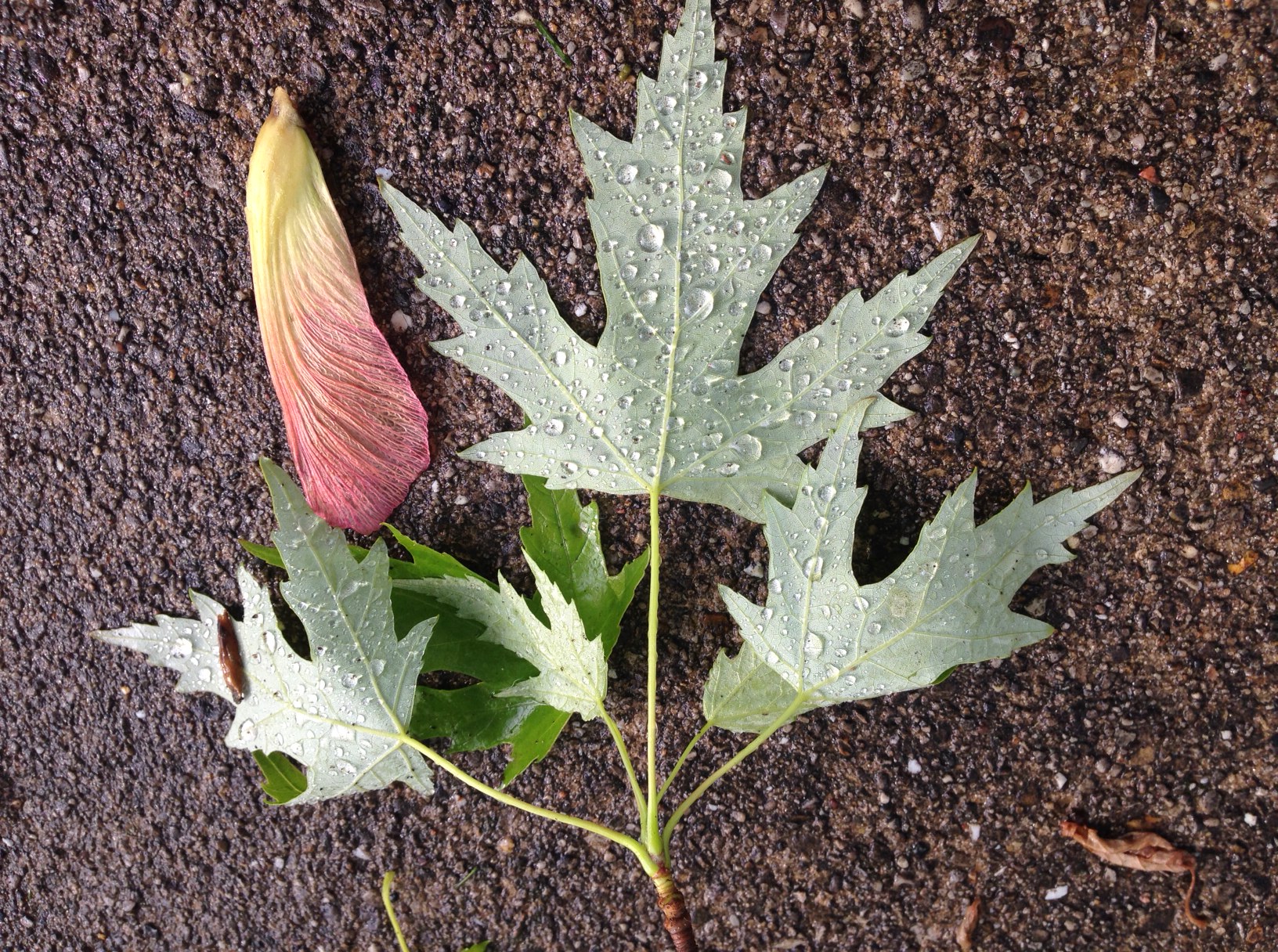
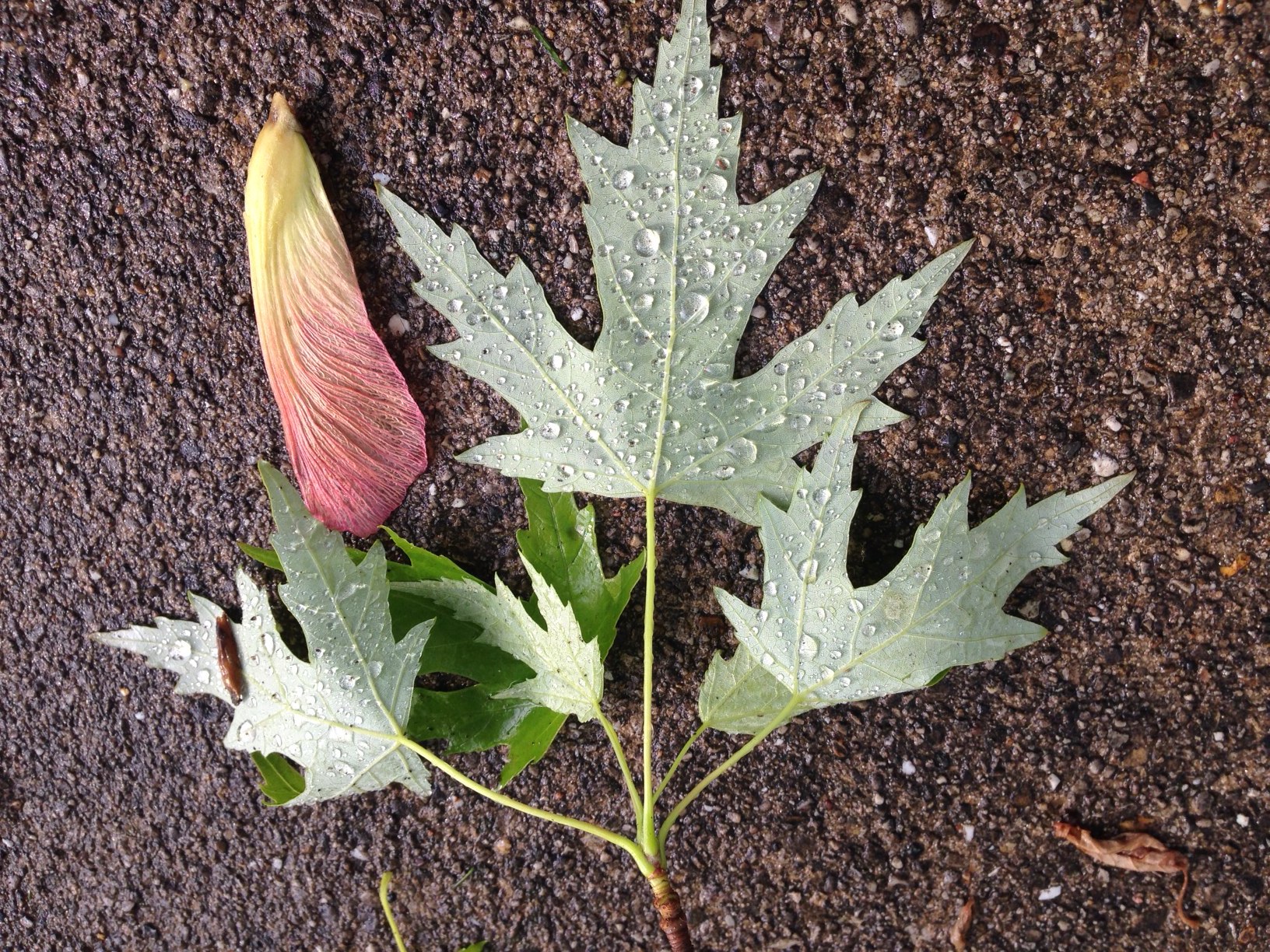
Maple leaf in rainBut even if you are not religious, there is sustaining hope in the very fact of life. You are here. You exist. You are the miraculous product of billions of years of evolution. You have free will. The choices you make do matter. You can choose to live in accord with all of human life and all of nature.

I choose to draw strength from both those scenarios. For me, the defining unity between God and material reality is love. It’s a very real thing, you know. It exists. It does great things. It sustains hope and heals wounds both physical and material. And as far as I can tell, God is love.

It is what it is

In our case we objectified our losses to gain some grasp of where the blessings still abided. Our phrase was “It is what it is,” That meant the cancer. The treatments. The loss of activities and joy in life. All that constituted loss

Cancer even caused us to lose insurance. Lose jobs.

But we never lost hope. That was the one thing we refused to lose.

Identifying with hope

Ultimately my wife lost her life to cancer. But she never lost her identity in the journey toward that moment. She retained her character. Refined it, in fact. At times it was something to witness. At other times it was something to support, encourage and even cajole. It was not always easy.

When she lay in bed after dying I touched her lips and told her that I was very proud of her. Hence the title of this blog and my book about our survivorship journey. The Right Kind of Pride.

Miracles happen

We’d seen miracles in our lives together. These were not miracles that necessarily broke the laws of nature. But they were miracles of love and beneficial consequence. Favors of love and care that transcended expectations. Money that arrived through gifts when we desperately needed it. All sorts of things transpired that left us in grateful, happy tears.

So you can see why that stream of consciousness at 2:00 in the morning feels rather profound. It may seem jumbled in the cold light of day. In fact it is clear that loss is real, but you can thrive in the face of it. We all must do that, for loss is everywhere. From small objects to entire dreams, hope and loss stand in delicate balance. Choose not to lose hope and loss becomes something you can handle.

Sometimes life does not seem fair. We still need to take responsibility and pride in our hope when facing difficult circumstances. Then loss does not possess us.

The Right Kind of Pride is available on Amazon.com.

RightKindofPridecover

Church of the Morton Arboretum

By Christopher Cudworth

photo (33)As a person with a lifelong interest in nature and especially birds, the outdoors has always felt like a holy place to me.

These instincts were later affirmed in my faith studies. While researching my book The Genesis Fix: A Repair Manual for Faith in the Modern Age (currently being revised for release on Amazon.com) I read the bible from cover to cover. Then I read the Bible all over again in a church-led project called Reading the Bible in 90 Days.

What I noticed both times was the baseline relationship between nature and God. That is not to say that nature IS God, or that God IS nature. Instead what I learned is that God and Jesus consistently use nature to exemplify and illustrate spiritual principles.

In particular Jesus taught using parables based on examples from nature. The parable of the mustard seed growing from a tiny object to a great tree illustrates the power of faith. The parable of yeast in the dough speaks to the fact that faith leavens the kingdom of God.

That relationship between nature and God made me feel good about skipping church now and then to get out in the woods and fields where nature speaks to us in a completely different language. After all, we can’t depend upon just words to make sense of this world. We need to see, feel and experience life in order to fill and fuel or souls.

Which is why the Church of the Morton Arboretum is a legitimate concept. My late wife and I would go there each season to celebrate the changing weather. I still go there with friends and my companion to immerse the mind in something other than contentious battles over who owns what in faith, politics and the environment.

Discovering the amazing detail and complexity of a simple autumn leaf can free the mind to let God in. That’s how it should be, and always will be.