Tag Archives: caregiving

From bitter to sweet memories on the 7th anniversary of my late wife’s passing

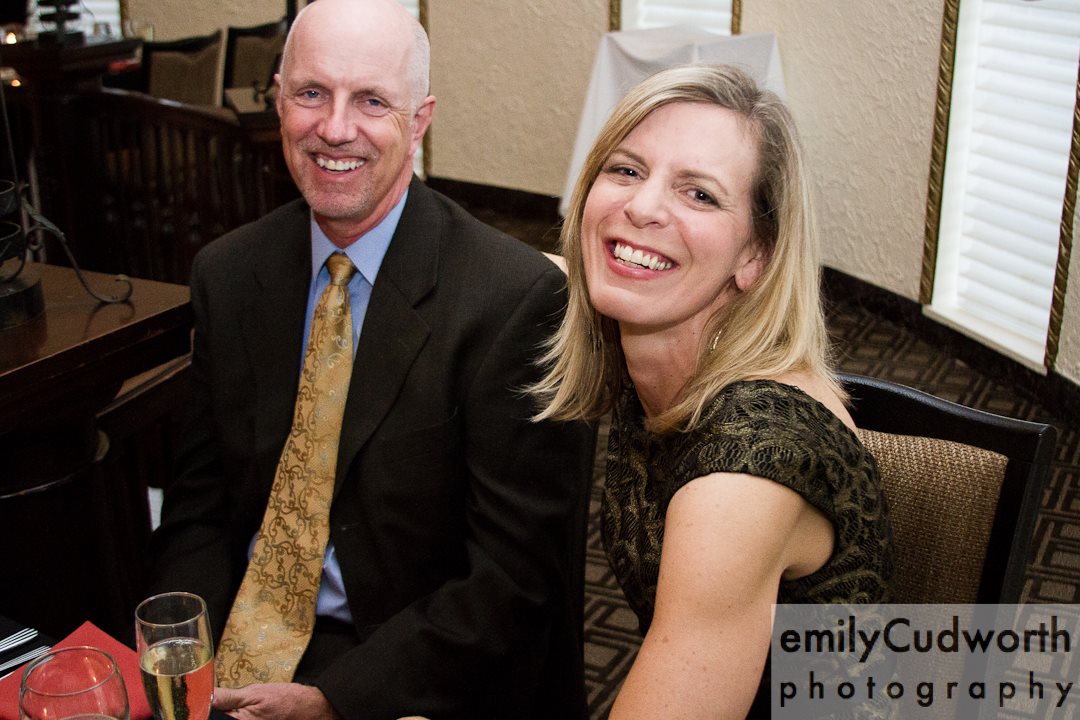
Linda and Chris
Our early dating years.

Tomorrow marks seven years since my late wife Linda Cudworth died after eight years of survivorship through ovarian cancer. The diagnosis came as a shock, as did multiple episodes of recurrence. Each time we’d reel from the news, go back into treatment and compartmentalize the best we could by using the phrase, “It is what it is.”

Those last months during the winter and spring of 2013 were confusing because doctors treating her for seizures learned there was a tumor in her brain. I’ve never published photos of her during that last round of radiation treatment because while we made the best of it, snapping pics using my laptop Photo Booth and laughing as the absurdity of it all, it was a strange world we were about to enter, because ovarian cancer was not supposed to be able to pass through the blood-brain barrier. But it did.

LInda and Chris
All dressed up and going somewhere.

We treated it with radiation and she started a regimen of steroids to contain the swelling and her personality became magnified. She lost native inhibitions about many things. On one hand, that was disorienting, as it ultimately became impossible for her to continue teaching at the preschool she loved. On the other hand, it proved to be liberating as she used those final bursts of steroid-fueled energy to buy a beautiful piece of art. She also stayed up late at night to research and buy a new car even though she abhorred going online. In sum she lived life to the fullest, however manic it might have been.

And that was bittersweet. Because when the steroids stopped, so did her energy. She passed away a few weeks later in the company of her husband and two children. Still, she never lost her sense of humor. After I’d arranged for palliative care in our home, we moved her from our master bedroom to the hospital bed in the living room where nurses and such could tend to her properly. The journey from bedroom to living room was awkward and difficult given her weakened state, but she looked up at me once she was tucked into the cover and smiled while saying, “I thought I wasn’t supposed to suffer.”
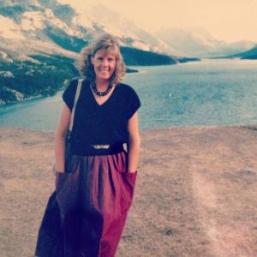
LindaAtGlacier.300x300
On our honeymoon at Waterton-Glacier

Most of that was indignity, and my late wife was a person who believed and abided in dignity in all she did. It was part of her beauty as a person. She also respected propriety, which made it amusing to think back on the fact that I showed up a night early for our first date. “What are you doing here?” she asked. “Our date is tomorrow night!”

She agreed to go out for a short dinner before hosting her parent-teacher conferences at the high school where she taught special education. But before we parted that evening, I got a taste of her naturally biting humor in reminding me that I ought to call confirm a date.

We got to know each other a little that evening and followed up with a hike to Starved Rock State Park. Stopping on a high ledge for a picnic on a mild November day, she broke out a lunch of apple-walnut bread sandwiches, cheese and wine served from a leather-covered flask. That implement was a remnant of her high school hippie days.
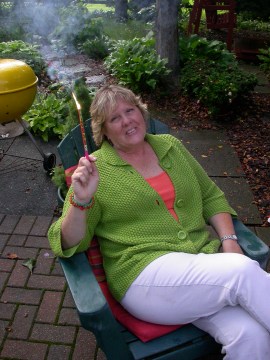
LindaWithFirework
Enjoying our festive 4th of July traditions.

We dated four years and even survived a long-distance romance early on when I was transferred from Chicago to a marketing position in Philadelphia. She visited me on Thanksgiving that year despite her mother’s objections, and I moved back to the Midwest the following spring when the company decided to disband the entire marketing department due to misguidance by the Vice President.

That would be one of a few job upheavals experienced over the years, and we survived them all. Our children came along in our late 20s and early 30s. Soon our lives were immersed in preschool, elementary adventures, and all the way through high school performances in music and drama.

We also belonged to the highly conservative church synod in which she’d grown up. The pastor that married us at the time was, however, a grandly considerate and patently open-minded man that once gave a sermon titled, “Do-gooders and bleeding hearts : Jesus was the original liberal.”

Emmy in Garden

Our lives swirled with church activities as our children passed through Sunday School all the way to confirmation, where they roundly passed the tests despite having to choke down conservative ideology about evolution preached by the pastor that had long-since replaced our marriage counselor.

After 25 years we moved up the road to a more tolerant and progressive Lutheran church. It was gratifying to learn that our friends from the former church did not abandon us. In fact without their help and the guidance of one of Linda’s best friends, a woman named Linda Culley, we would not have had as much grace and good fortune in the face of the perpetual challenges served up by cancer survivorship.
CudMuesPhotos-61
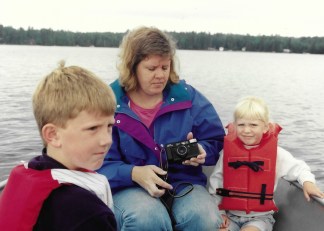
At 7 Mile Pinecrest

Now what I like to think about are the camping trips we took to the north woods while dating, and later, when we had small children, we’d spend a week each summer at a humble resort called 7 Mile Pinecrest thirteen miles east of Eagle River, Wisconsin.

Our children paddled around in the water and slipped off to Secret Places in the woods while their father fished in the early and late hours and went for runs half-naked in the pine woods north of the resort, swatting at deer flies the entire time.

CudMuesPhotos-55
Linda and Evan reading together.

At the center of all that family joy and adventures was Linda, whipping up sandwiches and sitting with a glass of wine on the small beach overlooking the lake. That was the only time the Do Not Disturb sign seemed to rise on the Mom Flag.

And when we weren’t visiting or traveling or doing school activities, Linda was immersed in planning, purchasing and planting her garden every year. Her priorities were indeed God, Family, and Flowers.

CudMuesPhotos-35

She was a really good person. That’s what so many friends have told me over the years. I was married to a really good person, and that makes me think of what a close friend told me when he first met her. “This is a good one, Cuddy. Don’t let her get away.”

It is bittersweet and sweet to think about all those years together. My daughter went through our stacks of photos to digitize the images and I’ve waited until today to open it up and pull some memories out to post with this blog. Holding people close to your heart is first and foremost the right kind of pride. I hope this writing inspires you to consider the importance of people in your lives.

And to realize as well that life does go on. She told our close friend Linda Culley that she knew, if she were to pass away from cancer, that I would meet someone again. And I have found love. But it does not mean the years with Linda Cudworth are forgotten. Far from it.

These memories can lift us up. Give us courage to go on. Cherish the life we had as well as the life we have. And that is the right kind of pride as well.
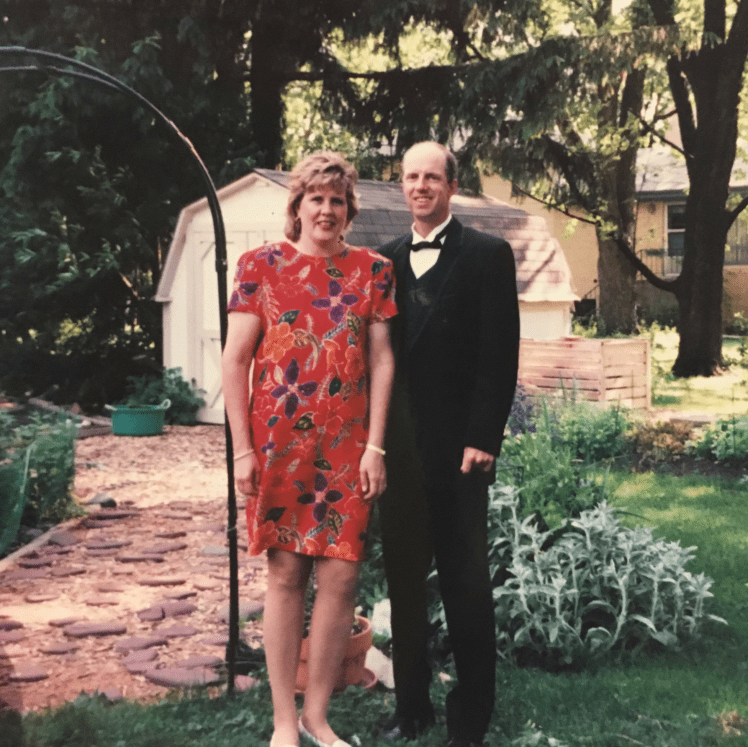
 

Six years on and beyond

Linda and Chris.jpgDuring eight years of cancer caregiving for my late wife Linda, who passed away six years ago this day on March 26, 2013, I grew to understand many things about other people. How some have such a heart for others. How giving they could be. How friends willingly took on chores too difficult to imagine. All of it done without judgment. These things came true in our lives.

There were also mysteries that were beyond explanation and should remain that way. During one period of time when I was out of work to take care of her needs, we sat together at our dining room table and added up the money needed to cover our bills. We’d already paid the $2000 COBRA monthly premium for health insurance. That was absolutely vital or we’d be broke in a minute from a running list of medical bills that came our way. These included chemotherapy treatments and surgeries that cost tens of thousands of dollars. In the days before the Affordable Care Act and protection from  pre-existing conditions, clinging to your health care was a life or death matter.

Somehow we made it week-to-week, month-to-month and year-to-year. But sometimes we just turned to prayer for help. So it was that we determined the need for $3500 to cover the rest of our bills. During periods when I had to be out of work to take care of her, I’d hustle up freelance work to cover our bills and more.

LInda and Chris.pngBut it was stressful. Sometimes we’d be pressed financially, and it was on one of those nights that we added up the bills, said our prayer and got her into bed to rest.

The next morning I came out to the kitchen to make her oatmeal and heard the front door mail slot creak open and shut. Whatever fell through the door made a solid thump on the floor. I walked out to check on the delivery because people were often bringing us food and other requests made through our caregiving website.

This package was different. The envelope was thick and bulging. I picked it up and opened the tab. Inside was a wad of money. $3700 worth.

I broke into quiet tears and stood there looking out the door. Whoever dropped off that envelope and collected that money was already gone. To this day I have inklings about who might have gathered that cash but in many respects prefer to leave it as a mystery. That’s what the folks who gave us the money apparently wanted. We used it wisely and gave a prayer of gratitude in response.

Yes, it’s been six years since my late wife passed away. But the kindness and grace of others that sustained us has never left my mind. I know it never left her mind either. In so many ways the support of others kept her alive during all those years in and out of remission after her initial diagnosis. We drew on that support for strength and hope during periods of both sickness and health. Our children felt that support, and in the ensuing years that remains an important part of our collective grieving process. Last year we held a memorial gathering in her honor. Rightfully so.

She and I met in 1981 and were married for twenty-eight years. Yet in many ways, we were also married to the world around us. It was that bond of vulnerability and hope that drew on the strength of others and became our main source of pride. The Right Kind of Pride. 


The art of dying

Losing a loved one is one of the hardest things to experience in life. All signs may indicate that the end of a life is near, yet it is so hard to accept them.

Most typically, people experience the death of parents late in life. There are exceptions of course. Tragic accidents or fatal diseases intervene with the normal cycles of life. For those experiences, the principle need is to focus on coping strategies. Helping people when the shock of death comes too early is a profound challenge. Every single circumstance is different.

But there are some commonalities we all share when it comes to aging parents or grandparents. We know they are not going to live forever. We sometimes see the decline, yet focus on the good signs and hope the bad things hold off as long as they can.

Triggers

Often there is some incident that triggers the process toward actual death. It may be some shift in health such as a heart issue or surgery. Yet something as simple as a fall can undermine a person’s health.

Recently that happened to a close associate of mine. His mother fell in the middle of the night and her equally aged husband did not notice. What followed was a series of stays in different hospital facilities and nursing homes.

There is a harsh reality afoot with people very aged and in a severe state of decline. Hospitals are chartered to help people get better. They reserve the right to determine if that is happening. There are broad patterns that affect these decisions. People experienced with the dying come to recognize whether the trend is toward better health or whether the symptoms of an accident or illness are likely insurmountable.

The protocols of this decision-making can seem confusing to family members or those chartered with caregiving. The legality of prescribing certain medications, for example, is often determined by the prognosis issued by the presiding physician.

Free radicals

Then there are the more radical decisions to consider. Will a surgery help mom or dad survive longer, or is it just a desperate attempt to extend their life?

Meanwhile, the patient sometimes vacillates between wanting all that rigamarole and perhaps not putting up with the intrusions. This can seem like they are giving up, or losing hope. But in truth, some people come to grips with their situation faster than their caregivers.

Yet that’s not often the case with people suffering pain. Their decision-making abilities are directly affected by their pain tolerance. That’s where it gets difficult for the hospital or other facilities to make decisions that please the family. Either the patient gets so doped up from painkillers and can’t converse, or they grow agitated from lack of treatment and just want the pain to end. Even death becomes a desirable option.

Opponents

There are relationship issues to confront as well. A temperamental parent can be a daunting opponent when it comes to end-of-life decision-making. If there are unresolved or dysfunctional relationship issues between parent and child or siblings, the end-of-life process can become complex and tense. Blame gets tossed around. Insinuations made. Guilt enters the picture. No one can find peace or balance. The parent becomes Ground Zero for family conflict.

Usually, there’s one sibling or one person that does most of the steering through an end of life journey for a parent or grandparent. Yet that leadership role can generate friction too. It can happen that parents will play one sibling off the other in order to gain sympathy or hedge the bets. When those parallel decisions work against the medical advice of the presiding doctor and the presiding sibling, things can get really confusing. Or angry.

Palliative care versus hospice

Sometimes medical staff will seek out the primary decision-maker(s) for discussions about palliative care or even hospice. Palliative care is defined as follows: a multidisciplinary approach to specialised medical care for people with serious illnesses. It focuses on providing patients with relief from the symptoms, pain, physical stress, and mental stress of a serious illness—whatever the diagnosis. The goal of such therapy is to improve quality of life for both the patient and the family.

But quite frequently, palliative care has the goal of keeping the patient comfortable leading up to the actual process of death. When death is likely imminent due to any number of signs related to disease or debilitation, a transition to actual hospice care occurs.

Hospice removes most life-giving supports and acknowledges that the patient is indeed dying. This can be an extremely challenging decision for families to make. But there are good reasons why hospice is entered as a care strategy.

Experience

Having worked with both my parents and my wife in both palliative and hospice care situations, I can assure you that the differences are not so distinct or profound as they might seem. I am fairly convinced that the only reason the terms differ is to ease the transition for family members. The term palliative is designed to help them come to terms with the fact that their loved one is indeed dying. When the wise female physician pulled me aside the day my wife was unable to move from the table where she lay, and counseled me that palliative care was likely the next step, I knew what she was saying.

In my mother’s case, she had been directed home from the hospital because there was, n the doctor’s words, “nothing else we can do for her.” In plain and simple terms, a hospital is medically defined as the place where people go to “get better.” When it is determined by the hospital that a mission of that order is not likely to be fulfilled, families are often asked to move their loved ones to another facility, or to simply take the patient home. Hospitals do not like it when people die under their care. It does not look good on the record sheets.

My mother was consigned to palliative care following an attempt at chemotherapy to treat her pancreatic cancer. The treatment was too hard for her to take. It put her in the hospital for a few days. Then the doctor came by and told me that they were done treating her. She was able to get home and we hired caregivers. All our family visited during a three-day period and she was happily able to see nearly all her loved ones.

But then she had a stroke on a Sunday evening, and by Monday morning, the case was clear. Her ability to swallow had been destroyed. The decision to enter hospice care was defined by that condition. Within a week of entering hospice, she passed away peacefully at home. Her husband and immediate family were there with her. And while it was sad to know that she was gone, there was great closure and peace that came from that.

Hospital business

Hospitals try to avoid keeping patients until they die. It’s simply bad for business. And hospitals are a business. That does not mean hospitals can necessarily avoid death in their patients. Plenty of people die in their hospital beds. Death is simply unavoidable when the human body and mind have had enough trouble dealing with pressure and failure.

Life comes to an end in one of three ways; natural, unnatural or somewhat assisted. A natural death is what we all seem to desire. That’s when people pass away of so-called natural causes. That would be heart failure in many cases, or other organs. There are many ways to die.

An unnatural death is typically the product of overtreatment. That would be too many surgeries in many cases, and not enough energy to recover. From what I’ve read, that process and occurrence is an all-too-frequent occurrence in the American health care system.

Perspectives 

I’ve watched my own family members anguish over the merits of yet another surgery for my father-in-law. Deep down I knew it was fruitless. But the patriarch of a family is not something people give away easily. Never mind that he’d already skirted death when he collapsed face first into a pile of sawdust while sawing wood in his own backyard. His wife woke him up that day. But from there, it turned into a series of heart operations, kidney problems, weight loss and finally death in the hospital. None of that was an easy choice for the family to make. It was deemed necessary as long as he was alive, to keep him alive. But whether it was absolutely necessary to keep him alive was the question everyone avoided.

Almost all families face that type of decision sooner or later. No one said dying is easy. But we tend to make it much harder than it should be.

Prayers for dad

My father passed away in a hospital bed six months ago.  He had fallen in the middle of the night and broken his hip. His caregiver called emergency for the umpteenth time and they carted my dad off to the hospital.

Everyone knows that a broken hip is a tough injury for any elderly person to sustain. My father already had an injured arm from a previous accident. But mostly he’d had a long time dealing with the effects of a stroke suffered back in 2003. He outlived my mother by ten years and we kept him in his own home with caregivers. The diagnosis to do surgery was his decision.

The diagnosis to do surgery for the broken hip was his decision. I let him make it because even though I was an executor of his estate with Power of Attorney for health care, he was still lucid and capable of deciding for himself whether to live with a repaired hip or die from the effects of the injury.

He lived another four days and saw all four of his sons during that week. Then he passed away quietly in that hospital bed. I arrived on a Saturday afternoon to a room with quiet music playing. His blanched figure with open mouth lay on the hospital bed. I kissed his forehead as I had done many times in fifteen years of taking care of him. Then I knelt and said a prayer next to him even though he was not necessarily a praying man.

I thanked him for his love over the years even though he lost his ability to say it. I said thanks to what I know of God for believing in my ability to take care of my father. It was tough as hell, and definitely worth it.

He was dead, but his memory just as surely came alive in the days that followed. There was nothing medically I could have done to change that outcome. There seldom really is. Death comes because it is meant to be. It gave me peace to know that he no longer had to live without his voice, and his golf clubs, and that wandering spirit squelched by his confinement to a wheelchair all those years. He dealt with it pretty well, and like an SOB at times.

The art of dying

But he dealt with it. And it was our job now to deal with his passing. It all took so long and happened so fast. That’s how death works, after all. And sometimes you should not fight it. That is the art of dying.

There’ll come a time when all your hopes are fading
When things that seemed so very plain
Become an awful pain
Searching for the truth among the lying
And answered when you’ve learned the art of dying

––George Harrison, The Art of Dying


As the crocus petals fall

A close friend has been at the hospital the last few days tending to his mother. She injured herself severely in a household fall by tripping on a braided rug that her husband has long refused to throw out in their bedroom.

Such are the vagaries of old age, and sentiment. Her broken ribs and swollen brain are being treated at the hospital, but she’s not sure it’s a good idea to go on. There is fear, and there is pain.

Her son is also in pain, of the emotional kind. There has been no more faithful a son than he. For two decades he has tended their garden. Mowed their lawn. Taken them to church when necessary. His own life is intertwined with that of his parents. Because he cares.

And because he cares, he is suffering now at the thought of his mother’s passing. She is alive, but barely. Sooner or later most of us go through this experience with a parent. A spouse. Or a friend.

I know people that have even lost children. Such abrupt dissolutions.

Crocus

As I entered the house today, I glanced down to notice that the crocus in the front garden are already starting to drop their petals. We wait all winter for the first signs of spring. Then spring comes and sheds these bright signs of life as if they did not matter at all.

I have watched my mother die. I was there when she passed away 10 years ago. Recently I watched my father die as well. We emptied their house this past week. Filled a three-yard dumpster with all their former belongings. Kept a few keepsakes and practical items for our own.

My brother said, “I’m going home to get rid of 25% of what I own. If this is what happens to us when we die, I don’t want that.”

Time passes

Three years ago this March 26 my wife passed away after an eight year go-round with cancer. She lived fully right to the moment she passed away. I have always said that I am proud of her for that. But life itself sheds its hold on us like petals on a crocus.

We are reminded of all this come Easter time. According to Christian tradition, even the Son of God shed those petals of life here on earth. The faith holds that our souls are borne into heaven if we have accepted the grace, and shed the brand of pride that prevents it.

Instead, we should hold pride in the mercies we can show others. I told that to my friend, the selfless man that has cared for his parents all these years. “You are in pain because your love is wrapped together with her life. That is pain your have earned through caring. God knows that we feel that pain, and it’s the knowledge that we are loved that sustains us through it.”

Walking right into the pain

Three years ago on Good Friday, I walked into the church I attend with tears barely concealed behind my eyes. My brother asked me why I attended the service so soon after the death of my wife, and I told him, “I’m walking right into the pain.”

That’s really the only thing we can do. You can’t escape it by walking around. It follows you like a shadow. And when I walked up to meet the pastor for a blessing that Friday evening, he was the one shedding tears in my family’s name. “You are in the right place,” he told me.

That does not cure it all. There is still the absence and the loss. The profound depression knowing that someone is gone, for good. That is grief. It must be reckoned with as well. But first we must acknowledge the pain. All else is folly. That can take time. It cannot be rushed. Yet neither can we dwell in the past, lest we forget there is life to be lived.

Preaching to the choir

I understand that church is not for everyone. I get that more deeply than you might think. My own father relinquished his churchgoing ways. He loved the camaraderie of the choir, but the words ultimately didn’t mean that much. It doesn’t mean he did not have a soul. And I do not worry for it. That is not the brand of faith to which I ascribe.

We are all flawed people, who need forgiveness for the things we do. And, we should do all the forgiving we can muster. Because the real purpose of those falling petals should be to let go the lies, and the hurts, the harsh words and the lost opportunities to say that we love someone.

That is the faith to which I ascribe. It is ultimately transcendent, even in all its fallen glory. It is not keeping the crocus past its time, but knowing that its coming and going is the real sign of hope, and of caring, and of things planted for the right purposes.

My father’s house

Back in October 2015 when my father passed away in his hospital bed, I was proud to think that we’d managed to keep him in his house in the ten years that passed after my mother died in 2005. As anyone with caregiving responsibilities can tell you, there are challenges to protecting the freedoms of the elderly. And when we love them, those challenges only increase when emotions and old relationship patterns cloud decision-making.

My father’s house was purchased in 1977 or so. It sits on a hill in St. Charles, Illinois where my brother and I used to chase grey partridge around the fields where hunters had released them as wild game.

Those birds are long gone, replaced by the suburban sprawl that created my dad’s place. The house is nothing special in any way. A split level with peach and apple trees planted in the back yard by my dad and mom years ago.

But my folks made it home for 30 years. Then my father had a stroke in the early 2000s and the home turned into a caregiving facility. In fact, caregivers lived in the home with my father all 10 years that he survived after my mother’s passing.

That’s all done now. And soon my brother will be coming out to Illinois to go through all the family archives left in the home. That includes albums both musical and photographic. My dad chopped up lots of pictures and pasted them into collections, so it’s a mixed bag. But it’s our bag, and I trust my brother of all people to handle that process.

Before leaving after a walk-through today I noticed a videotape on the shelf that took me back to the period when my dad had his stroke. He was out East on a reunion trip when the stroke hit. That threw our family into turmoil. It was my job back here in Illinois to keep the home safe and pay the bills.

The home itself has never had much sentimental value for me. But my father’s house instead was the symbol for caring and concern. We’ll be cleaning it out and selling it soon. But there’s no need to give up the former for the latter.

Understanding the Relationship Algorithm

What follows is a brand of simple, straightforward advice on how to have better relationships.

The Relationship Algorithm (RA) is a tool to help you open communications, build respect and sustain love through all the years of a relationship. The Relationship Algorithm is a formula one takes to either tear down or build up a relationship. It works like this:

Relationship Algorithm: Negative Direction

Relationships break down because they are subjected to a series of negative responses.

Complaint to or about a person is most often the catalyst that starts a chain reaction of negativity that can tear down a relationship. Complaint is a form of insult. Insult is a lack of respect. Lack of respect leads to lack of trust. A lack of trust undermines the ability to love. The inability to love reduces the will to communicate. When communication fails, the relationship is over.

Here’s the quick synopsis of that Negative Relationship Algorithm:

RA/N: Unhealthy or Constant Complaint >Form of Insult > Lack of Respect > Lack of Trust > Inability to Love > Unwillingness to Communicate. 


The Better option: Relationship Algorithm––Positive Direction

By contrast, a Positive Relationship Algorithm places communicate at the forefront. From there, a healthy chain reaction can occur that affirms the love in the relationship and builds on positive emotional feelings. Constructive emotions such as trust, respect and positive dialogue produce a relationship that is healthy and progressive in nature.

Here’s the quick synopsis on the Positive Relationship Algorithm.

Desire to Communicate > Ability to Love > Building Trust > Showing Respect > Complementing the Partner > No need for Complaint.  

Within this spectrum of constructive relationship tools, there are also tactics that can help you work within each component of the Relationship Algorithm to build positive dialogue.

Solving problems using positive direction

For example, imagine a couple has challenges discussing financial issues. A negative response is to complain about money issues or disrespectfully accuse the other person of mistakes or abuses. That insulting approach leads to reduced trust, lost love and reduced communication. That’s how fights over money begin and continue.

By contrast, a healthier way to engage in financial discussions is for both people in a relationship to separately write down their financial concerns. Then carve out a time where both parties can give full attention and communication to the subject. If necessary, get a babysitter for the kids if you have them. Turn off the cell phones and shut down the computer (unless you want to use a spreadsheet for discussion.)

Agree not to threaten, accuse or complain during the initial discussion.

Always show respect

Promise at all times to show respect on the issues at hand. If additional information is required to make a decision, make notes and agree on a timeframe for action or answers on each topic. Focus on establishing a consensus about each issue on the table. If that’s not possible, and you need to consult with advisors or professionals to organize or solve your financial (or other) problems, agree to make that appointment and engage in no complaint on the subject until that issue can be resolved.

Likewise, do not engage or impose the “silent treatment” on your partner following discussion of relationship (especially financial) problems. This is a form of silent complaint and a true lack of respect. In many ways saying nothing is far worse than having a fight.

Also, be especially aware of Passive/Aggressive behavior, in which one person baits the other with kindness or passivity to gain an advantage, and then turns on them with assertiveness or even violence to overwhelm or win a fight. That is obviously an unhealthy, unfair and unproductive way to relate.

It is always important to be aware of your own emotional intelligence in these categories.  Avoid using scare or manipulative tactics to get what you want. That is no way to resolution or healthy compromise where needed.

Patience, respect and positivity pay dividends

Some problems take more time than others to resolve. Again, if one person feels additional discussion might be necessary to clarify their position or provide updated information, be sure to begin from the communication side of the algorithm, not the complaint side. This prevents the negative feedback cycle from turning into a stress factor between two people.

As our financial illustration shows, a good relationship algorithm always begins with communication, not complaint. Even this simple guideline can be enough to control potentially negative feelings and get people working toward positive response to challenges and needs within a relationship.

The Relationship Algorithm can work wonders if you keep these positive goals in mind.

Christopher Cudworth is author of the book The Right Kind of Pride, a memoir about character, caregiving and community, the positive aspects of cancer survivorship and facing challenges in life. The book is available on Amazon.com. 

RightKindofPridecover
The Right Kind of Pride is a book by Christopher Cudworth about the importance of character, caregiving and community in this world. It is available on Amazon.com.


Go naturally

photo (33)A few weeks ago I attended a live music show led by my sister-in-law’s boyfriend Tom, a professional guitarist with a really good voice who performs with a crackshot bunch of horn players. Midway through the show the band played a couple numbers by the 60s group Blood, Sweat and Tears. One of the guest singers absolutely nailed the BSWT song, “God Bless the Child,” but there was another song running through my head the rest of the night. It’s a tune called And When I Die that was a part of the amazing lexicon of music produced in the late 1960s. The lyrics start like this:

I’m not scared of dying
And I, don’t really care
If it’s peace you find in dying
Well then, let the time be near

If it’s peace you find in dying
Well then dying time is near
Just bundle up my coffin
‘Cause it’s cold way down there
I hear that it’s
Cold way down there, yeah
Crazy cold, way down there

As a kid of 12 or 13 at the time, those were odd words to read. At that point in the life, the idea of dying was so mysterious, and most of the deaths of grandparents had happened before I even arrived on earth. My mother’s parents were both gone years before, and my father’s mother too. They were ghosts, essentially, about which people did not even talk all that much. It spooked me to think about anyone dying, for these reasons. But there was some strange hope in the song with the lyrics Go Naturally as well..

And when I die, and when I’m gone
There’ll be, one child born
In this world
To carry on, to carry on

Many years passed before anyone close to me died. I lost a classmate from college track who became too dehydrated from having a cold while competing in track. His fever shot through 107-degree mark and he passed away in his room.

During that time of life (and like so many young people) I was grappling with the meaning of my faith, and whether it existed at all….

Now troubles are many
They’re as
Deep as a well
I can swear there ain’t no Heaven
But I pray there ain’t no hell
Swear there ain’t no Heaven
And I’ll pray there ain’t no hell
But I’ll never know by livin’
Only my dyin’ will tell, yes only my
Dyin’ will tell, oh yeah
Only my dyin’ will tell

I had my own brush with possible death as early as my freshman year in college. Someone made a punch for the cross country team party and it nearly cancelled my liver that night. I could easily have died of alcohol poisoning. And what a waste that might have been. So much life left to live…

Give me my freedom
For as long as I be
All I ask of livin’
Is to have no chains on me
All I ask of livin’
Is to have no chains on me
And all I ask of dyin’ is to
Go natrually, only wanna
Go naturally

Through the mists of the years I learned that sadness and anxiety and depression could be scary things, but not as scary as giving up. On the few occasions when I felt like life was too much to bear, my mind considered what it would be like to end it all. But there was no motivation to do so. Perhaps my personal faith really did have a purpose.
Here I go!
Hey hey
Here come the devil
Right behind
Look out children, here he come
Here he come, heyyy

Don’t wanna go by the devil
Don’t wanna go by the demon
Don’t wanna go by satan
Don’t wann die uneasy
Just let me go
Naturally

Then came middle age, and the challenge of managing a parent through the final year of her life. My mother died at age 80 in 2005. I was there when she passed away. Sitting inches from her bed, I could see that the week she spent in hospice was the right thing to do. She had experienced a stroke after a try at chemotherapy and her body was done with this world. That was so clear that my mourning was rich with that knowledge. It strengthened me to know that dying is in many ways not the end we all dread. It is a part of life.

And when I die, and when I’m dead
Dead and gone
There’ll be
One child born, in our world
To carry on, to carry on

That same year my wife was diagnosed with cancer, and I can tell you that scared the ever living daylights out of me. More than dying, cancer was a ghost of dastardly proportion. And yet we helped her survive through bout after bout of chemo, and our personal faith delivered small miracles that added up to one big miracle. She was still here. She had not yet died.

But after eight years her body was also through dealing with the rolling effects of chemo and surgeries and stress. I was sitting with my two children in our living room when she passed away. And days later, an astronomy student friend of my daughter staying over at our house to keep us company awoke in the middle of the living room in the middle to the sight of three floating orbs of light right at the spot where my wife had lay when she died.

There was nothing frightening about this to us. This was no hooky spooky ghost or something imagined by my daughter’s friend out of fear of death. This was a person with the mind of a scientist witnessing something beautiful and wondrous being the sphere of human imagination.

You can doubt us if you like. Or you can wonder aloud to yourself if what we see day by day is everything we can possibly know. There’s more than one way to go naturally, you see.

A few months before my wife died her own father died in a hospital bed. My wife raised herself from a cancer surgery two days after recovery and we made the trek to visit her father. The look they exchanged upon greeting each other was beyond the realm of language to describe. It was an eternal connection, something made from the fabric of time itself. A few days later, having seen that his own daughter had survived her surgery, her father passed into eternity itself.

And this past week my father died of ultimately natural causes. He was a stroke survivor for thirteen years. His four sons all visited him the last week of his life, and when his youngest had made a visit to the hospital one more time, my father passed quietly into death that afternoon.

The hospital called to tell me the news and I made the trip up to sit with my father in his room. I had a good, long cry at his bedside before kneeling down to say the Lord’s Prayer. He was no longer a praying man himself, I think he would have told you. But he said many prayers in other ways over the years.

Which leaves more than one more child to carry on. To go naturally is the greatest gift of all. Even if there are bumps and sways and difficult operations along the way, in the end we all go naturally. Death is part of life. It teaches and it cajoles. It offers us an ending to consider, one that we may try to write a little differently, and delay indefinitely, but it will come eventually.

Let’s admit this is not a bad thing. The enigmatic lead character in the movie the Green Mile is both blessed and cursed to live on, perhaps into eternity, watching his loved ones and found ones all pass away before him. He cannot go naturally into the night. He is given a glimpse of the burden of God and Christ himself. There is great love in that, but also a burden to care.

Which is why people speak of going to their final resting place. A good rest will often do you good. We may not know what comes in the great beyond, but what we know of getting there is enhanced by the fact of our very ephemeral being. It is ours to go naturally through our days, and love life in every way we can along the way.

Lost and found on the day after my father died

Stewart Cudworth, born January 26, 1926. Died, October 17, 2015.
Stewart Cudworth, foreground. Born January 26, 1926. Died, October 17, 2015.

As I climbed in the car this morning the song In My Life sung by John Lennon of the Beatles was playing on the radio. I’ve sung and played that song many times on guitar, and know the lyrics well. But never have they sounded so prescient as today.

There are places I’ll remember
All my life though some have changed
Some forever not for better
Some have gone and some remain
All these places have their moments
With lovers and friends I still can recall
Some are dead and some are living
In my life I’ve loved them all

Yesterday my father died at 3:00 in the afternoon. The call came from the hospital, a kindly doctor trying to ease me into the knowledge that my father had passed away. He was beginning to go through the medical aspects of how my father had been cared for during the week, but I already knew the details. So I stopped the doctor and told him, “Your entire staff was wonderful. You gave my father an extra week or so to live, and all his sons got to come and be with him.”

In fact, my youngest brother had just visited that morning. He was in town by chance for a collegiate volleyball tournament with his daughter. He was quite close with my dad in many ways, perhaps the main son in the family that has dispensed wth any felt difficulties over time, and it was appropriate that he was the last son to visit.

But of all these friends and lovers
There is no one compares with you
And these memories lose their meaning
When I think of love as something new
Though I know I’ll never lose affection
For people and things that went before
I know I’ll often stop and think about them
In my life I love you more

My father was a passionately curious and often insistent man, willing to challenge our perceptions on any front. I recall the evening I stated that I’d seen some ducks on the river ice that day. “They were huddled together for warmth,” I said casually.

“How do you know they’re huddled for warmth?” my father asked.

To which I responded with some sort of angry retort. But that was my father. He wanted us to know the world did not accept everything we assumed we knew.

That was a lesson to be learned over and again. But the need to understand his thinking became a quality fo life issue when he had a stroke in 2002. That was when I first began assuming responsibility for his care. At first, it was my job to support my mother in her decisions about how dad should live. He moved through several care facilities with good and bad experiences before finally returning home with a live-in caregiver in 2004.

Then my mother passed away in 2005, and the direct opportunity to care for my dad presented itself. At first it was enormously difficult, because my father lost his ability to speak with his stroke. There were still seizures, and his body was compromised with loss of function on the right side. He could grow angry and frustrated at times, and my caregiving skills were put to the test in those circumstances.

All those changes and challenges are compounded when there are emotional patterns at work. The father-son relationship we had was transformed over the years as a result of the need to work together. I became adept at asking questions in sequential fashion to ascertain what he was thinking. This was an ironic rehearsal and reversal of the challenges he had long put to us growing up. All those probing questions were his teaching style, but too often we took that as an exasperation

But as we worked together our relationship softened somewhat. The same thing ultimately happened for my brothers as well. So while we’ve ostensibly lost our father to this life, in many respects we also found him again.

Though I know I’ll never lose affection
For people and things that went before
I know I’ll often stop and think about them
In my life I love you more

Christopher Cudworth is author of the book The Right Kind of Pride; Character, Caregiving and Community. It is a chronicle of cancer survivorship, and available on Amazon.com. 

Weeding our way through the world

Other seed fell among the thorns, and the thorns came up and choked it, and it yielded no crop. 8“Other seeds fell into the good soil, and as they grew up and increased, they yielded a crop and produced thirty, sixty, and a hundredfold.”9And He was saying, “He who has ears to hear, let him hear.”  –Mark 4:8

The inner dialogue of a person engaged in weeding a garden can go in a number of directions. There is the associative focus of separating good plants from bad, and yanking the weeds by the roots. There is also the dissociative tendency to let your mind wander and weigh your life along with everything in it.

A little of both is likely required to do a good job weeding. One must pay attention to identify weeds amongst the plants we choose for ornament and beauty. But sometimes weeds are so thick it does not take much thought to do the job. You stick your hands in there and yank for all you’re worth. Little thought is required, only muscle.

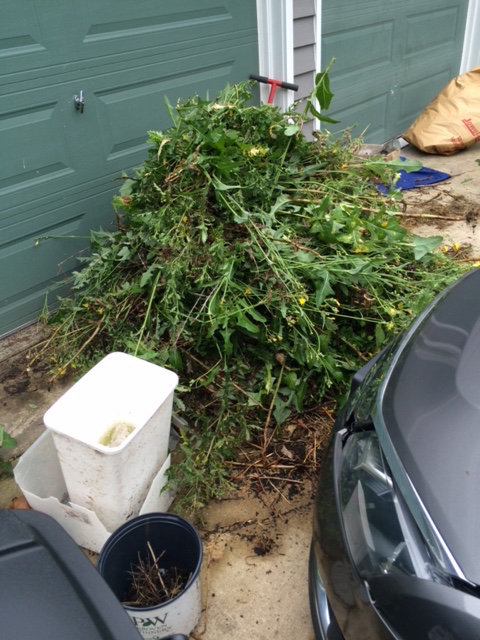
Pile of WeedsOver the years, one learns the best way to weed through practice. There is no other substitute for experience. One learns which plants are easy to pull up by the roots and which break off in your hands four to six inches from the soil. That makes for bigger problems. A trowel needs to come into play. There is not enough leverage left on the slimy stem of the weed to get a grip and yank up the roots.

Otherwise the weeds come back. Well, they come back no matter the method of removal. They’re weeds. That’s what they do. There’s always a supply of new weeds to fill in for the old ones.

One learns this lesson in your own yard and garden easy enough. Weeding is a required activity if you attempt to grow anything at all.

Of course, weeds are also at times a matter of perspective. Gardeners grow some varieties of plants that can escape and propagate places where they are not welcome. Purple loosestrife is one such beautiful pest. In a garden they are quite beautiful. But unleashed in a wetland they can take over an entire ecosystem. At that point, they must be yanked or otherwise killed off.

There are entire woodlands that need to be managed for the influx of plant colonies such as garlic mustard and buckthorn. Natural area restoration crews descend on these colonies and yank, burn and poison them to death. But the weeds almost always come back. It’s what they do.

Chemistry

That makes it all the more triumphant when the results of weeding actually do work. Perhaps there is no more profound example than that of a managed prairie. It can take years of propagation and burning to kill off the weed colonies and invasive species. But when prairie plants are given a chance, their competition strategies are smart and strong. The roots grow deep and the soul of the plant lies below the surface. That means burning takes off the dried up stems but does not affect the rich underground root system that also taps deep into the soil to gain moisture. Hot summer days do not kill these plants.

So nature invented weeding, on its own. But humans love to create environments with the appearance of natural balance that are, in fact, a stripped down version of nature that can be hard to sustain. Golf courses are one such example, and for years their strategy was to bathe the fairways and greens in dangerous chemicals as weed control. The monoculture necessary to allow the game of golf to be played requires intensive weed strategies that for decades contributed to ground pollution and other problems.

Our lawns at home often depend on such chemicals. Some are relatively benign and go away quickly. Others persist, and it would be much better for the world if these strategies were weeded out of our eco-strategies.

Answered prayers

One of my neighbors does not believe in lawn chemicals. That meant her yard become overgrown several summers in a row. She could not tell the weeds from her plantings. Finally I offered to help weed her lawn. She is a good Christian woman and had been praying about what to do for her lawn. Money was tight for her at the time and a full-on landscaping company was out of the question.

So I offered to weed. My late wife was glad that I did this. The Creeping Charlie from her yard had grown all the way through her lawn to reach the edge of our garden. When I dug into the mats of Creeping Charlie it could be hauled up like sheets of laundry. That work revealed an entire system of hostas and small groundcover plants that thrived once the weeds were removed. There were giant, towering thistles as well, and old, dried-up cedar trees in need of removal.

The process took several days, and my wife grew impatient with my dedication to the task. I quietly told her it was a duty that somehow called me. Nothing else. There was no husband or helper available to our neighbor at the time. So I lent my services in that department. I knew how to weed.

Since that time a man has come into her life, and a bit of money too. First he tore into the landscaping and removed many of the weeds, mulched the gardens and tore up funky trees. Then a landscape service began to show up and a beautiful new fence was installed. I love her new fence. It’s a wonderful backdrop for my own garden.

The property of life

Recently a family I know also needed some weeding around their yard. The husband has been dealing with the progressive effects of ALS for years now. His devoted wife keeps up with everything the best she can, but the duties and commitments of things like yard upkeep are not possible, yet are relentless. The family now also has grandchildren to enjoy. This is the property of life, which is so often counterbalanced by the weeds of existence. It takes a strategy of caregiving to manage these priorities.

Weeding water bottleSo it was with some joy that we organized a small community of workers from our church to do some weeding around their yard. The resultant piles of thick weeds piled five feet high. Along the north side of their property the landscaping was obscured by groundcover gone out of control. In fact some of it had died for lack of light. The daylilies competed with thistles and mulberry trees shot up through the arms of the spruce trees. All the weeds and overgrowth had to be inspected, sorted and removed. The tall mulberries were sawed up and heaped on the curb. The weeds were stubborn and thick, but the loose mulch gave up the roots easily enough. It was hot, and it was thirsty work. But it was worth it.

Organizing thoughts

All the time I was out weeding I thought of my friend Steve inside the house. This was his garden, and his love. It exhibited his character. I could see the organization of the plants and the landscaping at every turn. His wife told me how much he loved to garden. There were beautiful plants; butterfly weed (how ironic?) and many more.

As the shape of the garden emerged again I thought of how Steve and I first met. Our children were in high school music and drama together and something between us clicked after we met. He’d join me for lunch over at the Country House restaurant where they served nice fat burgers and cold beer. There were several meetings where he talked me through issues of depression related to some of life’s changes and work issues. Then my wife had cancer and Steve was there for that too.

Meanwhile his own health issues began to emerge. It became difficult for him to open the huge wooden door at Country House. There was a growing weakness in his system that could not be identified. It progressed and was finally diagnosed as ALS.

He has never let it stop him from living life, thinking through his writing and enjoying the company of all those who love him and his family. And there are many.

Steve and I helped each other weed through those depressive instincts years ago. We weeded out the negative thoughts to make room for positivity and hope to grow. That is a garden worth tending every day. Every year. Every life.

Christopher Cudworth is author of the book The Right Kind of Pride. It is available in print form on Amazon.com. 

Father’s Day

EvanandChrisThe morning that my son Evan was born was both a great joy and a tremendous relief. My wife had gone through fifteen hours of labor contractions every three minutes. He came into this world around 7:00 a.m. on October 30, 1986.

The thrill of having your first child is complemented by the arrival of the second. Our daughter Emily arrived around 9:00 p.m. on a warm April 26, 1990. That delivery rushed along so fast that we needed to call friends and family to watch our son when we rushed off to the hospital on the heels of a spicy Mexican meal a few hours earlier.

The pain and humor of fatherhood is never-ending. Your children grow up so fast that it is the small moments you accumulate in your mind that constitute being a father or mother.

I remember one late afternoon when the sun was falling through the front window of our tiny Geneva home. My daughter was crawling around on the bare floor chewing on a flexible teething ring. The sun was bouncing off the floor and struck her blue eyes. I raced for my film camera and snapped off a few photos before the sun went down. Later when I showed those photos to a friend she quietly murmured. “Her eyes look like cracked glass.”

I also recall the first word of my son. He was sitting on the back porch with my wife who often held him in her lap and pointed to flowers and other natural items around the yard. A small sparrow landed beneath their feet and my wife said to Evan, “Bird.” And he repeated the word, “Bird.” He was six months old.

In fact word games became a big part of all our lives. On our way home from grandma’s house one December, we drove through Geneva where the Christmas lights were blazing and Evan had a question for us both. “What’s the word, ‘wreath?”

He was always asking questions about language. We laughed years later when he admitted that he never knew what we were talking about when referring to Forced Preserves. That would be ‘forest preserves.” As Emily Latella might say, “Never mind.”

Emily with ChuckWith Emily it was always the purpose of language and song that mattered. We have a wonderful video of her in a pink ballerina dress practicing a Disney song. If the words did not come out just right she would stop and huff in frustration. Then she’d begin again. But you dared not interrupt her either. This was her challenge to complete and she did not want help recalling or repeating the words. That was her job, and hers alone.

Character

It is true that the character of your children emerges early and lives in their core their whole lives. Through creative means we learn how they think and believe and play. But it is through their character that we really know them.

Sometimes as a father of adult children I want desperately to know what they are really thinking. It is of course easy to dwell on our personal failings as a parent. When a child calls and the phone call ends, you wonder to yourself, “Did I give them what they need? Was I enthusiastic to their purpose? Am I being a good father to them?”

Those questions surface more frequently in absence of the mother that raised them. I know they miss their mother because she was superb at saying the right things when they called. I listened to hundreds of conversations over the years. Her attention to their needs was superb.

But these questions exist whether someone is alive or gone to another place. All it takes is a missed phone call in this life to get behind in our relationships. While modern technology is great, and we see each other on Facebook and catch up by phone when we can, there is a strange back-pressure that comes from so much attenuation to communication. If you’re not careful, the pressures of communication can become an undertow. That’s true for all of us, and with everyone.

Community

It’s important as a father to remember that your family needs their own space as well. So much of my own children’s upbringing was done by other adults and friends in life that I cannot claim all the facets of their character as my own. Those summers that my son spent over at a friend’s house building forts and beating each other up with floats in a tiny pool were critical in the formation of his personality. A father simply cannot provide all that input. That friendship. That love. It has to come from other sources too. The same goes for my daughter and those concert trips with her friends. It’s not the same if your father’s standing around at a concert. That has to be experienced on your own, and with your own community.

MuesPicnicI do know that many parents struggle to know their full roles. When I encouraged my daughter as a teenager to invite the bands she’d met at concerts to crash at our house overnight during a tour, it was not always with permission of my wife.

Yet I knew the importance and resonance of that connection because where else in the world would you encounter such amazing people in a close circumstance?

The morning she woke up to find a fantastic group of musicians sitting around her bedroom singing and playing guitar could never be replicated again. Later she leveraged her musical connections to recruit the group Goldhouse to play at her graduation party. The band was about to embark on a concert series called Warped Tour. Their set was polished and when the first notes of the first song rocked through our oversized basement with 60+ people crammed into that space, people shrieked in amazement. My son turned to me in wonder and joy, shouting, “Ohhhh Myyyy Godddddd!” It was fantastic. And it was ours to share with our friends and the world.

Caregiving

It is our job as parents and especially fathers to support our families any way we can. Yet it was the morning after a long drive down to Illinois State University that made me realize the ultimate role of a father. We had left late the night before because my son was involved in a school play. Leaving at 10 p.m., we made it to the Interstate just as a deep fog settled over central Illinois. As the fog thickened, my son nodded off in the seat beside me. I focused on the tail light ahead of me for a couple hours until we pulled into the hotel parking lot. I turned to him and asked, “Were you at all nervous about the fog?”

“I decided to go to sleep,” he said matter-of-factly. “I figured if I woke up dead it didn’t matter.”

We chuckled about that and piled into the hotel to catch a few hours of sleep. He was excited to rise early and join his friends for the student state government convention he’d been invited to attend. We exchanged quick greetings and a partial hug. Then he walked confidently down the hall without turning back. I watched him go and realized that I’d helped raise a reasonably confident son. That made me proud. Yet is also made me feel alone. That’s fatherhood in a nutshell.

Transitions

It hasn’t been easy for our family in a number of ways over the years. Yet my children have told me that they appreciated the stability and love found in our home. As parents perhaps we were sometimes a little too lenient in making them do chores. Yet our children were involved in positive things that occupied their time. There was plenty of time in life to learn chores it seemed. Many times they’d come home to tell of us some onerous task they’d just done for someone else’s parents. We’d laugh and confess, “Well, at least they’re learning responsibility somewhere.”

1397396_10152283918898332_876191508_oIn the wake of my wife’s death I elected to begin dating and have been in a relationship now for two years with a woman named Sue that appreciates the legacy of my wife and respects my children. I try to do the same for her. Now her daughter is an intern with the magazine where my daughter is managing editor. We are an evolving family. Our lives have converged and convened in positive ways. We spend time together with my mother-in-law and other relatives. My wife’s best friend confided to me last year that my wife said she knew that I would date after she was gone. I thanked that friend for sharing that insight. This is not about forgetting my late wife. It is about companionship and love and supporting each other and our families.

Love abounds

It troubles me sometimes that so many people fail to grasp the value of loving relationships wherever they occur. This obsessive absorption with the idea of a “traditional family” is so lame and disaffecting it should be trampled underfoot by the crowd of people truly seeking love in this world. Aren’t we all sick and tired of the loss of love in this world? Can’t we dispense with the angry ideology that emanates from this selective reading of the Bible and its ugly byproducts.

After all, it was the literalistic approach to scripture that was used to justify slavery for years, and racial discrimination for the century after that. Long ago it generated crusades over faith and then helped lead to the death of millions of Jews through anti-Semitism. The rigid practice of patriarchal faith still foments a disturbingly immature view of women as property. Biblical literalism fuels an ignorant brand of politics that denies science and the educational process that goes with it. In the face of so much ignorant history why do we still even listen to people whining about “traditional marriage” based on a religious view that is clearly anachronistic and damaging to society?

Parenting skills and simple tools

Into this social void we wade… while wondering what the next generation will bring. Some people seem to worry that this generation of children is irresponsible and somehow lacking in important social skills. As a father that has met dozens of my children’s Millennial friends, I do not share that worry. I know their character because they helped raise my own children. I see great hope in a generation that cares not what race a person is. I see love in the fact that they don’t care if someone is gay or not. I (somewhat radically it appears) think this generation of so-called Millennials has an etiquette and a respect for self and others that older generations are simply failing to grasp.

PaversFor example, I know now to occasionally text my son or daughter if I’m going to call them. Why? Because it’s not always appropriate to answer you cell phone, but you can handle a quiet text to call later. If they’re occupied I don’t get voice mail. And quite often they’re occupied with other tasks and cannot take a call. There’s no imposition there.

That might seem like an affront to some. But as a father I look at it from a completely different perspective. I respect my children as well as love them. It simply makes sense to try to understand their social constructs and not impose mine on them. As a society we seem to have migrated toward this world where holding people at a disadvantage is considered something of a power chip and a point of pride. But it’s the wrong kind of pride. Barking about how millennials are poorly trained and communicate differently is not a sign of maturity. It is a sign of emotional immaturity and selfishness.

Social pressures

The right kind of pride is taking the time to examine why people react the way they do to the demands of social pressure, communications and opportunity. I think Millennials have evolved a patent way to accord each other respect. It’s the blunderbuss of a generation that complains about entitlement and then acts like they’re entitled to have everyone do things their way or the Old-Fashioned Way that is hopelessly out of touch. But that’s no surprise in a society where Winner-Take-All is now the social style of both politicians and the religious. It’s no wonder Millennials are running from politics and the church. Would you stick around to listen if people were sending their message in ALL CAPS ALL THE TIME?

Father’s Day lessons

It seems the real lesson we need to learn on something so familiar as Father’s Day is this: parenting is not a one-way street. It’s a partnership and a revelation as well as a responsibility.

The ultimate vision of a Father is that of God. And if we’re wise we also recognize that God doesn’t just want obedience and contrition from the human race. There’s a relationship there as well. God the Father, if that’s how you prefer to visualize the ultimate form of love, is basically wondering how we’re doing. He wants to know. Sometimes it’s the smallest moments and the smallest things that matter. If you cease paying attention and miss those, then life is not so abundant as you might like.

And that’s the real message of Father’s Day.

The Right Kind of Pride is a book by Christopher Cudworth about the importance of character, caregiving and community in this world. It is available on Amazon.com.

Christopher Cudworth is author of the book The Right Kind of Pride, Character, Caregiving and Community, which chronicles the journey of his family through cancer survivorship. It is available on Amazon.com.