Art shows

From the age of perhaps four years old, I have been drawing and painting and showing my work to others for approval. Tucked in my baby book is the first real watercolor I ever painted. It depicts a jet plane with a flag on the tail. I have no recollection of the reference material used for that depiction of a jet. But it does exhibit some precocious visual interest in the world. Bic pen, watercolor and a piece of typing paper. It doesn’t take much to get started.

By the time I was twelve, drawing and painting were part of my everyday life. My father even helped me sell work to his friends. And by seventeen years old we’d put some artwork in frames and hung them in the old Manor Restaurant in St. Charles where we lived.

Too many study halls were spent drawing instead of studying. My grades in classes such as Economics and Government were not the greatest because I’d be drawing cartoons for my buddies rather than paying attention to lessons about how stock prices are affected by the market.

Art is both a wonderful obsession and a significant distraction. Being creative is not the best option in disciplined classroom situations. You can even be branded a smartass for giving creative answers to seemingly rote questions. You can also be branded a dumbass for not knowing the basics of this world.

I once wrote an essay titled “My Life As An Art Major, Or Why We Qualify for the Americans With Disabilities Act.” And it was funny, in a way. Because the world does not always accept creativity as the answer to basic questions.

But notice that does not suggest that artists lack problem-solving capabilities or that artists have no role in society. Quite the opposite. This interface between “reality” and operating in the abstract is often explored through art shows, where artists gather work together to show the public, and the public wades through and considers what is being shown, and said, by the art they find.

Just last night our Water Street Studios collective held a Resident Artist’s exhibition. As part of “the team,” of people renting studio space, four of my works were shown in the main gallery and my studio was open for visits during the evening.

Making art

Preparing work for any art show is a laborious process. Doing the paintings or other processes is just part of the mix. There is often framing to do, and that takes time and money. It can be exhausting getting everything ready on time. Then comes the lugging too. Carrying artwork comes with risks. All it takes is one dent on a frame or picture from a swinging door and a work can be ruined.

For that reason, art shows are Sisyphean ventures. There is no such thing as an artist being done with his or her work. Either the work itself is in progress, or a body of works is not complete.

Yet your goal is to sell some pieces to pay for the effort. Which brings back the harsh lessons of that high school economics class in which you might not have paid that much attention. Art shows are a practice in marketing. You market your work. But you also market yourself.

Body of work

People tend to buy artwork from artists that show a body of work rather than a piece or two that attracts their eye. It’s like the mating dance of exotic birds. The more ornate and complete the dance, the more likely the “buyer” is to welcome the artistic advances.

That means an artist needs to build both a body of work and with it, a reputation. Then comes word of mouth, and loyalty. You build a clientele, if you’re lucky and smart. One of the craziest experience I ever had as an artist was an art show held in a private home in a wealthy community. The hosts served lots of alcohol and the guests whipped out checkbooks and wads of cash and paid me on the spot. Women shoved money in my pockets while grabbing a painting and copping a feel. It was a very artsy evening, to say the least.

A more rational but equally stimulating version of that show was the annual Artists In Action event held in Geneva, Illinois each year. Artists were invited to actually produce work during a September weekend on which the Festival of the Vine was held. I always sold a lot of work there because people liked being able to see the artwork being made. It built a bond between patron and artist. And that’s good.

The process

Making a sale is not necessarily what goes through you head while you’re actually doing the work in a studio. Ideally, you are producing paintings or other artwork because you have something you want to say or show about the world. When that statement is visually or symbolically pleasing to other people, they might be motivated to buy. In other words, you take pride in your work. And that’s the right kind of pride.

Yes, there are some artists who develop a formula for sales and crank out things those purposes. Art is a business, and art shows are an extension of that business. There is no shame in that either. Some of that art is sentimental or familiar. But we should be able to distinguish between that style of art and that which is produced to make an impact.

Wine and canvas

In recent years, art seems also to have taken on a public flair with people taking courses featuring wine and canvasses. Everyone in the group paints a picture while being led by an instructor. These are fun and valuable lessons in art appreciation.

But the difficult part in producing art is being definitive. That is the characteristic one Jamie Wyeth (Andrew’s son) most values in his work. If it is not definitive, he wants no part in it.

Which brings us to the conclusion that good art shows are where good art shows. That is, it is definitive. And that is the goal of any real artist in this world. And to sell, of course.

What it means to be a widow

There are tons of things that I thought I’d be in life. Being a widow is not one of them.

When I was a kid I had dreams of being a pro athlete. Then in college, I dreamed of becoming a college All-American in running, and that happened on a team basis.

Then I went on in life, becoming a writer, an artist, an environmentalist and a liberal Christian. Some of these things have earned me friends. In other cases, enemies. It’s only proof that there are some things we seek in life, while others come our way no matter what.

And yet, becoming a widow was not one of the things I ever imagined happening.

Not so early in life, anyway. Three years ago this March my wife passed away after eight years of chemotherapy, surgeries and side effects resulting from all those cancer treatments. Cancer finally migrated to her brain, for God’s Sake. That was December 26, 2012. She submitted to brain surgery and radiation, but the tale was already written. Bravely she stood before mortality and only briefly did she admit that might not work. Three months after that numbing, post-Christmas diagnosis, she passed away in her own home in the company of her two children and husband.

Survivorship

Thanks to her strength, we enjoyed eight years of survivorship together. However, I must admit that the first day we learned my wife had ovarian cancer was the day that I began imagining life without her. There is no way not to think about that. I remember crying in my car, sobbing after hanging up the phone, wondering if I’d have her a month, a year or a lifetime. The answer was: “All of the above.”

With each successive, concussive treatment for cancer, that reminder or her challenges got a bit stronger. As time went by, the cancer came back repeatedly. It was like a ping-pong ball bouncing on the table., Rap….Rap….Rap..Rap..Rap.RapRapRapRapRap…until it became evident we were not going to kick this thing.

So truth be told, my brain began to recognize that I would be a widow well before she ever died. That’s an unfair advantage in grieving compared to those on the outside the widow sphere.

However my active role and belief were different than that. We maintained hope despite this developing realization that the cancer was so persistent. After all, who was I to determine the length or outcome of her determination? Miracles do happen. Miracles did happen. Multiple times over. We were grateful for that.

Personal history

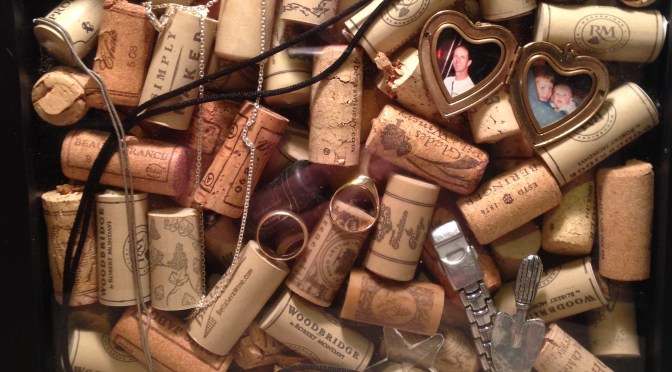
What you lose when a spouse dies is a big component of your personal history. A simple act like putting ornaments on the Christmas tree is not the same when the person with whom you’ve spent 25+ years is not there to corroborate their origin. You hang those ornaments with echoes of conversations past. Yet you live in the present. There is no escaping that.

So you carry on as a widow, because that’s what widows do. Initially that feeling of separation occurs on many fronts. You want to honor the memory of your loved one; parent, spouse, child or friend, and there are so many reminders in the first year or two of grief. Anniversaries and events. You especially want to respect and protect those memories for your own children, whose own unique and shared qualities are an extension of that life.

It’s as if there are Christmas ornaments hanging in every conversation you have with them. Sometimes they shimmer in the light. Some are fragile. Others are transparent. They bring laughter and joy.

Shared lives

It was not long after my wife passed away that I met a woman with whom I have forged a significant relationship. This was perhaps initially painful for the people in my life. My friends were immediately supportive, knowing that I enjoyed her company and we were both helping ourselves to new experiences. Yet, it was tough for people used to seeing me in the company of my wife of 28 years. These included my own children I’m sure, and my in-laws and family. They could not help be upset by the change.

Yet I know myself well, and at one point a year into my new relationship, my wife’s best friend, and former preschool director, turned to me at dinner one evening and said, “Did I ever tell you that Linda said she knew… that you would date if she passed away?”

That was like a Christmas ornament of its own. It was something my late wife never said to me. That was not really her style. But it meant quite a bit to hear it from so close a friend.

Ornaments

As I’ve taken Christmas ornaments off the tree this year and put them away as carefully as possible, it has become obvious that there is a dynamic at work in all our lives. We’re all widows in some sense. Memories are often attached to things, and things are attached to experiences. We lose grandparents and parents and people we love. We end marriages or relationships in love and work. Along the way we try not to misplace, damage or otherwise abuse the better ornaments of their memories. But it’s tough to do.

On a broader scale, being a widow is also like being an architect. You build these experiences in your life. That’s where your memories reside. But you must learn that it is not necessary to knock down one building to create another, nor should you.

After all, we don’t often live in the same houses all our lives. Yet we keep the memories of those homes in our minds, or feel them in dreams, our imaginations and ourselves. Because that’s the real place where we live. It’s a process of grieving the past while embracing the future.

And that’s what being a widow is like.

Grieving in dream time

We all know plenty of people dealing with loss in their lives. A friend loses a child in the latter stages of pregnancy. Another grieves over the death of their parent or a sibling. We lose people to cancer, or car accidents, suicide or heart attacks. All these losses are carried with us in many ways.

Most recently my father passed away. The day he died I entered his room and cried heavily over the man who raised me. I also cried for the relative valor with which he suffered 13 years of stroke disability. The loss of his ability to communicate robbed our family of valuable time with him. We also lost a share of family history since he was unable to tell stories of his youth or his experience.

And a few years ago, my wife died of cancer after eight years of survivorship. We had been married for 28 years. That’s a lot of shared history as well.

Just a year before my wife passed away, my father-in-law died from complications related to heart problems.

And ten years ago in 2005 my own mother passed away.

All these losses have been processed in different ways. Yet all of them have converged in some way in my dreams.

Shred of guilt

Whether we like to admit it or not, there is often a shred of guilt that goes with losing someone we love. Working through that brand of guilt alone can take years. We might wish we could have done something more for the person we loved, or been there more. We might have wanted to tell them with more urgency how much we loved them.

None of these feelings are foolish or unwarranted. They are the very real consequences of having loved, and having lived. It is simply impossible to have lived perfectly, of having never forgotten to say “I love you” when it counts. So it takes time to grieve through these feelings as well as the raw loss of someone in our lives.

Asking forgiveness

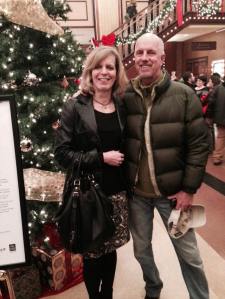
FamilyBefore my late wife passed away, I sat down by her bed and told her that I loved her and asked forgiveness for any wrongs or ways that I might have disappointed her over the years. All relationships have some degree of failure in their mix. I thought it important to let her know how much I appreciated our time together, and to apologize for my own shortcomings. Her doctor had advised me to be absolutely positive in her last few weeks. Yet we’d been through quite a few things together, and I positively wanted to tell her how I really felt. That included a bit of confession. We all try our best, but love requires that we admit some of our shortcomings along the way.
Recurring dream

Perhaps that is a brand of emotional w0rk we must always do on our own. The one recurring dream (every few months) that I have in relationship to my late wife is that she has returned somehow from the dead and I am in no way prepared to deal with that.

The dream typically finds her rising from apparent death at the funeral home to re-enter her life. I encounter her at parties or other events and don’t know how to engage. Awkwardly, I’m challenged in those moments to know what to do because I’m in a new relationship.

This is a painful dilemma in a dream world, much like those moments when you are trying to run away from some threat and are unable to move your feet. Dream interpreters say that not being able to run away in a dream… is a sign of general anxiety in your life.

That’s exactly how anxiety works, of course. It can focus on any topic, but it also invents its own realities. And so, in relation to grief, it brings that person back on the stage of your life as if they were alive again. “What do you think of this…” it wants to know?

Bad dreams and divorce

The anxiety of dealing with loss in a dream world is similar in some respects to a person living through a real life divorce. Rather than grieving through bad dreams, however, one is forced to grieve that relationship every time you encounter a former spouse in real time. That can seem like a bad dream in more than one way.

It takes just as much time to grieve through that kind of loss as it does to come to grips with the death of a sibling or a loved one. None of us can completely separate ourselves from the reality of a divorce any more than we can divorce ourselves from feelings of grief or loss with someone that has died. It’s part of your subconscious thoughts whether you like it or not.

Dealing with loss

In relation to our experience in loss, overall I feel our family has tried to deal with these experiences in healthy ways. Obviously, the pain of children grieving a lost parent is a different thing from a husband dealing with the loss of a wife. I think some of the guilt I am processing relative to my late wife is a shared empathy for my children in having lost their mother. The dream in which she returns to life reminds me that my work in helping them is not over. Nor should it be. She returns to me in dreams so that I remain sensitive to the fact that I am responsible as their living parent to keep her memory alive for all of us.

Rather than a nightmare, such dreams are instructive and healthy to the grieving process. In many ways, our family has found positives in our life celebrations together. We are not afraid to recall both joyful and amusing aspects of my late wife’s personality. She loved to tease but could also be petulant about certain subjects or beliefs. These dichotomous aspects of her personality do keep her memory alive. They can also be shared with others because they are honest. We can be unapologetically real about her memory.

Sharing burdens and friends

1509152_10204571857793222_4147884275556153224_nAlso, my companion Sue is respectful and loving toward our needs. Being a companion to a “widow,” as she has done,  is not always easy. For both the spouse and the new companion, it can be difficult living in the shadow of someone so loved. Sue has treated my children with respect for their mother’s memory. She has grown to understand them better as people as a result, because learning about their mother has helped her understand their own characteristics and values.  And in our relationship, I have been very honest with Sue about my feelings in the 2.5 years since my wife passed away.

We did not leap into categories of emotions too quickly. It has been a prolonged “honeymoon” if you want to call it that, since we met and starting dating. That’s a necessary fact of our respective situations.

Sue was working through pain from a previous relationship when I met her. I was in active grief from having lost a spouse. I believe we’ve helped each other through, and grown as people as a result. We treasure relationships with both our sets of friends, and some of these groups have merged successfully, to the point where we no longer define friends as “Mine” or “Hers.”

Protection and risk

11169852_10205615038072077_292278208289650118_nThat is the protection. The risk is the investment in time and love we have made in each other. We have discussed the weight of that investment on several occasions. Dating in your 50s is not like dating in your 20s or 30s, when there are families to build and children on the horizon. Yet there is still an investment in the future. Even during the few years we’ve been together, we’ve felt changes in our bodies, hearts and minds.
We’ve also ached in real time over the challenges our children face and have shared the ache across family ties as well.

Through all this shared experience, it’s never been my process to compare Sue to my late wife Linda. The relationship we now share is clearly built on its own foundations. As stated, however, these foundations do draw from our respective pasts.

And interestingly, Sue’s actual first name Linda. She’s simply gone by Suzanne, her middle name, for her entire life. I first learned this fact in the first few months of dating her when her bike slipped and we visited the Urgent Care facility to get her checked out. The registration desk asked for her name and she stated, “Linda Astra.” Then she spun around to say, “I forgot to tell you. Linda’s my real first name.”

That was an odd little moment. But it was not lost on me.

Caution signs

We likely all know situations where in which the deceased spouse can become something of a legend or a saint in the lives of those who carry on their memory. Sometimes that sainthood can produce dysfunction among stepchildren or in other relationships where the new person in the family formula is constantly measured against the parent or loved one who went before.

That can create a “bad dream” in which people refuse to accept or show love to others. It’s much better to acknowledge that we all need each other. Those relationships may be in new or different ways those in the past, but that can be a good thing.

We have this one life to live. It is best to make life better for one another every way you can. That’s almost better than the Golden Rule.


Understanding the Relationship Algorithm

What follows is a brand of simple, straightforward advice on how to have better relationships.

The Relationship Algorithm (RA) is a tool to help you open communications, build respect and sustain love through all the years of a relationship. The Relationship Algorithm is a formula one takes to either tear down or build up a relationship. It works like this:

Relationship Algorithm: Negative Direction

Relationships break down because they are subjected to a series of negative responses.

Complaint to or about a person is most often the catalyst that starts a chain reaction of negativity that can tear down a relationship. Complaint is a form of insult. Insult is a lack of respect. Lack of respect leads to lack of trust. A lack of trust undermines the ability to love. The inability to love reduces the will to communicate. When communication fails, the relationship is over.

Here’s the quick synopsis of that Negative Relationship Algorithm:

RA/N: Unhealthy or Constant Complaint >Form of Insult > Lack of Respect > Lack of Trust > Inability to Love > Unwillingness to Communicate. 


The Better option: Relationship Algorithm––Positive Direction

By contrast, a Positive Relationship Algorithm places communicate at the forefront. From there, a healthy chain reaction can occur that affirms the love in the relationship and builds on positive emotional feelings. Constructive emotions such as trust, respect and positive dialogue produce a relationship that is healthy and progressive in nature.

Here’s the quick synopsis on the Positive Relationship Algorithm.

Desire to Communicate > Ability to Love > Building Trust > Showing Respect > Complementing the Partner > No need for Complaint.  

Within this spectrum of constructive relationship tools, there are also tactics that can help you work within each component of the Relationship Algorithm to build positive dialogue.

Solving problems using positive direction

For example, imagine a couple has challenges discussing financial issues. A negative response is to complain about money issues or disrespectfully accuse the other person of mistakes or abuses. That insulting approach leads to reduced trust, lost love and reduced communication. That’s how fights over money begin and continue.

By contrast, a healthier way to engage in financial discussions is for both people in a relationship to separately write down their financial concerns. Then carve out a time where both parties can give full attention and communication to the subject. If necessary, get a babysitter for the kids if you have them. Turn off the cell phones and shut down the computer (unless you want to use a spreadsheet for discussion.)

Agree not to threaten, accuse or complain during the initial discussion.

Always show respect

Promise at all times to show respect on the issues at hand. If additional information is required to make a decision, make notes and agree on a timeframe for action or answers on each topic. Focus on establishing a consensus about each issue on the table. If that’s not possible, and you need to consult with advisors or professionals to organize or solve your financial (or other) problems, agree to make that appointment and engage in no complaint on the subject until that issue can be resolved.

Likewise, do not engage or impose the “silent treatment” on your partner following discussion of relationship (especially financial) problems. This is a form of silent complaint and a true lack of respect. In many ways saying nothing is far worse than having a fight.

Also, be especially aware of Passive/Aggressive behavior, in which one person baits the other with kindness or passivity to gain an advantage, and then turns on them with assertiveness or even violence to overwhelm or win a fight. That is obviously an unhealthy, unfair and unproductive way to relate.

It is always important to be aware of your own emotional intelligence in these categories.  Avoid using scare or manipulative tactics to get what you want. That is no way to resolution or healthy compromise where needed.

Patience, respect and positivity pay dividends

Some problems take more time than others to resolve. Again, if one person feels additional discussion might be necessary to clarify their position or provide updated information, be sure to begin from the communication side of the algorithm, not the complaint side. This prevents the negative feedback cycle from turning into a stress factor between two people.

As our financial illustration shows, a good relationship algorithm always begins with communication, not complaint. Even this simple guideline can be enough to control potentially negative feelings and get people working toward positive response to challenges and needs within a relationship.

The Relationship Algorithm can work wonders if you keep these positive goals in mind.

Christopher Cudworth is author of the book The Right Kind of Pride, a memoir about character, caregiving and community, the positive aspects of cancer survivorship and facing challenges in life. The book is available on Amazon.com. 

RightKindofPridecover
The Right Kind of Pride is a book by Christopher Cudworth about the importance of character, caregiving and community in this world. It is available on Amazon.com.


One long breath

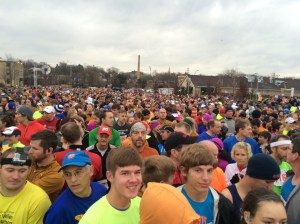
CrowdThere were more than 2000 people milling around the start line of the Thanksgiving Turkey Trot in our hometown. My racing instincts from long ago sent me out to a quiet street for a one-mile warmup jog. It had already been an eventful week getting my house ready to host 12 people for Thanksgiving. I was looking for a place, I suppose, to take a deep, long breath before doing the race.

Perhaps my mind was trying to take in a bit too much information at that moment. We had scheduled a Memorial Service for my father Stewart the night before Thanksgiving so that family could visit and join in celebrating my father’s life and grieve his passing.

Me with folksAll those years of caregiving for him were not quite over. There were still financial issues to manage, and the sale of his home to discuss. All that functions like a practical soliloquy that must be sung in order to gain closure.

But the emotional bank accounts remain open forever, and it is best to invest some time sharing memories with others, and learning how they view the life that has passed on. This is particularly true for a parent, as not everyone has the same perspective on what they mean, and how they should be honored.

As principal caregiver, my role kept me close to my father all those years after his stroke in 2002. He lived a full decade after my mother pass away in 2005. My job had been support for her initially, which quickly transitioned to full caregiver after her survivorship with lymphoma and pancreatic cancer came to a quick close in November 2005. That meant a full-time caregiver was necessary to join Stew in the home.

Stew and OlgaNot knowing what to expect after those quick changes, it struck me one day while walking into the home of my father that there were no real rules to this game. I was in charge of his life in consultation with my brothers. That meant there were always bills to pay and issues to discuss about his health and needs.
Sometimes that made it difficult to address much else in life. Stewart was not fond of making small talk when there were things bothering him. That list and how to address it could take quite a long time during my visits two or three times a week. He’d lost his ability to speech due to the stroke, which meant that we had to engage in a series of yes or no questions to ascertain his concerns. Early in the stroke recovery he’d quickly grow frustrated. His emotions were also hair-trigger thin at times, setting him off on a session of arm waving and barking “NO NO NO!” whenever I failed to get the questions right.

Stew and Evan and EmilyThere were many times I’d try to push the conversation toward something more pleasant such as memories of his that he might like to share. That was a tough gig too, because we could easily stall if I did not guess the name of the person involved in the story he wanted to relate. Even before his stroke we all had problems not knowing all the friends and family he thought we should know.
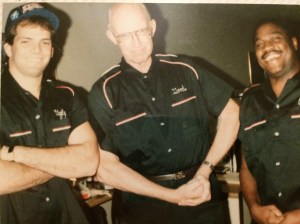
“Dad,” my brothers and I would say, “I never knew that person…” we’d reply, and he’d get frustrated and demand, “Yes you do!”

But we seldom really knew them. My father was a highly social man and had many acquaintances from golf and bowling and work and life in IMG_4900general that we, his sons, had never actually met. Or if we had, we did not remember them. Which was worse?
That meant it was a work in progress over the years moderating discussions with my father. It hurt me to hear that my brothers were frustrated with their visits. Stew would store up a memory bank full of things he wanted to share and try to communicate it all in one grand session rather than being patient and happy with a few satisfying stories.

There was a whole lot of life lost after my father had his stroke. He’d share photos and get bits of information out, often in beautifully abstract Stew and Evan and Emilyfashion. But my dad always was an impatient man in some respects, and one could go there with the best intentions to have a nice talk and come home hurt by the exchange.

His caregivers had the same problems. But we ultimately made it work for thirteen years. He lived in his own home until the very week he died. All three of his other sons made it for a visit by circumstance, and my father passed away on a Saturday afternoon.

All this was coursing through my head as I warmed up for the race. It felt like I’d been inhaling and dealing with the stress of trying to please him for so long. Now it was over, for the most part.

We held a nice memorial service with both laughter and tears.

And on Thursday morning I jogged up the quiet street away from the crowds. The air was clammy and grey. I felt tired and slow. And as I reached a spot near the river I stopped in my own tracks and began to cry. Tears fell down on the wet sidewalk and I told my father that I loved him.
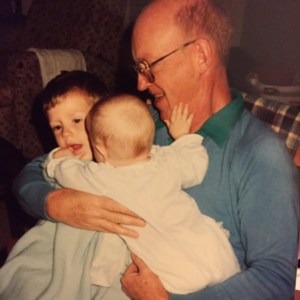
Stew and Olga.jpgEarlier I sat in McDonalds before warming up. My cell phone had some photos sent to me by my daughter and son the night before. They were photos of my father holding each of them in his arms. Truly, those images felt like yesterday. I felt sad at the time that had passed yet thankful for those memories. He was a wonderful grandparent and a good dad.

That’s about all you can say. The rest is part of one long breath we take throughout this life. It seems we’re always holding our breath for what comes next. Which is why I encourage you to let out a little air. Breathe out and let the air come back into your soul a bit. Breathe in the essence and reality of the people around you. Because they want your attention. They love you. The demands of life can wait. They seriously can.

Then take one long breath and smile. It’s worth it.


On the precociousness of November flowers

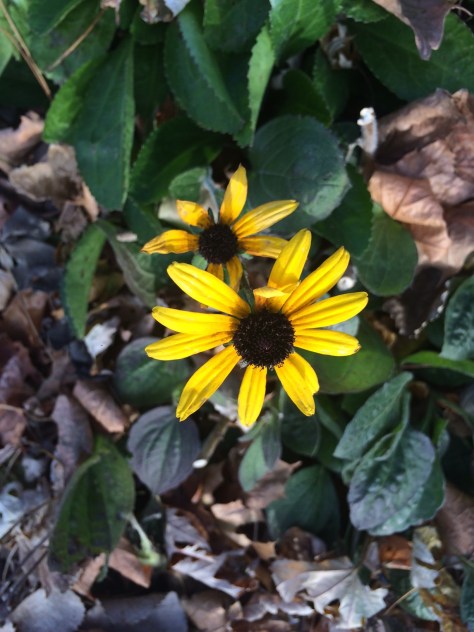
FlowersThis morning during my dog walk it was a bit surprising to find two yellow flowers blooming in the already pruned bed of a Master Gardener that lives nearby. She’s not one to pluck much of anything during the summer months. She prefers to leave her flowers out where everyone can admire them. But come autumn her garden beds get a full house-cleaning.

Yet up popped these two flowers.

Their species is not so much important as their precociousness. So I will not go on about their life cycles or why they might be giving it a second go this late in the season. All of nature perks and plays with warm fall days. Migrating warblers sing quiet versions of their springtime songs. Sparrows and robins too, and all birds in passage from north to south. It’s not so much about singing for territory as it is about communication of existence these days.

I’ve even heard chorus frogs singing from inside the prairie in mid-November. The temperature and humidity of a 55 degree fall day clearly resembles those dank March or April days when breeding begins for frogs. So the frogs sing.

Occasionally I will find the stiff remains of a snapping turtle that died during a frosty night while making its way from the uplands to the lake below. Mother turtles lay their eggs in holes dug into the dirt. Many of of these holes and eggs are proceedingly raided and eaten by marauding raccoons. The next morning all the leathery eggs lay strewn about the hole. If lucky, just one or two holes with their clutch of turtle eggs may survive. That’s how life’s competition works.

Nature depends on this precociousness to advance its cause. It is a long and random process in which we are all engaged. As human beings, call survival a “battle” when in fact it is often something far more subtle that takes us down. A set of mutant cells. A virus. Old age.

Having been through many such human “battles” in recent years with family and friends that have now gone before me, I am absolutely sensitive to the precociousness of life. When my father recently passed away, it was only after thirteen full years of existence following his massive stroke in 2002. At the time, no one really thought he’d live a year past that event. Yet he survived the death of my mother ten years ago, grieved and kept on going. A precocious man.

My father-in-law survived an apparent heart attack and lived another uneasy year in its wake. His persistence was evidence of his character, for the damage to his heart and body were profound. We all credited his hardscrabble Nebraska upbringing for his perseverance.

When my late wife passed away in 2013 after eight years of cancer treatment, it was not because she had given up hope. Quite the contrary. The woman put up with more pain and discomfort than anyone could bear during those years of treatment. Yet she precociously wanted to live. So she did, and saw her children through graduation from high school and attending college. I know they miss her deeply. But I also know we all admire her strength, humor and appreciation for all of life.

I know those flowers down the block will not last forever into the winter But their presence is a reminder that all of us are precocious beings. We all feel the warmth of the sun even when it deceives us a bit, bringing us out to turn our faces toward the sky and breathe in. We precociously feel alive in the face of all that might defeat us otherwise.

Let’s face it. The news is almost never good out there in the world. Even our religions reek with the stink of death, and always have. Only faith survives precociously like two small flowers in the November dirt.

In politics, our hopes of peace lie like road kill along the information superhighway. Twitter throws 140 characters of crap in our faces and Facebook ridicules sincere and liberal concerns for humankind while videos of cats startled by cucumbers at least make us laugh.

Yet is it is the face of two small flowers in November that remind us the precociousness of life is worth appreciating. And protecting.

Go naturally

photo (33)A few weeks ago I attended a live music show led by my sister-in-law’s boyfriend Tom, a professional guitarist with a really good voice who performs with a crackshot bunch of horn players. Midway through the show the band played a couple numbers by the 60s group Blood, Sweat and Tears. One of the guest singers absolutely nailed the BSWT song, “God Bless the Child,” but there was another song running through my head the rest of the night. It’s a tune called And When I Die that was a part of the amazing lexicon of music produced in the late 1960s. The lyrics start like this:

I’m not scared of dying
And I, don’t really care
If it’s peace you find in dying
Well then, let the time be near

If it’s peace you find in dying
Well then dying time is near
Just bundle up my coffin
‘Cause it’s cold way down there
I hear that it’s
Cold way down there, yeah
Crazy cold, way down there

As a kid of 12 or 13 at the time, those were odd words to read. At that point in the life, the idea of dying was so mysterious, and most of the deaths of grandparents had happened before I even arrived on earth. My mother’s parents were both gone years before, and my father’s mother too. They were ghosts, essentially, about which people did not even talk all that much. It spooked me to think about anyone dying, for these reasons. But there was some strange hope in the song with the lyrics Go Naturally as well..

And when I die, and when I’m gone
There’ll be, one child born
In this world
To carry on, to carry on

Many years passed before anyone close to me died. I lost a classmate from college track who became too dehydrated from having a cold while competing in track. His fever shot through 107-degree mark and he passed away in his room.

During that time of life (and like so many young people) I was grappling with the meaning of my faith, and whether it existed at all….

Now troubles are many
They’re as
Deep as a well
I can swear there ain’t no Heaven
But I pray there ain’t no hell
Swear there ain’t no Heaven
And I’ll pray there ain’t no hell
But I’ll never know by livin’
Only my dyin’ will tell, yes only my
Dyin’ will tell, oh yeah
Only my dyin’ will tell

I had my own brush with possible death as early as my freshman year in college. Someone made a punch for the cross country team party and it nearly cancelled my liver that night. I could easily have died of alcohol poisoning. And what a waste that might have been. So much life left to live…

Give me my freedom
For as long as I be
All I ask of livin’
Is to have no chains on me
All I ask of livin’
Is to have no chains on me
And all I ask of dyin’ is to
Go natrually, only wanna
Go naturally

Through the mists of the years I learned that sadness and anxiety and depression could be scary things, but not as scary as giving up. On the few occasions when I felt like life was too much to bear, my mind considered what it would be like to end it all. But there was no motivation to do so. Perhaps my personal faith really did have a purpose.
Here I go!
Hey hey
Here come the devil
Right behind
Look out children, here he come
Here he come, heyyy

Don’t wanna go by the devil
Don’t wanna go by the demon
Don’t wanna go by satan
Don’t wann die uneasy
Just let me go
Naturally

Then came middle age, and the challenge of managing a parent through the final year of her life. My mother died at age 80 in 2005. I was there when she passed away. Sitting inches from her bed, I could see that the week she spent in hospice was the right thing to do. She had experienced a stroke after a try at chemotherapy and her body was done with this world. That was so clear that my mourning was rich with that knowledge. It strengthened me to know that dying is in many ways not the end we all dread. It is a part of life.

And when I die, and when I’m dead
Dead and gone
There’ll be
One child born, in our world
To carry on, to carry on

That same year my wife was diagnosed with cancer, and I can tell you that scared the ever living daylights out of me. More than dying, cancer was a ghost of dastardly proportion. And yet we helped her survive through bout after bout of chemo, and our personal faith delivered small miracles that added up to one big miracle. She was still here. She had not yet died.

But after eight years her body was also through dealing with the rolling effects of chemo and surgeries and stress. I was sitting with my two children in our living room when she passed away. And days later, an astronomy student friend of my daughter staying over at our house to keep us company awoke in the middle of the living room in the middle to the sight of three floating orbs of light right at the spot where my wife had lay when she died.

There was nothing frightening about this to us. This was no hooky spooky ghost or something imagined by my daughter’s friend out of fear of death. This was a person with the mind of a scientist witnessing something beautiful and wondrous being the sphere of human imagination.

You can doubt us if you like. Or you can wonder aloud to yourself if what we see day by day is everything we can possibly know. There’s more than one way to go naturally, you see.

A few months before my wife died her own father died in a hospital bed. My wife raised herself from a cancer surgery two days after recovery and we made the trek to visit her father. The look they exchanged upon greeting each other was beyond the realm of language to describe. It was an eternal connection, something made from the fabric of time itself. A few days later, having seen that his own daughter had survived her surgery, her father passed into eternity itself.

And this past week my father died of ultimately natural causes. He was a stroke survivor for thirteen years. His four sons all visited him the last week of his life, and when his youngest had made a visit to the hospital one more time, my father passed quietly into death that afternoon.

The hospital called to tell me the news and I made the trip up to sit with my father in his room. I had a good, long cry at his bedside before kneeling down to say the Lord’s Prayer. He was no longer a praying man himself, I think he would have told you. But he said many prayers in other ways over the years.

Which leaves more than one more child to carry on. To go naturally is the greatest gift of all. Even if there are bumps and sways and difficult operations along the way, in the end we all go naturally. Death is part of life. It teaches and it cajoles. It offers us an ending to consider, one that we may try to write a little differently, and delay indefinitely, but it will come eventually.

Let’s admit this is not a bad thing. The enigmatic lead character in the movie the Green Mile is both blessed and cursed to live on, perhaps into eternity, watching his loved ones and found ones all pass away before him. He cannot go naturally into the night. He is given a glimpse of the burden of God and Christ himself. There is great love in that, but also a burden to care.

Which is why people speak of going to their final resting place. A good rest will often do you good. We may not know what comes in the great beyond, but what we know of getting there is enhanced by the fact of our very ephemeral being. It is ours to go naturally through our days, and love life in every way we can along the way.

Lost and found on the day after my father died

Stewart Cudworth, born January 26, 1926. Died, October 17, 2015.
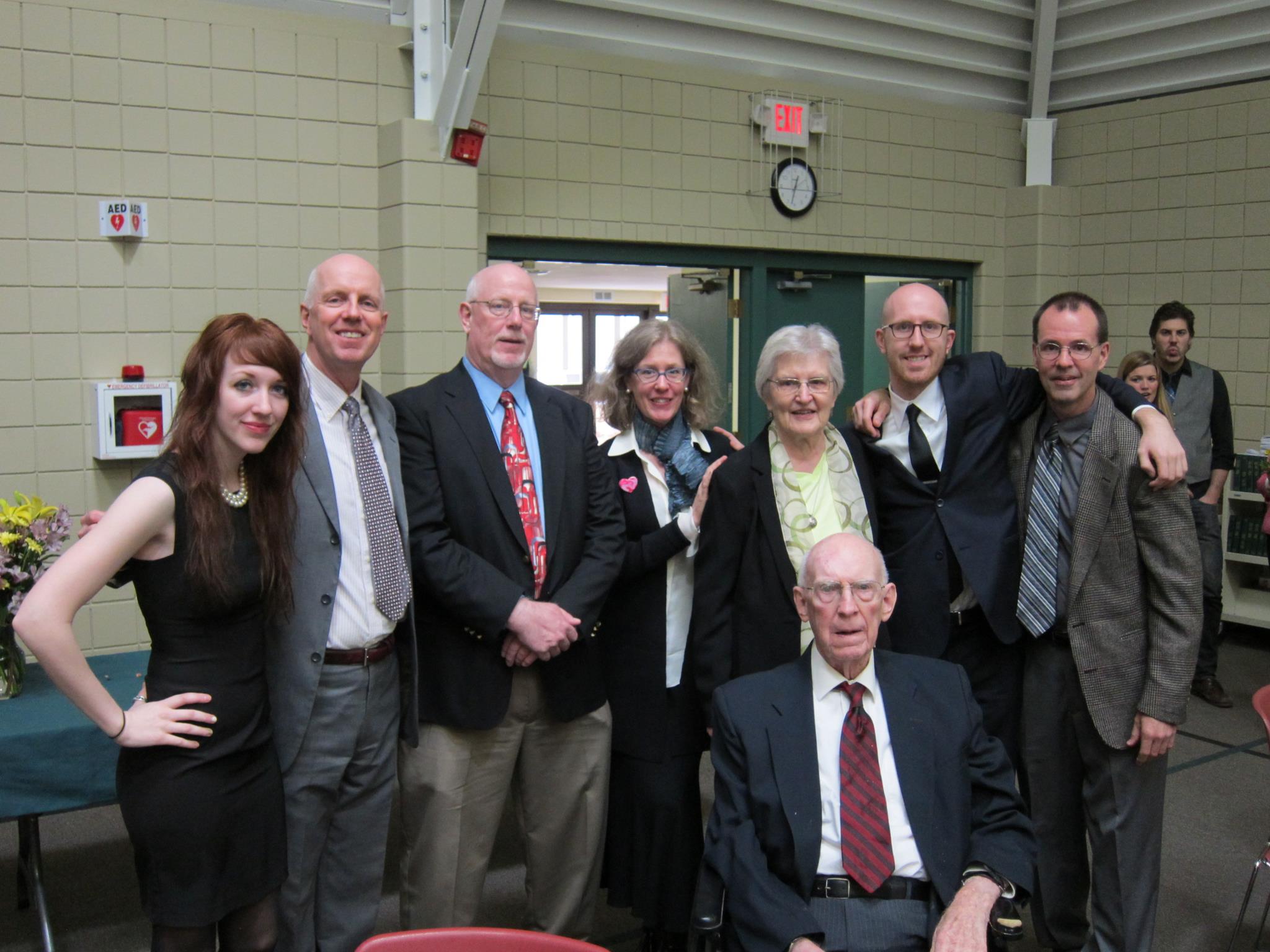
Stewart Cudworth, foreground. Born January 26, 1926. Died, October 17, 2015.

As I climbed in the car this morning the song In My Life sung by John Lennon of the Beatles was playing on the radio. I’ve sung and played that song many times on guitar, and know the lyrics well. But never have they sounded so prescient as today.

There are places I’ll remember
All my life though some have changed
Some forever not for better
Some have gone and some remain
All these places have their moments
With lovers and friends I still can recall
Some are dead and some are living
In my life I’ve loved them all

Yesterday my father died at 3:00 in the afternoon. The call came from the hospital, a kindly doctor trying to ease me into the knowledge that my father had passed away. He was beginning to go through the medical aspects of how my father had been cared for during the week, but I already knew the details. So I stopped the doctor and told him, “Your entire staff was wonderful. You gave my father an extra week or so to live, and all his sons got to come and be with him.”

In fact, my youngest brother had just visited that morning. He was in town by chance for a collegiate volleyball tournament with his daughter. He was quite close with my dad in many ways, perhaps the main son in the family that has dispensed wth any felt difficulties over time, and it was appropriate that he was the last son to visit.

But of all these friends and lovers
There is no one compares with you
And these memories lose their meaning
When I think of love as something new
Though I know I’ll never lose affection
For people and things that went before
I know I’ll often stop and think about them
In my life I love you more

My father was a passionately curious and often insistent man, willing to challenge our perceptions on any front. I recall the evening I stated that I’d seen some ducks on the river ice that day. “They were huddled together for warmth,” I said casually.

“How do you know they’re huddled for warmth?” my father asked.

To which I responded with some sort of angry retort. But that was my father. He wanted us to know the world did not accept everything we assumed we knew.

That was a lesson to be learned over and again. But the need to understand his thinking became a quality fo life issue when he had a stroke in 2002. That was when I first began assuming responsibility for his care. At first, it was my job to support my mother in her decisions about how dad should live. He moved through several care facilities with good and bad experiences before finally returning home with a live-in caregiver in 2004.

Then my mother passed away in 2005, and the direct opportunity to care for my dad presented itself. At first it was enormously difficult, because my father lost his ability to speak with his stroke. There were still seizures, and his body was compromised with loss of function on the right side. He could grow angry and frustrated at times, and my caregiving skills were put to the test in those circumstances.

All those changes and challenges are compounded when there are emotional patterns at work. The father-son relationship we had was transformed over the years as a result of the need to work together. I became adept at asking questions in sequential fashion to ascertain what he was thinking. This was an ironic rehearsal and reversal of the challenges he had long put to us growing up. All those probing questions were his teaching style, but too often we took that as an exasperation

But as we worked together our relationship softened somewhat. The same thing ultimately happened for my brothers as well. So while we’ve ostensibly lost our father to this life, in many respects we also found him again.

Though I know I’ll never lose affection
For people and things that went before
I know I’ll often stop and think about them
In my life I love you more

Christopher Cudworth is author of the book The Right Kind of Pride; Character, Caregiving and Community. It is a chronicle of cancer survivorship, and available on Amazon.com. 

The 10 ways I’ve most changed since I was a kid

This morning while pouring cereal into the bowl, the box of Maple Pecan flakes ran out. Seeking to fill the dish, I picked out the Ginger Granola and poured it into the bowl to create the right portion. Then I thought, “I’d never have done that as a kid.”

Growing up I liked my cereal pretty much homogenous. If it was Cheerios or Rice Krispies, that’s what went in the bowl. Never would I think of mixing the two.

I also had a favorite spoon with which to eat my cereal. It had a raised image of the United States Capitol building on it. I loved that spoon, and ate my cereal with it every day.

These little moments of recollection set me thinking about how many other ways a person changes from a child to a grown up. At one point my own son at eight years old confessed that he would rather not grow up. He could see that being a grownup came with all sorts of challenges that did not seem to be that much fun.

And yet, there are some things that you do and feel as a kid that are not that great either. Here is a list of my Top 10 ways I’ve most changed since I was a kid. Perhaps you can share a few of your own in the comments below.

  1. No longer afraid of the dark. At some point in my late 30s I was running down the dark stairs to our basement and realized that the haunting feeling of fear at entering a dark space was no longer there. No boogeyman. No devil. No ghosts or other imagined dangers in the dark. It was a liberating feeling.
  2. Sex is no longer such a mystery. I can remember having sexual feelings very early in life. Children do, but they often don’t know what to do with them. Most masturbate their way through puberty and early teens, then experiment their way with sexual partners into some form of knowledge. It took me a long time to understand anything about sex, and that is not to say I know all about it now, either. But the giant wall that was “sex” looming ahead in life from the perspective of childhood was quite difficult to figure out. I was always jealous of kids who seemed to know so much about sex. And some just did. It’s a gift, I guess.
  3. My sense of wonder is not the same. This is both a relief as a person, and a shame as well. As a very sensitive child there were many moments of experience so deep and heartfelt it was difficult to function at times. I recognize now that some of this was tied to an anxious mind. Gaining control of my ruminative nature has been necessary to function in this world. And yet, I sometimes miss the intensity with which I felt a keen sense of wonder at nature, or in a moment.
  4. My trusting nature has evolved. I still trust people, especially those I love. But through many experiences in life, one learns that some people simply cannot be trusted. That was not me as a child. I trusted everyone. I often got teased or tricked as a result. The long journey to loss of naivete is the hardest road many of us travel in life.
  5. Money is just something, where it was once everything. As a kid you’re happy as heck to have money to buy candy or cheap stuff to entertain yourself. Our acquisitive nature drives us to want way more than we need. We obviously need money to survive in this world, and one learns through odd jobs and real jobs that you have to work hard to earn it. Some people judge themselves (and others) by what they earn. They see it as a mark of adulthood. And that is to some degree true. But there’s also an immature or childish nature to liking money too much. The Bible warns us that the love of money is the root of all evil. It is also the mark of adulthood to balance your love of money with gratitude in life.
  6. I put competition in perspective. For some crazed reason I could not stand to lose as a kid. Hated it. As an athlete I became one of the most competitive people you could meet. My brothers called me The Mink because I’d get spitting mad in the heat of competition. That fire to win served me well for the most part, winning races as a runner and leading the teams on which I competed or coached to victories. But at some point I recognized that the desire to win must be tempered with the understanding of what it really means to win, and when winning actually represents some sort of loss. Because that can happen in relationships, for example. But I have always, always fought for the underdog and for fairness to the best of my ability. I’m proud that I have not changed or lost that childhood sense of fair play to this day.
  7. I’ve learned to forgive myself. In my case childhood essentially lasted through the age of 29 years old. That’s when I woke up pounding the pillows in anger over some of the things that happened in my upbringing. I was confused by these angry feelings all through my teens and 20s. As I began to understand their source and grow out of the vexing events so many of us experience in childhood, it became evident that I was beating myself up all the time by not being willing to forgive those who might have wronged me. But it was a wise counselor that finally asked me this question: “You seem to be good at forgiving others…how are you at forgiving yourself?”
  8. My sweet tooth really is my enemy. We all want candy without the consequences. Back home in Lancaster, Pennsylvania there was a candy store a quarter mile from our home. A dollar would buy you tons of sweets, and that foundation of candy-loving carried through my college years and well into adulthood. But the harsh truth is that sweets are bad for your body in a lot of ways. Between sugar and carbohydrates, the supposed fuel of athletes, there lies deep danger to your heart, stomach, liver, kidneys and other organs. Reigning in my sweet tooth is hard, but it truly is the sign of a wise adult.
  9. Love has changed me. For all the flaws we see in our parents as we grow up, it often takes a lifetime to appreciate how they loved you. I no longer have any doubts about that, even with my father, who at times was a hard and exasperating man to abide. Time has given me insight into how many ways he did nurture me, and my mother too. As a result, love has changed me from a child who felt hurt due to a sensitive nature into a man who is sensitive to the power of love to heal those emotional pains. I’ve also grown in my understanding of faith from a child taught through bible stories to think of heroes as outsized personalities to a person who sees heroics in the small and wonderful things people do for each other. That is true love.
  10. Death is no longer so scary. Dead things were always both interesting and scary as a kid. The only funeral I attended as a child was for some relative I knew little about. It reduced me to tears seeing my aunt and uncle cry at the loss of their loved one. Yet when I lost a treasured former teacher to a heart attack in 1993, the funeral turned out to be a celebration of his life. I learned from that. Then my mother passed away in November 2005, and I was there when she ceased breathing and I saw that her body was through with life. Of course, during the eight years in which my wife struggled through cancer treatment, death was the frightful thing that always lurked ahead. When it came to us n March, 2013, my next worries were how to help my children deal with the loss of their mother. That is a challenge that will never abate. I think about my own mortality as well, and if you do the math and add up the years you have remaining on this earth, life itself can seem pretty scary.

So how delightfully ironic it is, that one of the best ways we can learn to enjoy life is to bring back our inner child. That’s when we begin to experience life in new and meaningful ways. It doesn’t mean you need to relinquish all the things that you’ve earned for yourself as a healthy adult. It may mean setting aside some of your more restrained behavior so that you can try new things, take chances and live a little. Or a lot.

The garden zen and now

While walking the dog this morning a neighbor on the block who is a Master Gardener and works in the trade for a living was out trimming dead daisy heads off the profusion of plants in her front plot. “Did you have many visitors during the Garden Walk?” I asked. Her home was featured in a July tour of local gardens.

“Yes, but now the weeds are back. And I don’t really care. Summer’s over, as far as I’m concerned.”

She means the real growing season. For August marks the beginning of the dying season, as gardens go.

Not true out on the local restored prairies, but home in the land of prized perennials and annuals, it is indeed a period of mourning and acceptance among those who tend gardens. The lilies? All bloomed and leaning low. The spiderwort? It was a banner year for them, but their seeds have all shed except for the lone strange plant that cropped up in the front garden. I harvested those and will save them for a new spot come spring.

Zen growth

My garden is not the most carefully tended thing in the world. Keeping ahead of the weeds proved impossible at many points. I only won out late in July when a window of time allowed me to hack and yank enough to create some shape and beauty.

This latent response was insufficient for those who visit the home and care about such things. My daughter lectured on the bumper crop of maple trees. My companion lamented that gardens need more regular tending.

I am intensely aware of all that. But in defense of my approach this first three years of tending the garden myself, this is still a learning period. The first year was like the luxuriousness of an inheritance. The work of my late wife was everywhere. That was bittersweet. Then came the second year and my installation of another water feature along with a large expanse of additional woodland garden. I mulched deep piles of leaves and buried them under soil. This combination has produced good fodder for growth and recycled much of what otherwise would have gone into paper garbage bags to wind up who knows where.

This year I dug a sweeping curve of soil and made a ridge in which to transplant a fine line of nodding choral bells. At least that’s what I call them.

So my progress as a gardener has been measured in experimentation. Refinement, as a result, has had to wait.

It has also taken time to learn to identify the desirable plants in their early stages of growth. I moved some phlox around early in the season on a hunch and the results have been spectacular. Same with some coneflowers and other plants that I now know by heart. Many of the plants I now recognize. The lilies and the iris. The bergamot and sunflowers. Joe pye “weed” and many others.

Back of the mind

But I must not claim to have a zen relationship as yet with my gardens. The south section took off with weeds and creeping charlie and lurks like a bad thought in the back of my mind. I got out to lay garden cloth one morning and it rained on me during the process. Then obligations took over and the job never got finished.

Such is the life of a gardener in the learning phase. Many projects have gotten done. A nice new brick layout borders my fountain water feature.

There is still a party to be held in August. There will be new mums sprouting in my garden before then. August may be the end of gardening season, but it does not need to be the end of gardening. There is a zen component to keeping on with what you have. The official end of summer does not come until September 20 or so. That’s still seven weeks away.

There are still questions to be answered for the garden zen and now. I have yet to achieve that desired peace of a gardener in full flow. But it’s coming. Maybe next year. Or the next. It is a relationship that is both sustaining and challenging at once. It is the act of caregiving that gives back to the caregiver. The feeling may be fleeting and ephemeral when it comes. But the notion that all is right is worth pursuing for a lifetime.