Tag Archives: pride

Humility and honesty in the face of hubris

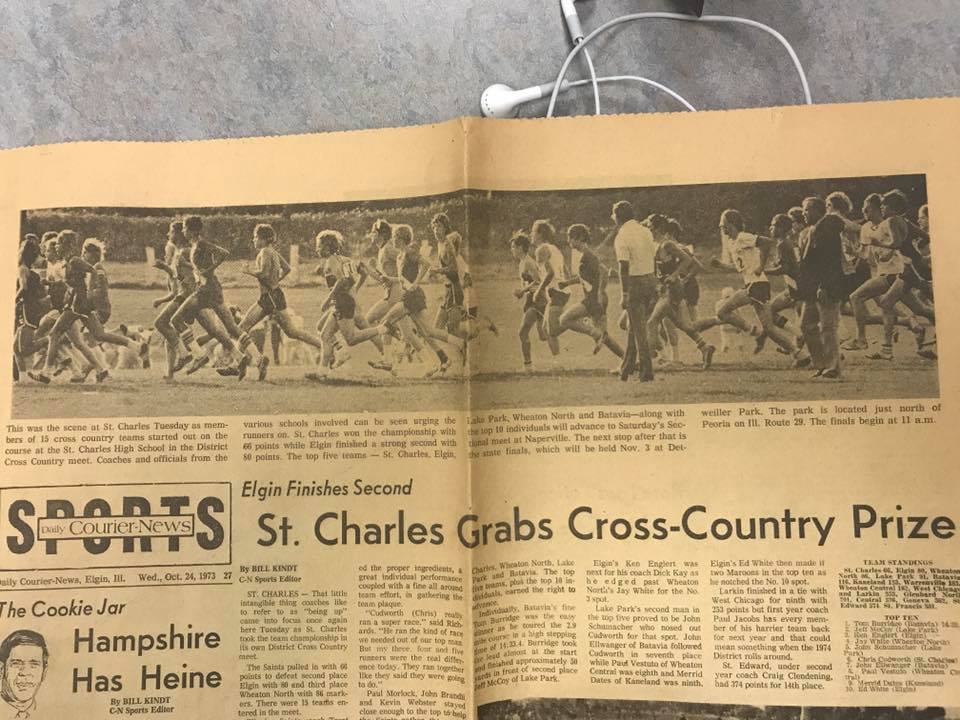
I’ve learned the value of humility the hard way, just like everyone else. As a proud young athlete growing up, my main concern was winning every contest I could find. My older brothers challenged me daily in sports ranging from table tennis to basketball and all points between.

Having older brothers toughens you up. I transferred that sibling rivalry to competing with friends and then participating in competitive sports. At the age of ten, I pitched our Local 285 baseball team to victory in the second game of the Lancaster, Pennsylvania city championship.

Throughout high school and college, I led the teams I played on, eventually turning to running full-time, where I ran as the first man on teams that won conference and district championships. In college, that success continued as I competed as a Varsity runner in a cross country program that won our conference all four years and as a senior captain ran in the Top Five all season, leading our team to 2nd in the NCAA Division III championship. In track I won conference three years and made Nationals three years in the steeplechase.

Even after college, I kept competing and set all-new personal records at distances from the mile (sub-4:20) 5K (14:45) 10K (31:10) 10-mile (53:30) and 25K (1:24:25). In my best year I raced 24 times and won 12 of those road and track races.

The reason I share this journey is to explain that all this training and perseverance was cited by my coach as having extreme value when my late wife was diagnosed with ovarian cancer in 2005. “Your whole life has been a preparation for this,” he told me.

But what I wasn’t prepared for was the degree of patience required to be a good caregiver. As a person with ADHD, I always struggled sitting still, waiting for things to happen, and not being able to “do anything” in the moment. Learning patience when you have to wait for hours to get results, sit in quiet (or noisy) hospital rooms at a bedside with your partner, and keeping track of important details day-to-day, these are all key requirements in a caregiver. I had to learn them. The hard way.

On top of my wife’s care I was caregiver to my father who suffered a stroke back in 2003. Through eight years of my late wife’s survivorship I tended to my father too. She lived through 2013. He lived through 2015.

I learned humility from all that caregiving. Never did I think that I was doing things perfectly. Mistakes are made no matter how hard you try. Sometimes, it’s emotional mistakes. Becoming impatient. Letting anger take over. Getting frustrated when the patient doesn’t seem to appreciate you. Feeling ‘put upon’ when relatives won’t or can’t step up to help.

And there’s money mistakes. Medical too. But you muddle through. But one thing that you learn from all that is practical humility. You don’t think of yourself as better than others. In fact, its possible to be too hard on yourself. One therapist called me on that one. “You seem to be good at forgiving others,” she reminded me. “How are you at forgiving yourself?”

Both of those traits require honesty. You have to “get real” in order to “truly feel” your purpose in the moment. Get to know where your weak points are, and understanding your strengths. Learning to lean on others when (and if) you can, and embrace vulnerability. It’s a superpower.

That brings us to the trouble with hubris. Once you’ve been a caregiver it’s easy to spot false pride in others. It’s painful sometimes to realize how insensitive and willfully ignorant people can be. In the United States, our healthcare system doesn’t favor the weak. It rewards the rich and employed and too often casually disregards those most in need. I read about how Black women can’t get a fair shake in medical offices because practitioner don’t take their word seriously. I’ve heard about other women than my wife feeling something’s wrong in their body and doctors just write off the bloating to water weight when in reality it’s tumors growing on their ovaries and spitting out fluids. By the time they’re discovered, cancer has advanced.

And when I see the callous way that certain political parties treat the healthcare system in America, it makes me angry. Now, I’ve been the beneficiary of non-profit forgiveness of medical debt, so I’m not personally complaining. One time AT&T even wrote off a $500 cellphone bill during one of my wife’s most tenuous cancer recurrences.
But the idea that rich people are now running around passing judgment on programs like Medicare without considering the life stories of those insured through it, or maligning folks counting on Social Security they’ve saved for decades to support them in elder years, it makes no sense why people vote for the hubris of these greedy freaks whose money obsession says more about their own fears in life than it does about their supposed success

Hubris is the opposite of humility, the quality that makes us all better people whether we’re caregivers or not. When you look to leaders, take stock of where their humility meter reads. If they’re arrogant and dishonest, don’t throw your trust their way. They’ll only use you and discard you as fodder for their selfish ways.

Take pride in that aging face

Originally published on my blog WeRunandRide.com

Posted on November 18, 2020 by Christopher Cudworth

Let’s talk about aging faces. I have no real way of knowing the age of the people who read this blog. There are about 1500 subscribers, and there are some who don’t subscribe but read these words through social media and other portals. But no matter what age you are, we all deal with the aging on our faces.

When you’re in your tweens and teens, those facial changes have profound impact on your self image. Getting zits and growing facial hair is a part of growing up. Dealing with tweezed eyebrows and the right makeup mix, or watching a callow jaw shift to manhood are all part of the process. Hair length also affects how facial changes are seen.

So the process of dealing with our aging faces starts early in life. Add in the impact of getting braces on your teeth, or in my case having a baseball accident smash a front tooth, and the changes never cease.

Those of us that compete in athletics put our faces through an entirely different kind of strain. The grimace lines wrought by the pain of endurance sports begins the process of forced aging that continues throughout our lives.

The effort shows in our faces.

So perhaps it’s time for all of us to take a healthier form of pride in that aging face we see in the mirror each day. That face of yours has so much to tell about all what you’ve gone through. There is laughter, joy and excitement. There is sorrow, fear and depression. All in the same face. It’s a wonder we don’t wear them out with all these emotions.

In recent years, I’ve worried that the look of my face has begun to limit opportunities in life. The ugly specter or ageism creeps up on you secretly. People aren’t going to tell you to your face that they consider you “too old” to do a job or fit into a workplace culture, but it happens. By law, age discriminate is illegal. Yet we all know that it still happens.

Wattled and tired

I was sickened one day while reading an article that popped up in my social media feed. A younger writer crowed that he wants nothing to do with people whose faces are “wattled.” That’s a disqualifying factor in his mind. His thinking seemed to be centered around the idea that if someone looks old, they must be unable to think clearly or creatively.

That would be news to millions of people throughout history whose contributions to this world continued or even began in their later years. I think in particular about the life of R. Buckminster Fuller, one of the most creative yet practical individuals to ever live. One of my favorite quotes by Mr. Fuller evolved from an experience of great sorrow and near defeat in his life. He’d experienced a great personal tragedy and was depressed beyond imagination. He indulged in a period of intensive personal isolation to figure out what to do next and emerged with a vision of new purpose, “You do not belong to you. You belong to the universe.

He used that perspective to face the world in a new way. Among his many inventions were the geodesic dome, a mathematical breakthrough in architecture. His influence and thinking continue to expand to this day. No one cared that he looked young or old. What matters is how he thought. We all need to grab that truth and never let it go.

We should also never forget that our faces are attached to our bodies. Today I read an interesting article in the Chicago Tribune about the fact that people who do something more than walking in their exercise routines wind up having better efficiency and posture as they age. While walking is beneficial, it doesn’t stress the body in the same way that cycling, running or swimming do. It’s the classic training principle that applies to life itself: you have to push past your boundaries to gain the most benefit.

That seems to be the principle at work when we consider the condition of our faces as we age. If you’re engaged and passionate and pushing yourself to continue learning and trying new things, it shows in your expression and even the condition of your face.

Facing life

Until a few years ago, I’d never heard the term ‘resting bitch face’ applied to the baseline expression of someone who looks dour or unhappy all the time. Is that term as bad as dissing someone through ageism? It certainly seems cruel. Yet there is a reality at work in how we project our emotions through our visage. I’m perpetually aware of the value of smiling during conversations with people.

That’s especially true in business situations. I once had a boss tell me, “I like you a lot more when you’re smiling.” He was right. I wasn’t a happy person during that period. My late wife had just experienced a recurrence of cancer and had a nervous breakdown as a result. I was scared, felt alone, and had little tolerance for the daily vicissitudes of business, which seemed so insignificant compared to what was going on at home.

Those internal conflicts showed in my face. There was little I could do about it at the time. Just put on the best face I could, and get through it.

Facial control

So we perhaps don’t always have control of what our faces say about us. There’s always the possibility that a person with a ‘resting bitch face’ has gone through so much in life their face reflects that path. But then again, some people develop attitudes of victimhood and duress that dominate their existence. There is such a thing as becoming so bitter about life that it shows in everything you do.

I’ve got enough life experience now to look back and understand the causes of the challenges I’ve faced in life, and the reasons for the mistakes I’ve made. I’ve come to realize that a native anxiety affected many of my decisions. So did a likely associative form of ADD, a lifelong challenge that often determined the manner in which I processed information, or did not. In summary, I’m proud of having dealt with these challenges and adapted to succeed in some ways along the way. It all comes with knowing yourself well enough to accept past mistakes and not let them rule the present.

I can look at my face in the mirror now and see all sorts of experiences etched there. I see miles of training and racing, and the self-belief emerges from all those tests. But they keep coming. A former coach once told me, upon hearing that my late wife was diagnosed with cancer back in 2005, “Your whole life has been a preparation for this.”

He was quite right. That coach later faced cancer himself. He passed away a few years ago. The thing I remember most of all about him is still his face. I don’t see him as young or old. There’s a spiritual aspect to that, I believe. Take pride in that aging face, no matter what age you are.