Category Archives: God is love

Strong bond in the recent and distant past

Mark Strong and Christopher Cudworth 2024

In the late spring of 1970, the Cudworth family unrooted itself after seven years in Lancaster, Pennsylvania and moved 750 miles west to the small town of Elburn, Illinois. My father was laid off from work at RCA back east and landed a job with a company called National Electronics (now Richardson Electronics between Elburn and Geneva) as a sales engineer.

For me, moving that far west meant leaving close friends behind back in Pennsylvania. The only thing that made the move enticing for me at the age of twelve was a Polaroid photo of a basketball backboard with a square behind the rim that my father sent back to show us what our new home would look like. As a kid deeply into basketball at the time, and caught up in the “new look” of the game with squares at which to aim a bank shot, that single photo made it seem partially worthwhile to deal with such a big change in life.

New friends

That still left it for me to make new friends in a small town situated on the railroad tracks forty miles west of Chicago. Fortunately, news got around town that I could dribble and shoot a basketball like it was magic, and I met a couple of guys named Mark Strong and Eric Berry.

Within weeks we began hanging out and doing what twelve-year-olds going on thirteen typically do. We played sports and tried to get the attention of girls that lived in town. There were always older guys around with their cars and muscles and cool haircuts, especially in the summertime. The girls were most interested in them, but we still got to hang around with a couple of girls named Allison and Twyla. Both had the last name Anderson.

These were my “new friends” in Illinois.

Nicknames and other games

That summer I went out for baseball as I’d done back east where the team I’d joined won the prestigious Lancaster New Era Championship. We were schooled in fundamentals and played at the highest level for our age. But the first team they put me on in Elburn at 12 years old was a town team for 8-12 year olds. I threw a perfect game and the coaches all gathered ’round and told me that I’d have to move up to the American Legion team for sixteen-year-olds and above.

That set the stage for playing Elburn baseball the next few summers, and my new friend Mark Strong played on that team along with some guys I’d met through school. Our friend Eric Berry wasn’t that interested in baseball, so our friendship ebbed and flowed with the seasons. Yet we still got together to ride bikes around the small streets until well after dark. We’d get bored now and then and with my baseball pitching skills I grew adept at breaking streetlights with roadside rocks. It was small-town entertainment at its “best.” Not.

During the summer months, Mark and I often headed out to the fields beyond the east edge of Elburn where giant ponds filled the clay holes where topsoil had been graded off to prepare for new homes. We’d play army in the dirt or blow up frogs with firecrackers. In winter, Mark and I took his shotgun out for sport. Even though I’d become a birdwatcher by the age of thirteen, I’ll confess to shooting a few sparrows with his 12-gauge. They mostly disappeared.

One early winter day we used our BB guns to peg house sparrows off a large bird house behind his home. What we thought were echoes from our BBs striking the bird house turned out to be a ton of holes in the neighbor’s large glass window. Yes, we had to pay for the damages.

For all our juvenile delinquent instincts, we also served as the town’s paperboy service for several years. Mark and Eric (better known as Eeker, his nickname) owned the route first. They handed the route off to me when I was a freshman in high school. The route paid about $8.50 per week, enough to keep me in candy bars and cinnamon rolls at Kaneland High School. I’d collect the papers at Smith’s Bar-B-Cue in downtown Elburn and deliver them inside the doors of the thirty or so homes on the route.

Competitive natures

For all our friendship endeavors, Mark and I were immensely competitive with each other. We played sports all the time. As luck had it, Mark’s father was the elementary school principal in town. That gave us access to the school gym. On cold winter days we’d head to the school to play basketball or try to beat each other in a game we invented, call it Wall Ball. We used one or two of those ugly red recess balls with the seashell patterns on them. The game had simple rules. You could throw the ball from up to half court and the object was to hit the far wall below a tile line without letting the other guy block it. That was worth one point. Hitting the basketball backboard was two points and actually shooting a basket was worth a whole five points. In the heat of that game, we sank more shots than you might think. We’d play Wall Ball for an hour or more sometimes.

Once we got into high school, Saturdays were when Mark played football for Kaneland High School and I ran cross country. After that, we’d meet up at his house for even more sports stuff. My legs would be sore and tired from racing three miles, and Mark was bruised from football, but we’d take turns playing receiver while his dad played quarterback. Mark was bigger and stronger than me, but not as adept or quick. All told, our games were typically even. Yet I remember a day when I got the best of him for one reason or another and as I left to go home I could hear his father counseling him on not giving up.

Neither Mark or I were the type to quit anything easily. But life has a way of sorting things out no matter how determined you might be to do something. As an 8th grader, I’d won the town Punt, Pass, and Kick contest, advancing to regionals. Part of me apparently thought that throwing and kicking the ball was what football was all about. My father knew better and never let any of his four boys go out for football. He’d seen what it did to his high school and college friends who came away with busted up knees and shoulders. On the day that I was ready to sign up for football my freshman year, my father grabbed me by the scruff of the neck at the locker room door and said, “You’re going out for cross country, and if you come back out of that locker room, I’ll break your neck.” My dad was right. I made the Varsity as a freshman and would likely have been crushed in football. I weighed 128 lbs.

So it was football for Mark and cross country for me. Our mutual friend Eeker drifted into the arts and theater, interests that matched his musical talent. His brothers all played instruments and they’d rehearse playing CS&N and Beatles tunes in the upstairs of the local Catholic Church. The Berry’s were one of the wealthier families in town. Their dad Ed Berry would eventually become mayor.

Eric and I did cross sporting paths in track, where he excelled in pole vault like his brothers Mark and Chris. The Berry boys all had a wild streak and vaulting paralleled their love of thrills that included downhill skiing in the winter months. I also accompanied the Berry Boys in some late-night thievery as they had set their eyes on some fat tire slicks on a vehicle downtown. I never had any instinct for motor sports and didn’t see the thrill in doing “burnouts” in a car, but I crept around to help them get the prized slicks off the jacked-up car. The closest I ever came to laying rubber was making skid marks with my Huffy three-speed bike.

For all our hijinks, there was a moral side to Mark and I as well. We both joined the confirmation class at the downtown church pastored by Rev. Wilhite, who was also my next-door neighbor. Our confirmation class discussions covered everything from the radical scope of the new musical Jesus Christ Superstar to what it means to believe in God. Reverend Wilhite was an able guide as he spoke to church doctrine while remaining open-minded to the coarse speculations of young minds.

My parents attended a church in Geneva but I had decided on my own to get confirmed at that little church in Elburn. I wasn’t alone in that. Many friends from Elburn and Kaneland Junior High joined us in that naive but earnest effort to commit ourselves to faith in some way.

A social kid

Mark and I remained friends into our high school years but being in different sports did drift us apart a bit. Plus, the social system at Kaneland was often harsh and involved a ton of hard teasing and worse. I remember times when our peers mocked both Mark and I for various reasons. They gave him the nickname Roy, which wasn’t a compliment. My nickname was Woppo based on a mistake I’d made in some half-assed art class where I wrote my name Cudwopth rather than Cudworth. First came Cudwop, then Woppo. Mostly it was a term of endearment, but always with a tone of snark to it. I was a popular kid yet still a dopamine-driven dreamer with a lack of self-esteem. A classmate once walked up to me during a track meet and muttered, “Cudworth, you’re just a hayseed.” Honestly, that was pretty accurate. I was a child of the outdoor margins, happiest when trouncing about in the Elburn Forest Preserve finding new bird species.

But I always came back to the realm of sports, and during the winter months that meant hours playing basketball in one sphere or another. My homework suffered and my Converse shoes wore holes in the bottom. More than one set of glasses met an awful end thanks to the elbows thrown in basketball. That’s me, #10 in the photo below.

I don’t recall if Mark went out for wrestling but that would not have surprised me. He was a tough-minded guy in many respects. In classic guy fashion, had quite a protracted arguments on subjects such as whether basketball or football players were better all-around athletes. Mark said football. I said basketball of course. I was loyal to the game because I was decent at it. It gave me self-esteem as even older kids invited me to play games at Morris’s barn, an actual farm structure with a b-ball court in the upstairs.

By the time I was a sophomore I’d become class president as a somewhat popular kid. I didn’t know a damned thing about what I was supposed to do in that role other than choose the class ring. That was one of many moments in life when I accepted a job without a clue about what it involved.

An ordered mind

Mark was a direct contrast to that approach. I seem to recall him working a summer job inseminating cows at a big facility north of Elburn. He described the work of plugging cows with semen packs and I almost puked thinking about it. The truth is that Mark had a pragmatic streak that bordered on stubborn. He didn’t blanch at hard work or being honest. For that attribute he became the butt of teasing at school as I recall. I may have joined in on some of that too. We all did.

Kaneland (like so many high schools) was at times a cesspool of ridicule. There are always smart people in every social circle who engage in dumb rituals by making fun of others. We’re seeing it in spades in the United States these days. The habit of mocking or ostracizing people to gain social or political advantage is common in American society. Anyone who strays from the “straight and ordinary,” or thinks or acts differently is open season. When those belief systems become institutionalized in any way it can tip whole societies.

My painting of a bird house and wren in my mid-teens

Those of us trying to buck those trends at any scale find it hard to swim upstream. I got mocked for my birdwatching during high school. Even as a successful athlete I got manipulated by guys with less talent to stop believing in myself. People often tried to bring you down a rung or use some social cue to make you feel inferior. I even recall have female friends that I trusted and being told they weren’t worth it if I wasn’t somehow trying to get something from them or “hustling them.”

As a person eager for approval, I might have fallen prey to some of those pressures had our family stayed in Elburn. That wasn’t to be.

Moving on, moving out
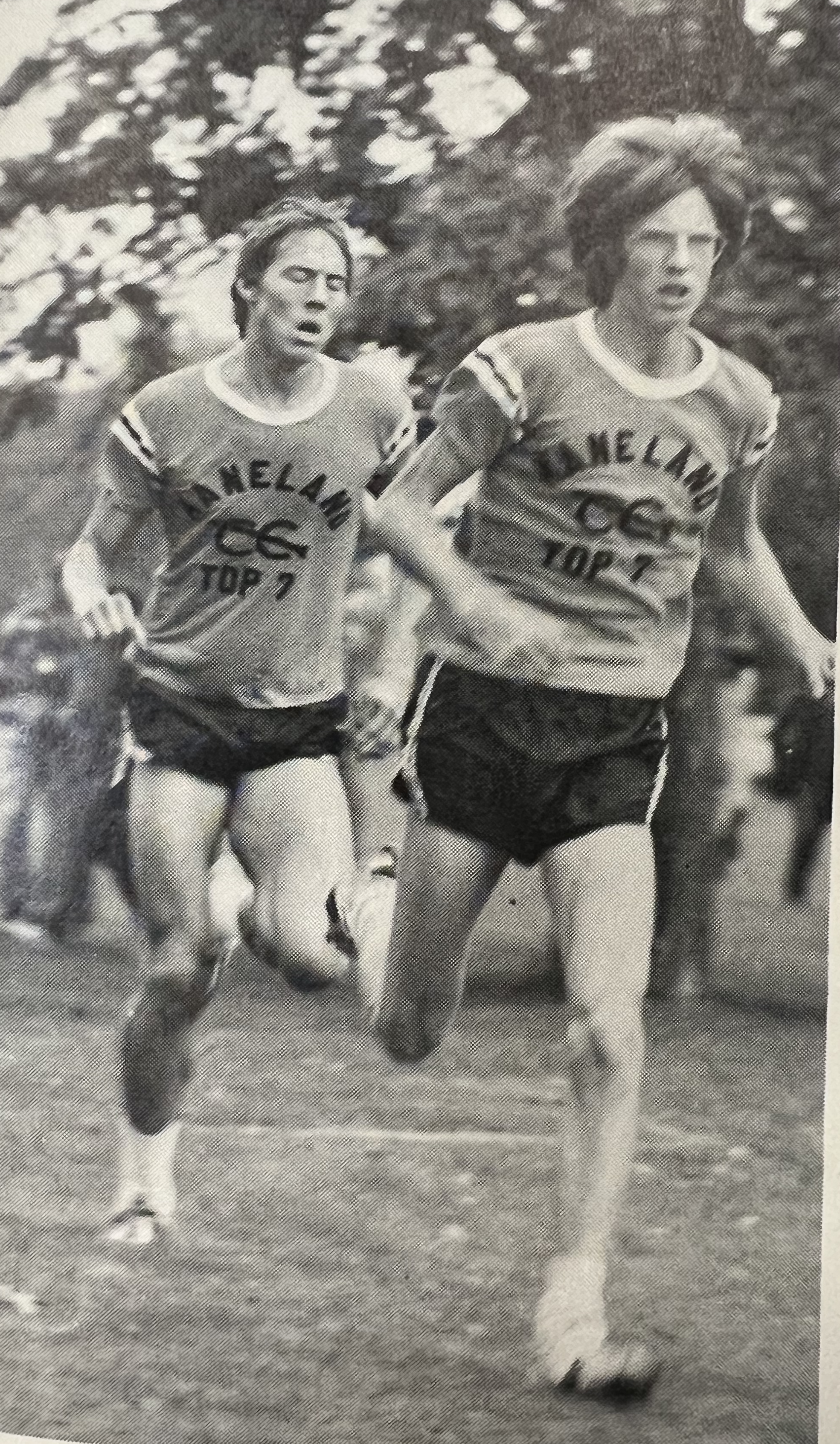
In the middle of my sophomore year my father announced that we were moving from our big home next to the “deaconry” in Elburn to a little house in St. Charles. I was torn in two by the decision because I’d worked hard to make good friends at Kaneland, yet at the same time sensed there was always opportunity for change.

Rumors floated that I was “recruited” to St. Charles by the track and cross country coach Trent Richards, a Kaneland graduate that had coached me in Elburn baseball. Frankly, I wasn’t that great of a runner to be the subject of recruiting or any other tactic. I was just a kid who could run decently trying my best to make a place in the world.

The process of leaving Kaneland for a nearby school was awkward at best. Some of my classmates thought I was doing it on purpose, but the facts were different. I never had any say in the matter. Twenty-five years later, my father told me that we left Kaneland so that my younger brother (6’6″) would not have to play basketball for the slowdown offense at Kaneland. As it turned out, my dad made a good decision. My brother earned All-State Honorable Mention at St. Charles and earned a D1 scholarship.

When my father told me why we moved, I replied, “What about me?”

“I knew you were a social kid,” he responded. “I knew you’d get along.”

No goodbyes
I don’t recall saying goodbye to either Mark Strong or Eric Berry when we moved or as some painful goodbye after the last day of school at Kaneland. That day was anticlimactic, as I recall. My dad picked me up after the last day of classes and we drove away on a warm spring day.

After that I lost touch with most folks at Kaneland except when my buddies at St. Charles wanted to meet the pretty Kaneland girls. I told them, “Look, I didn’t have an inside track when I went there. What makes you think I could do any better now?”
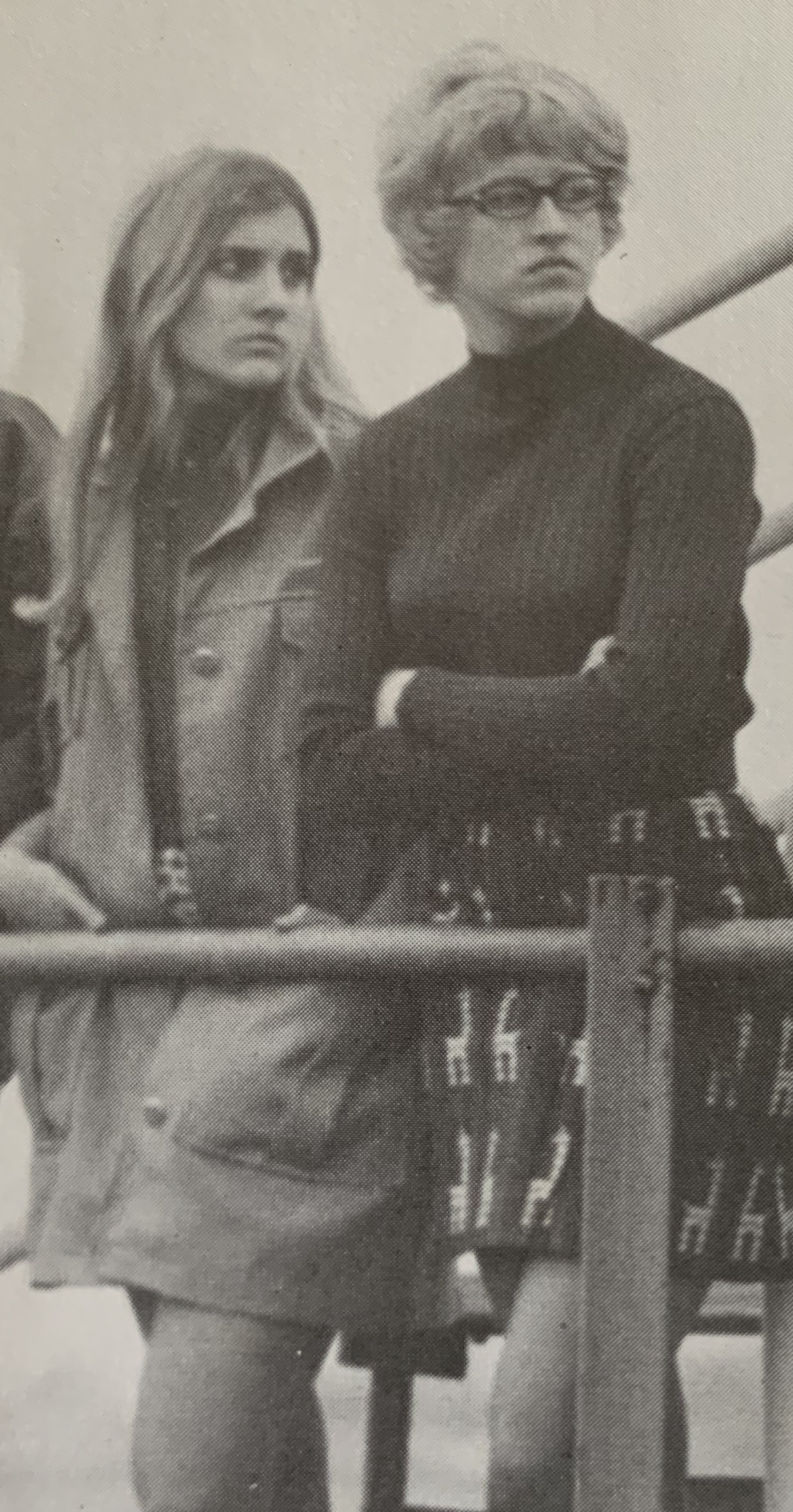
As an athlete in St. Charles, I’d wind up competing against Kaneland in cross country, basketball and track. I was admittedly jealous when the Kaneland track team won the state championship during our senior year. On that front I wondered what it might have been like to stay at that school. Would I have been better or worse off?

A partial answer to that question came weeks after the last day of high school. My “former friend” Mark Strong called me one day and said, “Come on. Let’s go to a party they’re having outside of town. I have some new music for you to hear.”

We piled into Mark’s car. It was good to see him again. He turned the key and started the engine. Then he popped a tape into the deck and started blasting Bruce Springsteen’s new album, Born to Run.

In the day we sweat it out on the streets
Of a runaway American dream
At night we ride through the mansions of glory
In suicide machines
Sprung from cages on Highway 9
Chrome wheeled, fuel injected, and steppin’ out over the line
Oh, baby this town rips the bones from your back
It’s a death trap, it’s a suicide rap
We gotta get out while we’re young
‘Cause tramps like us, baby, we were born to run
Yes, girl, we were

Mark looked over at me and smiled. “I knew you’d like this…”

I had not yet heard of Springsteen. Then he played some new Supertramp from Crime of the Century. The lyrics in the middle of song nearly knocked me out.

Write your problems down in detail
And take ’em to a higher place
You’ve had your cry, no, I shouldn’t say wail
In the meantime hush your face

Right (quite right), you’re bloody well right
You got a bloody right to say

It felt good to connect with him again. But later at the party we got separated and I was left to wander a backyard bash rife with all kinds of drugs and booze. I was now completely out of my league. The most I’d ever done in high school was drink a few beers. I saw people on speed and pot, drugs that were completely unfamiliar to me. I don’t remember how I got back home that night. Perhaps I found Mark and he drove me to St. Charles. I was relieved. Not saying that I blame Mark for that experience. Quite the opposite. In many respects if was revelatory. I’d learned all I needed to know about the previous two years. I think he was trying to tell me, in some ways, that he was a survivor.

Perhaps it was our mutual experiences dabbling in Christian thinking when we were just 8th graders. Or maybe it was just riding our bikes on quiet streets in downtown Elburn with the stench of the meat packing plant filling our noses that taught us the world could be a stinking place to be. I know now that Mark went on to some challenges in school and such, just as I had done. But he emerged a thinking man and these days, as we recently shared over coffee, he’s a man of strong faith and in eager pursuit of truth related to his religion.

The Sodom Dig

So we caught up recently and I learned that Mark has spent the last several years as an active archeologist working a dig that is suspected to be the city of Sodom, famous in the Bible for its destruction by some cataclysmic event. The dig is ongoing and was the subject of an article in Nature magazine. This is one of those cases where science converges with religion and people are trying to figure out what it all means.

Mark shared one fascinating perspective with me about the findings there and other archeological work in Jordan and other Middle East locations. “We’ve disproven the lineage of Adam through Jesus,” he wryly noted.

“Whoa,” I replied.

“Yeah,” he chuckled.

This is the aspect of Mark Strong that I find most interesting. He unrelentingly follows what the information tells him. Yet he’s also a saved, born-again Christian. In other words, he’s exactly the kind of Christian this world needs if it’s going to be honest about the tradition, history and truth of scripture and everything after.

That’s interesting because while I approach scripture more from the aspect of what I call “outcomes” related to religion and history, science and politics, we have engaged in what one might call “convergent evolution” when it comes to our respective beliefs. Mark is clearly a bit more “conservative” in some aspects of his worldview. I am certainly more “liberal” in my outlook, believing that Christian tradition has gotten many things wrong over the years. But look at us now. We’re still capable of having the same kind of healthily competitive relationship that we did fifty years ago.

We’ll meet again sometime soon. Because while we laughed at some old stories, our worlds now convene very much in the present. He said a prayer for me before we left. I was graced by that action and don’t take such sincerity lightly. That is the right kind of pride, to care and be cared for. We should all be so lucky to cycle through life with that in mind.

Enneagram wisdom: “True strength comes from the courage to be vulnerable”

Taking pride in vulnerability does not mean always being scared or sad. It’s quite the opposite. It’s about being authentic in whatever situation you find yourself in life.

One of my new work cohorts encouraged me to take an Enneagram test to see where my personality fits on the spectrum of such things. I signed up on Truity and paid $19.99 to get the full results. The outcomes were interesting, with all my best qualities and flaws laid out in black and white.

Somewhere late in the PDF, which is replete with graphs and charts about personality and life traits, I noticed a quote highlighted in the headline of this article. “True strength comes from the courage to be vulnerable.” I sat there a minute and thought: “That’s exactly what I meant by calling my book “The Right Kind of Pride.”

The Right Kind of Pride is precisely that: the consistent action of taking pride in the willingness and courage to be vulnerable.

As for that book, I’m pretty sure that some people are scared or uncomfortable about reading a book about cancer survivorship. But it’s not JUST about that. The eighty-plus blogs I compiled speak to the the value of authenticity in all situations.

Here’s the basic fact: All of us must be survivors of one kind or another. Plus, none of us gets out of this world alive. All I can say is that when it comes to getting through the tough things in life, vulnerability is truly powerful.

Caregiving

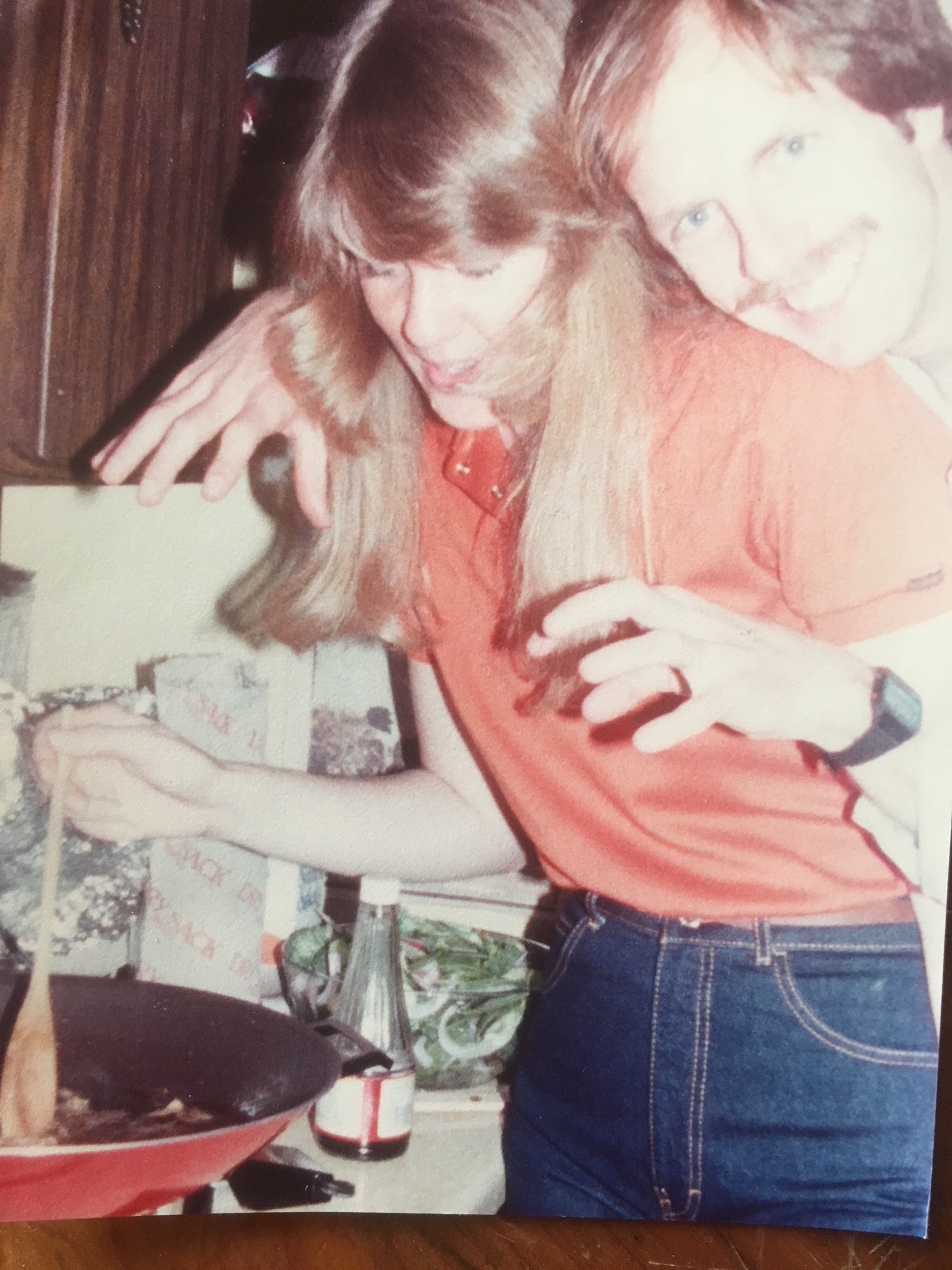
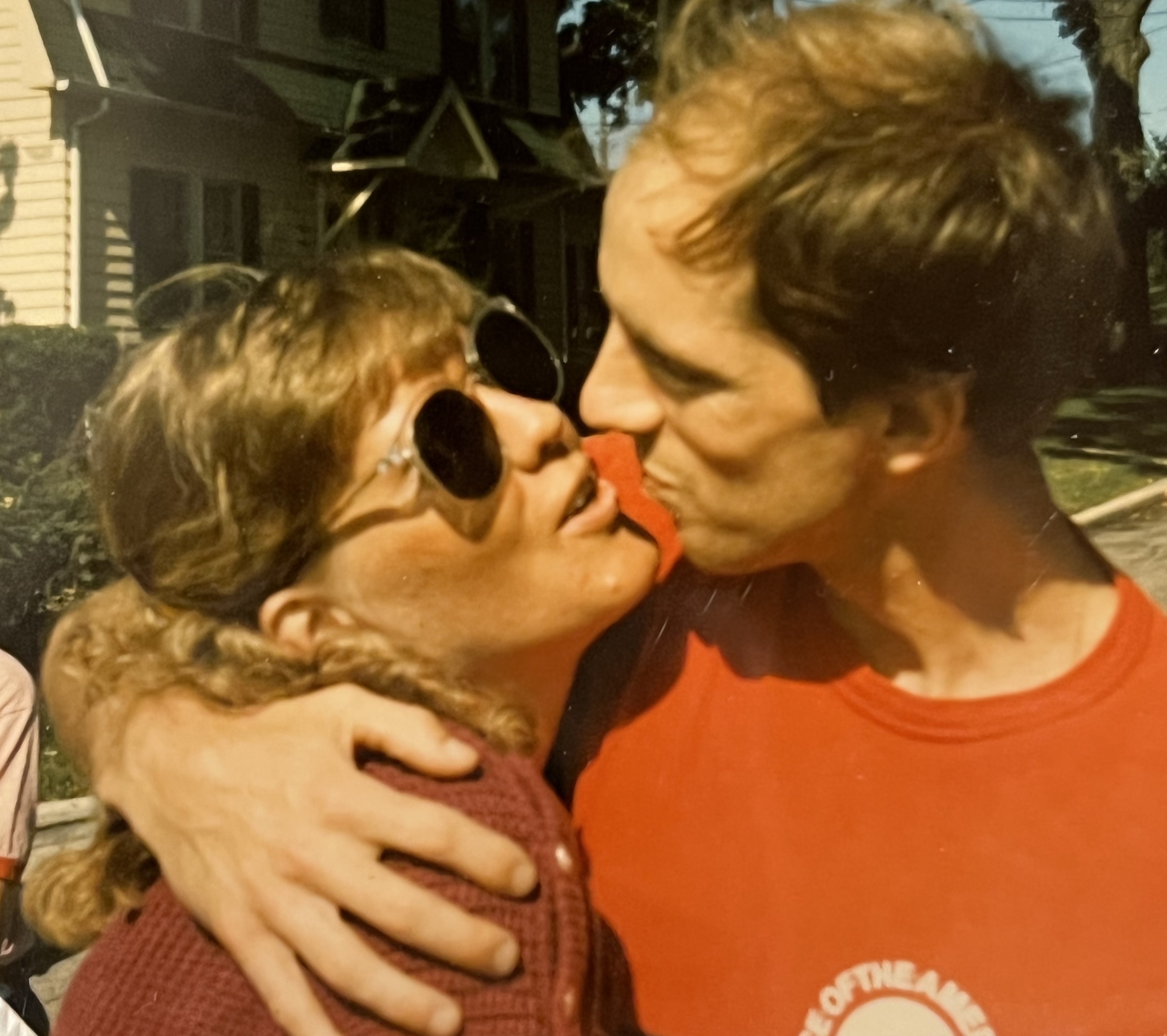
Before our marriage in 1984.

Over eight years of caregiving that was the principal way that I found hope and support.

Originally, I oversaw my mother’s journey through lymphoma and pancreatic cancer, followed by a stroke and finally hospice. Her passage left me in charge of caregiving for my father Stewart Cudworth, a stroke victim from 2002. I would remain his caregiver through his passing in 2015 at 89 years of age.

That all began in 2005, the same year that my wife was diagnosed with Stage IIC ovarian cancer. Immediately I was graced by an offer of support from the preschool director and her team of teachers at the school where my late wife Linda taught. For the next eight years, those people and many others (thank God) were willing to help us through the ups and downs of cancer treatments, including surgeries and recovery, chemotherapy, prodigious drugs and side effects, and emotional challenges deeper than we’d ever imagined possible. We’d make it through one segment of treatment to remission only to have the cancer return. That progressed with rapidity like the sound of a ping-pong ball as it taps out from its original dropped height.

During all that time I blogged to our caregiving support group about the blessings and challenges we experienced, and things we learned along the way. Those blogs formed the bulk of the book I wrote titled The Right Kind of Pride. Then I wrote a prologue and epilogue, including A Goofball’s Guide to Grief. Because I am. A goofball.

Making the most of my hair before it all went away in my late 20s.

Personal journal

But I also kept a personal journal for thoughts that were not ready for public consumption at the time. I’d actually forgotten about those words until recently when I opened up a thick journal given to me by my mother-in-law for my July birthday in 2012.

I’d been thrown out of work earlier that year by an employer who fired me the day after they learned my wife had cancer. So I was freelancing and trying to cover everything from COBRA insurance costs to the daily costs of living. Fortunately, I was able to find bits and pieces of work to tide us through, all while dealing with the difficult fact that Linda’s health was decreasing in quality. She started having seizures in the fall of 2012, and then we discovered a brain tumor that required surgery, radiation and steroids to treat, and after that, things got really tough.

Calm realizations

At that point in February of 2013, I landed a new job and was trying to do my best at it. But the daily challenges of helping her through were significant. By February 11, it was even tough for her to get around. “Linda sleeping on the couch upstairs,” I wrote in the journal. “Chuck is on the Ottoman, leaning on my leg until a few minutes ago. Following me around all day. Linda improved a bit, for a while anyway. Big day tomorrow. Meeting Dr. Ferris and Dr. Dolan.”

We made it to the appointment with the medical oncologist Dr. Ferris. But things didn’t go all that well. She could barely stand to lie on the table, and the doctor pulled me aside and made a calm recommendation of palliative care going forward. I knew what that meant. And besides, Linda was too exhausted from gut swelling and fatigue to make the trip from Warrenville to Advocate Lutheran General to see the physician that treated her so well from the outset. I could barely get her home.

Constructive thoughts

I wrote in the journal on February 14, Valentine’s Day 2013, “Well, my objective with this journal is to focus on constructive thoughts rather than destructive, which so many other journals in this house seem to have been. In a constructive fashion, therefore, it is still important, most important, to acknowledge that Linda Mues Cudworth––or Linda Ann––is in the process of dying. She has been a most wonderful wife all these 28 years, and wants to continue if only she could. But her cancer is catching up with our dreams of going places together and doing things. We had both promised to get to Glacier this year––together, if her health would allow it. Now it seems more likely she will be gone, the earthly part of her that I so love anyway. Our relationship has gotten richer these past 8 years. Richer than money and wealth combined. Our mutual failings and weaknesses have fallen away. She has told me that she loves me and I believe her now. I have told her that I love her and she knows it now. Our wedding vows have been fulfilled; for richer or poorer, in sickness and in health, till death do us part.”

We made many trips to Decorah, Iowa over the years. One of the prettiest spots in the Midwest.

Reading those words again nine years after she passed away on March 26, 2013, gives me both sadness and satisfaction. We did the best we could all through those years. “Sunrises and sunsets still await,” I continued writing in the journal that February. “And spring as well. Hurts so much to know that she may not be with me. So soon. So sudden. Yet we have lived well together, the best we know how. I love you Linda. I always will. God Bless your kind and spirited heart. Forever.”

The promise of vulnerability

It would still be weeks before the end of her life came. But we opened our lives at that point, trying to bring our children and family, friends, and associates into the sphere of vulnerability. If you absorb nothing else from these words, please embrace the truth that “true strength comes from the courage to be vulnerable.” We lived that reality and I can promise you that while things don’t always happen or end how you’d like or expect, the courage to be vulnerable is one of the most valuable human traits of all. It expands all the good things that life has to give.

It’s fascinating to study yourself objectively through a test like Enneagram. It’s a valuable thing to learn what emotions and character traits drive you from within, and how that translates to life and relationships. And it’s the core of who we are that matters. Letting others see that in you can be a wonderfully empowering force in life.

Linda Cudworth passed away on March 26, 2013. While appreciating her life, I am grateful for the things life and love continues to bring.

Fire and Rain all points in between


Maple leaf in rainI first purchased a James Taylor album as a freshman in high school along with works by Paul Simon, Neil Young, David Bowie, Bob Dylan, and Elton John, to name a few. Among those, there were a few mentions of God in the lyrics, a subject of consequence since I’d recently chosen on my own to get confirmed along with friends at the church whose pastor lived right next door to me.
And while I’d gotten confirmed at the age of thirteen, already I was asking questions about traditional religion and its role in our lives. Something about the confessional language of orthodoxy never satisfied my vision of what it meant to believe in something larger (or as large) as what we see around us.

And later in life, when religious leaders that I met began picking on the subject of evolution and showing bigotry toward various kinds of people, I’d had enough, and parted ways for a while with conventional Christianity.

Sweet returns

Then I met a girl in college whose academic interest in the Jewish religion led me back to thinking about what the whole story of Jesus was about. And as a quasi-English major, I was interested as much in the story aspect of scripture as the supposed literal truth it conveyed. At the same time, I was aware of the need to write my own version of that story.

June 1979
Journal entry from June of 1979, 21 years old. 

The woman that I later married was raised in the Missouri Synod Lutheran tradition. So we joined that church and for twenty-plus years raised our children there. I sang in the choirs, taught Sunday School to middle school and high school kids, and served on the Church board. Meanwhile, our congregation enlisted a successive line of pastors who preached an increasingly harsh and conservative line of doctrine. The theory of evolution was just one of their favorite targets, as were gay people and even women who dared think they could ever be pastors.

Departures

Thus toward the end of my wife’s life after six years of cancer treatment, we bid a solemn goodbye to that church and moved upriver to a more welcoming Lutheran congregation that cared for us during the final years of her existence on earth. For that and all service before I am eternally grateful.

During that whole journey, I drew on a ton of faith to get through. The practical issues of her illness we addressed through medicine and following doctor’s orders. I kept working at the jobs I held between severe challenges on many fronts. Her treatments had profound emotional effects on us both. That’s when we looked to faith for support.

In my case, it had never really disappeared. All those mentions of God in my running journals during those self-focused years training almost full-time and racing twenty-four times a year were testimony to that desire to understand it all. Every day was a trial of sorts, I knew that much. And when my former track and cross country coach heard that my wife had cancer, he intoned: “Your whole life has been a preparation for this.”

Sustaining hope in the face of adversity

IMG_6537

He was right. But you can’t be prepared for everything. And when hope drains away it is comforting to turn fear over to something other than a piece of paper on which you write down your problems, somewhat in order, in hope of tackling them the next day.

That’s when some of the lyrics from the James Taylor song “Fire and Rain” came back to me:

Won’t you look down upon me, Jesus
You’ve got to help me make a stand
You’ve just got to see me through another day
My body’s aching and my time is at hand
And I won’t make it any other way

Frankly, I’ve never been a big Jesus worshipper. When asked long ago by a pastor what my faith is most based upon, I told him that knowing God was my first priority. Of course, that received the standard confessional response that Jesus is the portal to God, is one with God, and so on. But I persisted in seeking what I know of the spirit outside the lines. And nature is often the source of that insight.

Chance meeting

Recently while out doing bird photography I waved to two women out walking through the forest preserve where a pair of wood thrush was singing loudly in the brisk spring sunshine. We met back in the parking and I struck up a conversation with them by shared how long I’d been visiting that preserve both as a runner and a birder. That led to a discussion of our respective families. One of the women had been an Olympic Trials swimmer and her sons and daughter were both college athletes. So was her husband. I found that fascinating and offered to write a story about their clan.  She seemed game to the idea but there was something else going on in the conversation, and I didn’t feel right to press it.

Transitions

But I shared some recent facts about learning to swim after meeting my present wife on a website called FitnessSingles.com. Then I explained to them both, “I lost my first wife to cancer seven years ago.”

The two women exchanged quick but earnest glances. Then two minutes later in the conversation one of them turned to me and said, “You were put here by God to talk with us, because she just lost her husband to cancer last Saturday.” It was a Tuesday morning.

We cried together, the three of us. But no one exchanged hugs in the age of the Coronavirus. Even her husband’s funeral the next morning would be a private affair, limited to ten people due to the pandemic.

A walk in the wilds

Prairie Hill

They both shared that their walks in the woods were a way of coping with problems and talking them through together. But now their walks had taken on the role of processing the immediate grief of having lost a loving spouse. As most of us know, grief has both mental and physical effects on us. In its most difficult stages, grief can make you want to cease living and at the same time put your body through aches and pains that you never see coming. That is fire. And that is rain.

There are also many points in between, where sudden bursts of recollection and joy mix together in a combination of fire and rain. How is that possible? How can two seemingly opposite substances mix together in our minds?  

Our spiritual selves

To me, that is the mystery of our spiritual selves. If emotional pain is real––we can certainly feel it––then love must be just as real. And if love is real, then to me, some sort of spirit is a reality too. And as the saying goes, God is Love.

So in that sense, I truly believe in God. It is both within and apart from us to love in this world. If anything, that is the meaning of that passage in the Lord’s Prayer; “thy will be done, on earth as it is in heaven.”

As I wrote in my first book The Genesis Fix, I call that call of gratitude and active love grace appreciated. When we are attentive to appreciating love a grateful sense, we are appreciating it. Yet when we extend love to others in an active sense, we are appreciating grace on behalf of God. Then our lives take on a different and richer meaning. We commence to live from a foundation of our spiritual selves. That is what I think scripture is all about, that perpetual discovery of purpose, principle, and life fully lived.

Connections to spirit and life

Butterfly weed

That is why I talk to people. I consider it a connection to the spirit and life of others. One might call it a ministry of sorts, to talk to people, find their mutual humanity, and learn interesting things about them along the way. Even during this Coronavirus pandemic, I find ways to speak with people even under the call of social distancing.

There are times when that is not welcome, and I respect that. Not everyone is coming through this crisis with an attitude of appreciation. Some engage on their own terms and hold to their spirit in the best way they know how. And I say God Bless them. And if they don’t believe in God, I say bless that too. Just as in nature, there is diversity in the human condition as well. We should honor that, and sadly too many supposed Christians take certain passages of scripture literally and dishonor the spirit and love they could otherwise find in others.

I know there are also passages in scripture that demand absolute fealty to Jesus in order to be saved, as in: “No one comes to the Father but through me.” Well, that passage is the product of a patriarchal society, isn’t it? We’ve discovered a bit more about the significance of the feminine in this universe, and science too. So I don’t place limits on the points between fire and rain. Instead, I choose to celebrate them.

And if we meet, I hope to celebrate you too. For that, if anything, is the Kingdom of God.

Christopher Cudworth is the author of The Right Kind of Pride: A Chronicle of Character, Caregiving and Community. It is available on Amazon.com. 

All images by Christopher Cudworth. christophercudworth.com


From bitter to sweet memories on the 7th anniversary of my late wife’s passing

Linda and Chris
Our early dating years.

Tomorrow marks seven years since my late wife Linda Cudworth died after eight years of survivorship through ovarian cancer. The diagnosis came as a shock, as did multiple episodes of recurrence. Each time we’d reel from the news, go back into treatment and compartmentalize the best we could by using the phrase, “It is what it is.”

Those last months during the winter and spring of 2013 were confusing because doctors treating her for seizures learned there was a tumor in her brain. I’ve never published photos of her during that last round of radiation treatment because while we made the best of it, snapping pics using my laptop Photo Booth and laughing as the absurdity of it all, it was a strange world we were about to enter, because ovarian cancer was not supposed to be able to pass through the blood-brain barrier. But it did.

LInda and Chris
All dressed up and going somewhere.

We treated it with radiation and she started a regimen of steroids to contain the swelling and her personality became magnified. She lost native inhibitions about many things. On one hand, that was disorienting, as it ultimately became impossible for her to continue teaching at the preschool she loved. On the other hand, it proved to be liberating as she used those final bursts of steroid-fueled energy to buy a beautiful piece of art. She also stayed up late at night to research and buy a new car even though she abhorred going online. In sum she lived life to the fullest, however manic it might have been.

And that was bittersweet. Because when the steroids stopped, so did her energy. She passed away a few weeks later in the company of her husband and two children. Still, she never lost her sense of humor. After I’d arranged for palliative care in our home, we moved her from our master bedroom to the hospital bed in the living room where nurses and such could tend to her properly. The journey from bedroom to living room was awkward and difficult given her weakened state, but she looked up at me once she was tucked into the cover and smiled while saying, “I thought I wasn’t supposed to suffer.”

LindaAtGlacier.300x300
On our honeymoon at Waterton-Glacier

Most of that was indignity, and my late wife was a person who believed and abided in dignity in all she did. It was part of her beauty as a person. She also respected propriety, which made it amusing to think back on the fact that I showed up a night early for our first date. “What are you doing here?” she asked. “Our date is tomorrow night!”

She agreed to go out for a short dinner before hosting her parent-teacher conferences at the high school where she taught special education. But before we parted that evening, I got a taste of her naturally biting humor in reminding me that I ought to call confirm a date.

We got to know each other a little that evening and followed up with a hike to Starved Rock State Park. Stopping on a high ledge for a picnic on a mild November day, she broke out a lunch of apple-walnut bread sandwiches, cheese and wine served from a leather-covered flask. That implement was a remnant of her high school hippie days.

LindaWithFirework
Enjoying our festive 4th of July traditions.

We dated four years and even survived a long-distance romance early on when I was transferred from Chicago to a marketing position in Philadelphia. She visited me on Thanksgiving that year despite her mother’s objections, and I moved back to the Midwest the following spring when the company decided to disband the entire marketing department due to misguidance by the Vice President.

That would be one of a few job upheavals experienced over the years, and we survived them all. Our children came along in our late 20s and early 30s. Soon our lives were immersed in preschool, elementary adventures, and all the way through high school performances in music and drama.

We also belonged to the highly conservative church synod in which she’d grown up. The pastor that married us at the time was, however, a grandly considerate and patently open-minded man that once gave a sermon titled, “Do-gooders and bleeding hearts : Jesus was the original liberal.”

Emmy in Garden

Our lives swirled with church activities as our children passed through Sunday School all the way to confirmation, where they roundly passed the tests despite having to choke down conservative ideology about evolution preached by the pastor that had long-since replaced our marriage counselor.

After 25 years we moved up the road to a more tolerant and progressive Lutheran church. It was gratifying to learn that our friends from the former church did not abandon us. In fact without their help and the guidance of one of Linda’s best friends, a woman named Linda Culley, we would not have had as much grace and good fortune in the face of the perpetual challenges served up by cancer survivorship.

CudMuesPhotos-61
At 7 Mile Pinecrest

Now what I like to think about are the camping trips we took to the north woods while dating, and later, when we had small children, we’d spend a week each summer at a humble resort called 7 Mile Pinecrest thirteen miles east of Eagle River, Wisconsin.

Our children paddled around in the water and slipped off to Secret Places in the woods while their father fished in the early and late hours and went for runs half-naked in the pine woods north of the resort, swatting at deer flies the entire time.

CudMuesPhotos-55
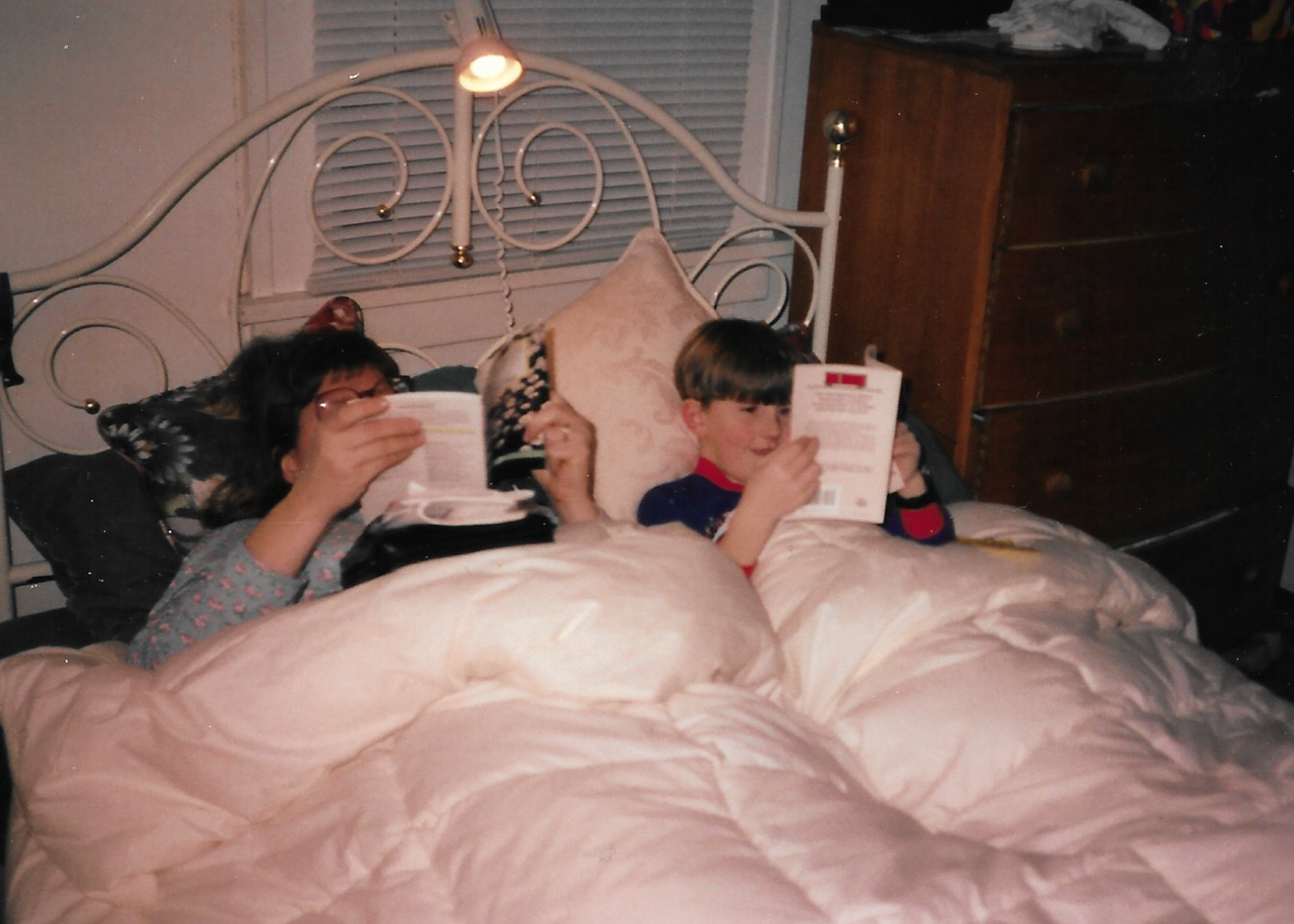
Linda and Evan reading together.

At the center of all that family joy and adventures was Linda, whipping up sandwiches and sitting with a glass of wine on the small beach overlooking the lake. That was the only time the Do Not Disturb sign seemed to rise on the Mom Flag.

And when we weren’t visiting or traveling or doing school activities, Linda was immersed in planning, purchasing and planting her garden every year. Her priorities were indeed God, Family, and Flowers.

CudMuesPhotos-35

She was a really good person. That’s what so many friends have told me over the years. I was married to a really good person, and that makes me think of what a close friend told me when he first met her. “This is a good one, Cuddy. Don’t let her get away.”

It is bittersweet and sweet to think about all those years together. My daughter went through our stacks of photos to digitize the images and I’ve waited until today to open it up and pull some memories out to post with this blog. Holding people close to your heart is first and foremost the right kind of pride. I hope this writing inspires you to consider the importance of people in your lives.

And to realize as well that life does go on. She told our close friend Linda Culley that she knew, if she were to pass away from cancer, that I would meet someone again. And I have found love. But it does not mean the years with Linda Cudworth are forgotten. Far from it.

These memories can lift us up. Give us courage to go on. Cherish the life we had as well as the life we have. And that is the right kind of pride as well.


The 10 ways I’ve most changed since I was a kid

This morning while pouring cereal into the bowl, the box of Maple Pecan flakes ran out. Seeking to fill the dish, I picked out the Ginger Granola and poured it into the bowl to create the right portion. Then I thought, “I’d never have done that as a kid.”

Growing up I liked my cereal pretty much homogenous. If it was Cheerios or Rice Krispies, that’s what went in the bowl. Never would I think of mixing the two.

I also had a favorite spoon with which to eat my cereal. It had a raised image of the United States Capitol building on it. I loved that spoon, and ate my cereal with it every day.

These little moments of recollection set me thinking about how many other ways a person changes from a child to a grown up. At one point my own son at eight years old confessed that he would rather not grow up. He could see that being a grownup came with all sorts of challenges that did not seem to be that much fun.

And yet, there are some things that you do and feel as a kid that are not that great either. Here is a list of my Top 10 ways I’ve most changed since I was a kid. Perhaps you can share a few of your own in the comments below.

  1. No longer afraid of the dark. At some point in my late 30s I was running down the dark stairs to our basement and realized that the haunting feeling of fear at entering a dark space was no longer there. No boogeyman. No devil. No ghosts or other imagined dangers in the dark. It was a liberating feeling.
  2. Sex is no longer such a mystery. I can remember having sexual feelings very early in life. Children do, but they often don’t know what to do with them. Most masturbate their way through puberty and early teens, then experiment their way with sexual partners into some form of knowledge. It took me a long time to understand anything about sex, and that is not to say I know all about it now, either. But the giant wall that was “sex” looming ahead in life from the perspective of childhood was quite difficult to figure out. I was always jealous of kids who seemed to know so much about sex. And some just did. It’s a gift, I guess.
  3. My sense of wonder is not the same. This is both a relief as a person, and a shame as well. As a very sensitive child there were many moments of experience so deep and heartfelt it was difficult to function at times. I recognize now that some of this was tied to an anxious mind. Gaining control of my ruminative nature has been necessary to function in this world. And yet, I sometimes miss the intensity with which I felt a keen sense of wonder at nature, or in a moment.
  4. My trusting nature has evolved. I still trust people, especially those I love. But through many experiences in life, one learns that some people simply cannot be trusted. That was not me as a child. I trusted everyone. I often got teased or tricked as a result. The long journey to loss of naivete is the hardest road many of us travel in life.
  5. Money is just something, where it was once everything. As a kid you’re happy as heck to have money to buy candy or cheap stuff to entertain yourself. Our acquisitive nature drives us to want way more than we need. We obviously need money to survive in this world, and one learns through odd jobs and real jobs that you have to work hard to earn it. Some people judge themselves (and others) by what they earn. They see it as a mark of adulthood. And that is to some degree true. But there’s also an immature or childish nature to liking money too much. The Bible warns us that the love of money is the root of all evil. It is also the mark of adulthood to balance your love of money with gratitude in life.
  6. I put competition in perspective. For some crazed reason I could not stand to lose as a kid. Hated it. As an athlete I became one of the most competitive people you could meet. My brothers called me The Mink because I’d get spitting mad in the heat of competition. That fire to win served me well for the most part, winning races as a runner and leading the teams on which I competed or coached to victories. But at some point I recognized that the desire to win must be tempered with the understanding of what it really means to win, and when winning actually represents some sort of loss. Because that can happen in relationships, for example. But I have always, always fought for the underdog and for fairness to the best of my ability. I’m proud that I have not changed or lost that childhood sense of fair play to this day.
  7. I’ve learned to forgive myself. In my case childhood essentially lasted through the age of 29 years old. That’s when I woke up pounding the pillows in anger over some of the things that happened in my upbringing. I was confused by these angry feelings all through my teens and 20s. As I began to understand their source and grow out of the vexing events so many of us experience in childhood, it became evident that I was beating myself up all the time by not being willing to forgive those who might have wronged me. But it was a wise counselor that finally asked me this question: “You seem to be good at forgiving others…how are you at forgiving yourself?”
  8. My sweet tooth really is my enemy. We all want candy without the consequences. Back home in Lancaster, Pennsylvania there was a candy store a quarter mile from our home. A dollar would buy you tons of sweets, and that foundation of candy-loving carried through my college years and well into adulthood. But the harsh truth is that sweets are bad for your body in a lot of ways. Between sugar and carbohydrates, the supposed fuel of athletes, there lies deep danger to your heart, stomach, liver, kidneys and other organs. Reigning in my sweet tooth is hard, but it truly is the sign of a wise adult.
  9. Love has changed me. For all the flaws we see in our parents as we grow up, it often takes a lifetime to appreciate how they loved you. I no longer have any doubts about that, even with my father, who at times was a hard and exasperating man to abide. Time has given me insight into how many ways he did nurture me, and my mother too. As a result, love has changed me from a child who felt hurt due to a sensitive nature into a man who is sensitive to the power of love to heal those emotional pains. I’ve also grown in my understanding of faith from a child taught through bible stories to think of heroes as outsized personalities to a person who sees heroics in the small and wonderful things people do for each other. That is true love.
  10. Death is no longer so scary. Dead things were always both interesting and scary as a kid. The only funeral I attended as a child was for some relative I knew little about. It reduced me to tears seeing my aunt and uncle cry at the loss of their loved one. Yet when I lost a treasured former teacher to a heart attack in 1993, the funeral turned out to be a celebration of his life. I learned from that. Then my mother passed away in November 2005, and I was there when she ceased breathing and I saw that her body was through with life. Of course, during the eight years in which my wife struggled through cancer treatment, death was the frightful thing that always lurked ahead. When it came to us n March, 2013, my next worries were how to help my children deal with the loss of their mother. That is a challenge that will never abate. I think about my own mortality as well, and if you do the math and add up the years you have remaining on this earth, life itself can seem pretty scary.

So how delightfully ironic it is, that one of the best ways we can learn to enjoy life is to bring back our inner child. That’s when we begin to experience life in new and meaningful ways. It doesn’t mean you need to relinquish all the things that you’ve earned for yourself as a healthy adult. It may mean setting aside some of your more restrained behavior so that you can try new things, take chances and live a little. Or a lot.

God

Something in human nature craves the idea there is always something more than what we see on the surface of existence. We choose God as that focus.

Yet it is most often pride of ownership that obscures the known and unknown channels to God.

For God is the Great Contrarian.

We call God a Creator. Yet everything created by God is always, and ultimately, destroyed.

We call God the Author of Life. Yet we know that 99% of all living things that once lived on the earth are now extinct.

We call God a King and celebrate God’s Kingdom. Yet the true authors of that kingdom often painfully pass into death. They are symbols for the challenge all of us face.

Some speak of the End Times as if there were a beginning and an end. But that is the wrong kind of human pride at work again. We’re told we cannot know that time, when in fact we cannot know time at all. It is forever behind and ahead of us. All we can truly know is this vibrant present. It too is destroyed.

That does not mean we are helpless in time. God is clear that love is an operative that brings life into full focus. We are encouraged through love to look beyond the self. Thus the world expands in our presence. And God’s presence is brought to us.

This selfless love can however be abused. It can face injustice. Even unto death.

That is exactly what God the Contrarian asks us all to embrace. Love is no sin. And sin is no love.

To understand our role in this world we must begin by knowing love even at risk of losing it. Only then can we begin to appreciate what life really is about.

That does not mean we are meant to squander that which is precious or meaningful. We know God as well through all that exists around us. Our great scriptures call up images of God through natural symbols. These help us understand spiritual principles. Mustard seeds. Yeast in the dough.

Grow love.

The Right Kind of Pride does not force these symbols into a role they were never intended to play. Seven days. Snakes in the Garden. These help us understand the advent of Creation, human nature and sin. But they are not the Final Word.

In fact The Final Word is love. That is what God wants us to know. For love exists outside the realm of all we call tangible, literal and temporal. It is both rational and irrational. And love is real.

That is why God is real. For God is love.

All our understanding must pass through this test if we hope to appreciate the motives of God. We may find ourselves contradicting the habits of society and commerce. We may find ourselves speaking alone against a crowd of voices fixed with fury and political fervor, shouting us down. Telling us that we just don’t “get it,” and that tradition says we’re wrong.

But are we out of touch with reality? Really? When we act the Contrarian in good conscience, advocating for protection of the poor out of love and mercy, we are not out of touch. We are in touch with God. And when we side with causes of mercy and social justice despite the inconvenience it represents to commerce and human society, we are in touch with God’s wishes for humankind.

These are not simple principles by which to abide. If they were, everyone would do them. Instead they require a vigilance for which so few have an appetite. Comforts distract. So does access to power and human selfishness.

But God the Contrarian sees all that and knows the hearts of human beings. That is where God connects with all of us. Even those who do not profess belief in God have a heart of their own. Neither are they ignored. Grace extends to all. Knows all faiths. And the lack of it.

For love abounds. It only disappears when we attempt to confine it to our selfish purposes or turn it into a weapon or a tool for control. We see it every day. The force of love can kill if it is wielded with sufficient anger and fear. God the Contrarian knows that too.

God has loved the world to death before. It is woven into the nature of all existence, the expression of all destruction. To come and go with wisdom, we must know this simple truth, and remember it well. God is love, and the force of love can save, or kill.

Our better natures are like God the model of contrition. God call us to this example. All of nature and a world of love awaits our answer.

The Right Kind of Pride is a book by Christopher Cudworth about the importance of character, caregiving and community in this world. It is available on Amazon.com.
This blog is a reflection on the principles found in the book The Right Kind of Pride by Christopher Cudworth, about the importance of character, caregiving and community in this world. It is available on Amazon.com.