Tag Archives: teaching

Life, abuse, and self-confidence

A pensive moment at 18 years old during a college field trip

Perhaps it’s been native anxiety that vexed me in life. I’m a nail-biting kid who grew into a nail-biting adult. The roots of anxiety are chemical but also familial and cultural. Raised in a family with three other brothers, a pushy father, and an enabling mother rife with her own fears (projected upon us) it’s no wonder my life bears marks of self-confidence failures.

That said, there was no more competitive kid than me. I compensated for anxiety by trying to win everything in sight. Sports was also a release for the high-energy needs of a kid with ADHD. But I never rationally understood that condition as a child. I knew that any boring subject turned me into a lost soul staring out the window during class. Or else I drew. Art was something I could turn that attention-deficit focus into something real. Later on, I found writing too. Those three pursuits are my life’s salvation. They fueled whatever self-confidence I could muster through those elementary school years through college.

I once had a 3rd-grade teacher who gave me a choice. “Chris, you can stay inside and work on the classroom play or go out for recess. Which do you want to do?”

Well, I was leading the kickball home-run contest during recess. It made me the hero of the whole school. But she didn’t ask me about that. I told her, “I want to go out to recess.”

“Fine,” she blurted. “You don’t get to do either. You can sit here with your head down the whole period.” That’s what she made me do. She punished me for a choice I had sound reasons to make.

But in 4th grade, I had a teacher whose Robert’s English Series curriculum combined writing, art, and plays. I thrived in that class and wrote about it once on this blog or another. One day I received a phone call from National Public Radio. A reporter conducted a Lexis-Nexus search about that curriculum and my writing was the only article that turned up. They interviewed me about it. It made me feel good to be recognized for appreciating the value of integrated education. It bolstered my self-confidence to hear that someone else understood the value of helping kids, especially neurodivergent kids like me, find self-confidence through innovative teaching.

These days, I substitute teach and notice many kids struggling with classroom attention. Perhaps I should have chosen teaching as a profession, but I’m not sure I had the self-confidence or self-assurance earlier in life to do so. It takes enormous focus for effective classroom management. I might have been too forgiving or unwilling to discipline kids acting badly.

Part of me also resists those tactics because our elementary schools in Pennsylvania used corporal punishment to control kids. In first grade, I shoved a kid for knocking over a Stratego game we were playing during indoor recess due to a rainy day. The kid tattled on me and instantly a vicious old lady teacher named Mrs. Paloney entered the room, grabbed me by the neck and hauled me out into the hallway where she told me to drop my pants and underwear to the floor and proceeded to spank my bare ass in front of other children in the hall.

Trauma transfer

Now, by that age, I’d witnessed my father thumping my brothers to the point where I was traumatized as a child seeing his fury. It frightened me beyond words. So being spanked further traumatized me. Later that afternoon, I saw my best friend spanked out on the playground for committing some small slight. I broke down in tears.

My first-grade teacher, Mrs. Cutler, saw me crying and somehow sensed a deeper fear in me. She escorted me inside and asked, “Is there something else going on, Chris?”

I longed to be honest with her at that moment but didn’t fully grasp why I reacted that way. What I do know is that many years later, during my late 20s, I awoke at night pounding my pillow in a fever dream of anger and rage. That’s the moment I realized that childhood trauma follows you and undermines the ability to have trust in yourself and self-confidence too. Soon after that I sought counseling. That didn’t work because the therapist wasn’t that good at discerning my need to reconcile the longstanding impacts of unfortunate life events.
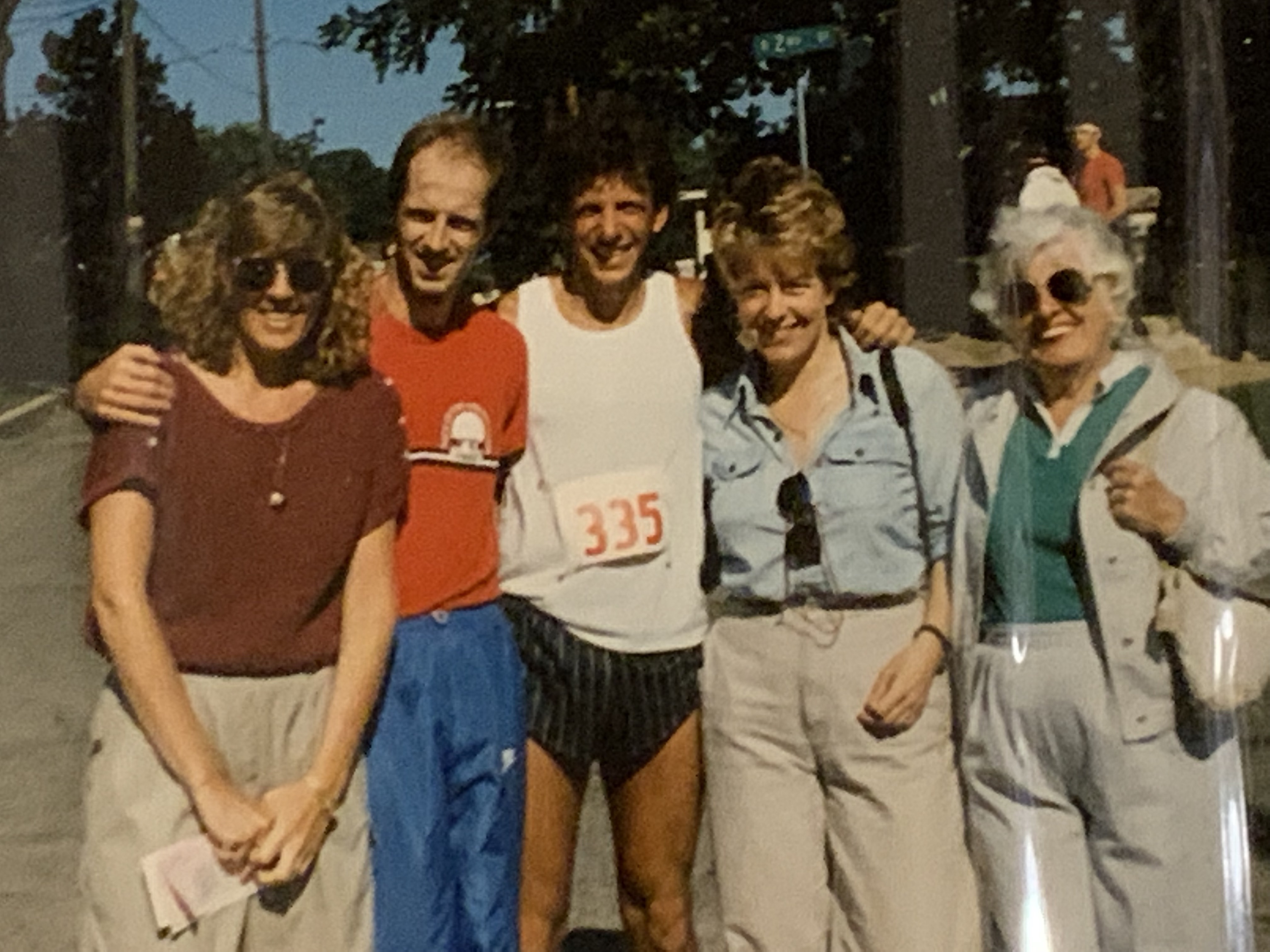
With my late wife Linda (left) best friends Greg and Francie, and my mother Emily following my win in the Geneva Community Classic 10K circa 1984

The long way around

During my late wife’s eight-year cancer survivorship, I sought counseling to help me manage caregiving for my late father as well. After a couple sessions, the therapist asked, “You seem good at forgiving others. How are you at forgiving yourself?”

That question answered numerous questions for me. It also allowed me to search past relationships and examine social (especially dating!) failures caused by that combination of early trauma, native anxiety and neurodivergent sensitivities. From then on, in my early fifties, I began building a different kind of self-confidence.

Racing in college cross country. Our team placed second in the nation.

Despite my lifelong struggles with a lack of self-respect and confidence, I achieved great things on many fronts. I led teams to national championships in running. I published art prints and won awards for design. I built a literacy project that grew to serve 375,000 families. And I’ve now published four books with several more on the way.

I also stood strong through ten-plus years of caregiving for my wife and father. Through that I learned patience which has an incredible effect, believe it or not, in building one’s self-confidence. I also grasped through experience that I have strong character under all sorts of duress. That strengthened my resolve and confidence in other ways. I walked out my father’s door one afternoon after my mother passed away in 2005 and realized, “This is all up to you, taking care of him now.” And I knew I could, and would, do my best at that.
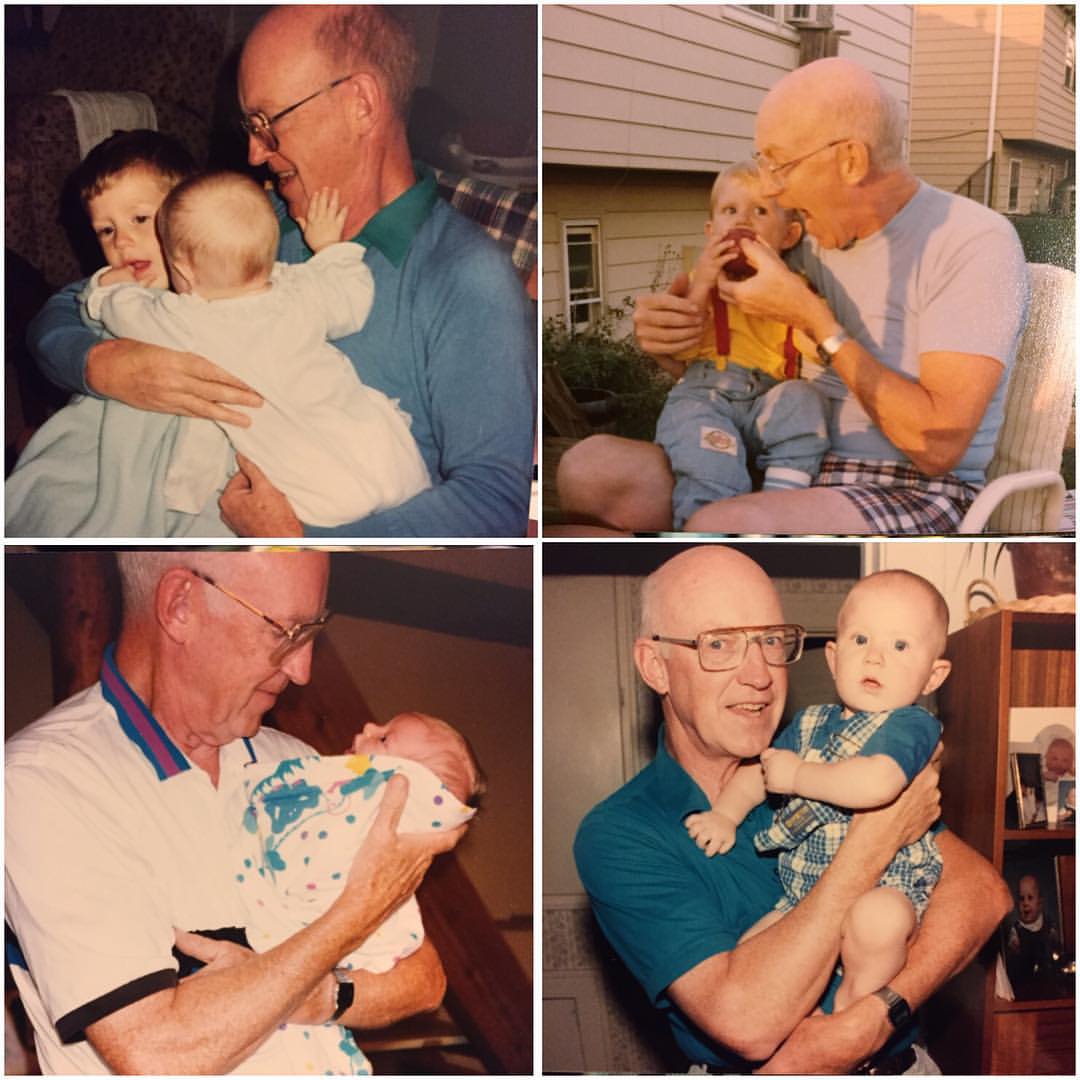
My father was in fact a loving man whose adoration for his grandkids proved it.

Which meant engaging with my father daily through all his medical and social needs. Over time, I came to realize that despite his fatherhood struggles raising four headstrong boys, he’d done much for me in support of my art and writing and sports. “Pay attention to your craft,” he once advised. That’s the best advice any father can give.

I believe I also helped my brothers dissolve some of their misgivings about our dad. Once the two eldest had trouble engaging with him, that ability improved in later years.

So, while the call of self-confidence waivers at times, and costs me opportunities due to fear, that’s my big “resolution” this year, to shove fear aside and continue on the paths I love. I hope you can too.

Are you overcoming fears this year? Share at cudworthfix@gmail.com

“Why are you a substitute?”

For the last few years, I’ve been substitute teaching in four different public school districts in our area. I attended school in two of them, Kaneland from 8th through 10th grade, and St. Charles from Junior to Senior year.

That all came about from having transferred from one district to another during my sophomore year in high school. That wasn’t fun or easy, but I made it work thanks to my interest in sports and general ease in making friends. Twenty-five years after those events, I asked my father why we moved. I said “Dad, I was the top runner and Class President at the Kaneland.” But he told me, “I didn’t want your younger brother to play basketball in that slowdown offense at Kaneland.”

“What about me?” I replied.

“I knew you were a social kid,” he smiled. “I knew you’d survive.”

He was right. Thanks to cross country, basketball and track, plus art class and writing and Key Club and Prairie Restoration, I made lifelong friends.

But while the social and athletic side of life went well enough, I struggled with some subjects from an early age all the way through college. I would not learn until later in life that I was “blessed” with attention deficit hyperactivity disorder. From grade school on I’d crush some subjects and do poorly or fail at others. In that respect, I had great company in an artist that I’d come to admire, one my favorites, in fact. Louis Agassiz Fuertes, a bird painter from the early 1900s. He was an artistic genius who also had a tough time with certain subjects. Here’s a clip from his biography.

That was me, too. I spent far too much class time either drawing or dreaming that I’d “come awake” at some point to the fact that I’d entirely lost the point of discussion. Teachers hated that. Attention deficit was poorly understood back then. I recall my mother having meetings with teachers to discuss my progress through the elementary and middle school years. My mother was a teacher also. She tutored kids at our home during after school hours and once told me, “These children have some learning challenges, so we don’t talk about them at school, okay?”

From fog to clarity

Throughout junior high and high school I felt moments of foglike distraction. It would take over my brain during certain classes, especially math, and of course algebra, a subject that bored and exasperated me. Once you’re behind in that class, you stay behind. I got a series of Ds in high school algebra.

But algebra required a type of executive function and organization at which my brain did not excel. I don’t care.

I did well in geometry because it involved shapes. I picked up a love of perspective and measurements from a seventh grade Industrial Drawing class in which the teacher was an taskmaster. We worked to be as perfect as possible during his guidance. I loved the demanding atmosphere. We took blocks of various construction and mapped them out with precise measurements to draw images on light green industrial drawing paper. Then we carefully labeled our drawings in all capital letters. I started write in all caps in everything I did, a habit that reverberates to this day. It all started in seventh grade.

An able substitute

That brings me to why I’m now a substitute teacher on top of my prime occupations of writer and an artist. As so often it happens in life, our perceived strengths can turn out to be weaknesses, and vice versa. Given the fact that I had trouble learning certain subjects in school and processing specific types of information in the work world, I’ve had a professional career much in keeping with my academic experience. Massive successes accompanied by distracted failures.

Many times I’ve wondered if I chose the right career path at all. About fifteen years ago, during a period when my late wife was fighting cancer and I was out of work taking care of her, I wrote a friend about getting back into the marketing world once she was well enough. In a kind and assertive way, he told me, “You know what? You should be a teacher.”

I’d considered that early in life because my mother was a teacher all her life. So was my brother, and I married a teacher back in 1985. That meant I visited tons of classrooms over the years. While I talked to much in most of those teaching opportunities, I slowly learned that teaching is actually getting students to learn by discussion rather than just telling them stuff. Based on that foundation of understanding, I’ve become an able substitute, certified to teach based on my college degree and education.

Those who can’t do, teach…

Perhaps I was haunted during my college years by a statement someone once made in my presence. It was patently false, but it sank into my conscience and never let go. They said, “Those who can’t do , teach.”

Along with my reading of Ayn Rand,’s The Fountainhead during my early 20s, I’d embraced the idea that creators of any kind cannot compromise their principles by “teaching” rather than doing. In my rebellious youth I came to view the teaching profession as somehow “giving in” or “giving up” on the things I loved to do, especially art and writing.

After watching the movie Mr. Holland’s Opus, I was moved by the character’s struggle to complete a symphony while juggling his commitment to teaching. Along the way, his “work” as a teacher motivated hundreds of students to “try hard things” as so many arts instructors encourage kids to do. That included a woman student who went on to become governor. The movie ends with a surprise performance of his “American Symphony” that encompassed influences from rock to classical music. It symbolized his desires to create and also stood for the advocacy he had for the arts in the face of the music program he loved being cancelled for lack of funding.

What Mr. Holland learned was that he should not be ashamed at having chosen the teaching profession. It did not mean that he “could not do.” Instead his gift was encouraging and demanding effort from others, and ultimately, from himself as well. His life was not perfect, yet some things were perfected as a result of his trying.

Another lifetime

I can’t say that I would have been a great teacher if I’d allowed myself to pursue that profession. I might well have run afoul of administration with my propensity for self-expression and a strong sense of social justice. I’ve known several teachers that were chased out of schools for the same thing. Yet I remain a strong advocate for public education. I believe in it because there is a darkness about privatizing education by allowing it to be taken over by those who want to censor reality in favor of ideology. There’s a genuine threat of that here in the United States of America. I’ve written books about that threat.

So I haven’t wasted my time or opportunity at what I’ve done. But one can imagine what it would be like to pursue a different path in another lifetime. I do have a talent for teaching. Once after an internal presentation at the marketing company where I worked as the Senior Copywriter, the head Creative Director came up and said, “You should do this for a living.”

That was ten years ago. Now that I’m at the age where getting hired in the creative industry is difficult due to factors such as ageism (“He must not be any good if he hasn’t retired yet…”) I am pushing forward with my art and writing. There are still bills to pay, and I learned the hard way that accepting Social Security when you’re earning too much results in penalties. I had to play catchup after eight years of caregiving through cancer survivorship with my late wife. That’s not easy.

So I’m a substitute teacher because it is the perfect balance of earning income and level of time commitment. Right now I’m in a full-time sub position for an art teacher that tore her Achilles tendon at a trampoline gym and needs a few weeks for rehab after surgery. Over the last three years I’ve taught everything from Pre-K (the age my late wife taught) to Middle School and High School. Every one of those assignments is interesting in its way. The little kids say the darndest things. The middle schoolers try to figure themselves out and the high school kids appreciate if you treat them like actual human beings.

One of the art projects the kids are doing is a self-portrait with one side realistic and the other their interests. My prep sketch.

I do love teaching. I’m not afraid to push kids when the subject presents opportunities to learn. I get them asking questions and let them proceed at their own pace at times. I’ve taught kids with learning difficulties, and have great empathy for them given my own academic history. That includes working as a paraprofessional at times, supporting kids one-on-one through the day if necessary, or just watching them so they don’t wander off on the playground.

I’m a substitute teacher because I like it. Grant you, I’ve got retired teacher friends who still help out in the classroom. Others are so done with teaching they never want to go near a school again. So it’s a they say, “To each their own.”

My approach is taking pride in what I’m doing at any given moment. That’s the Right Kind of Pride. We all arrive at circumstances in life from different timelines and varied perspectives. As the ending of the book Candide observes, and I paraphrase, “We must cultivate our own garden.”

And keep growing.

Through the eyes of children

I’m not a big believer in the idea that the deceased are able to talk with the living. No amount of talk by so-called “mediums” convinces me that people in this life can connect with the dead through supernatural means. I once read that a famous celebrity promised his wife that if he died, she would someday see his presence revealed in a white feather floating in the air. I don’t think that ever happened, or we might have heard about it.

Instead, I believe that when it comes to all things supernatural, it is up to us to find meaning in everyday experiences that trace the lives of those we have lost. Yesterday, I felt the strong presence of my late wife in a teaching experience with children the same age that she once served.

As a substitute teacher the last month and a half, I’ve had the opportunity to work with classrooms ranging from first grade through middle school and high school. Having been in many teaching situations over the years, including adult and higher education, I’m exploring how I can expand that love of teaching at this point in my life.

It has been a challenge and a joy to learn how to work with students of all ages and abilities. Like my late wife, I’ve also worked with special needs students across a range of abilities. Her ultimate career choice was a preschool teacher, a bit different than the higher-paying public school positions to which she once planned to return, but her love of teaching young children won out.

I always knew why my wife loved teaching children that age. They are getting ready for the big world of kindergarten. They need guidance in social skills as well as basic learning in the alphabet and numbers. They also love to explore the arts and play.

As a teacher one learns to adjust to aptitudes and witness how personalities are already forming. It is also a calling to help form those personalities in an encouraging way.

That means you use what talents you have available to connect with kids. For me, that means read-aloud time and drawing. Those are my best teaching attributes. While moving from group to group during play time, I shared some drawing time with a left-handed little guy who absolutely loved the process of copying what I drew on the board. At one point I drew the head of a mouse. He then completed the body and legs, and drew a companion mouse next to the first.

Such are the serendipitous arrivals of teachable moments. Sometimes you make them happen. Sometimes you let them happen.

Over a twenty-year period my late wife experienced thousands, if not millions of such encounters. Those kids were a gift to her in life. Though her life ended earlier than she ever planned, the children and raised (our kids) made it the richest life imaginable. She saw it through their eyes, and the purity of the moment is made from the absence of time. It will be eight years since she passed away on March 26, 2013. It was nice to feel a bit of connection with that life through some preschooler’s eyes.

Teaching and learning

The kids in the INCubator program at our local high school.

A number of weeks ago while speaking with a friend who runs the INCubator program for high school students in which I’ve served as a Mentor and Presenter the last five years, we talked about how schools are adapting during the ongoing pandemic.

“A lot of people are out,” he told me. “We need subs.”

Getting certified

I dug into the requirements to become a substitute teacher and learned that people without a teaching degree can register to become a short-term substitute. That means teaching according to the lessons plans provided by the full-time teacher.

It took several days to fill out and submit the paperwork, gather transcripts from college and high school and file it through the Illinois website. Then I needed to register through the county website and get fingerprinted. Finally it was time to fill out the district paperwork.

Much of that signup could be done online. But wanting to put a face with a name and forms, I stopped at district offices to meet briefly with human resource directors. It is always good to become a known quantity.

I was impressed with the relative efficiency of all that registration. The districts I’m serving also have a great way to sign up for substitution assignments.

Middle school subbing

My first days of teaching were in middle school, running physical education classes all day, managing a language arts class and becoming a “floater” as teachers were getting vaccinated and needed someone to oversee class time and assignments.

Conducting a live art instruction at the Candlelight Dinner Playhouse for an audience of 900 children

I’ve spent many hours in classrooms and teaching in other ways over the years. My late wife was a special education teacher for ten years and a preschool teacher for twenty. She asked me to teach her class now and then. My mother was an elementary school teacher for twenty years. I visited her classroom many times to talk about birds, art or other subjects. I’ve also been a guest speaker for the “art people” trained by the Art Institute of Chicago to share art with student at all grades. Some might say teaching is in my blood. Perhaps it should have been my profession. But it’s never too late to start…

Learning abilities

My next round of assignments were in an elementary school two miles from our house. At the front desk, a fellow substitute and I met with a teacher and administrator to determine who would take the music or ILP classes that day. ILP stands for Individualized Learning Plans, a term describing students with specific needs. My mother often tutored children in our home that needed individualized learning. She’d tell me, “These are your classmates, and you can go out and play after their lessons, but you need to let them learn while they’re here.” She also told me to keep their tutoring a private matter. “They learn differently than other kids,” she explained.

To some degree, I was one of those kids too. Only late in life did I ascertain that there is a certain amount of attention-deficit disorder at work in my brain. Looking back at my education years, I now recognize patterns of difficulty, obstinance, and outright frustration or failure when it came to certain learning circumstances. I’ve had to work a bit harder than others on certain kinds of tasks, and build discipline and good habits into my routines. I take pride in that now.

I think it can be accurately stated that every human being on earth has some kind of learning disability if a fine enough focus is placed upon it. Some excel at math and stink at English. Others love the social sciences and history while some find it excruciatingly boring.

Individualized Learning Plans

I chose to work with the ILP children earlier this week even though teaching the music class that day seemed like it would have been fun. I’ve played in bands and can sing fairly well, but I knew that past experience in classrooms with special education children would help me help them.

The ILP teacher walked me through the day’s lessons, materials, and tools used by the students to practice and learn. Each child had their own ‘best practices’ to follow. They took pride in pulling out their respective memory cards, books, and speaking devices.

The first boy I worked with was a charming child with Down’s Syndrome. He applied himself with energy for the most part, with only occasional drifting or distraction. His favorite part of the lesson was going through a series of slides depicting people expressing different kinds of emotions. While he did not recognize all the words, some of them were pretty long, he loved working with me to imitate the facial expressions and body language of the kids in the photos. We had a particular laugh at my imitation of the person exhibiting a ‘dubious’ expression. I turned my head to the side and lifted my chin, looking at him out of the corner of my eyes. He came back to the slide several times to coax me into the dubious mode, and we’d laugh all over again.

Then it was time fo reading, and he read me a book about a cat named Puff who liked to hide.He pulled out another book about a Mama Bear gathering berries, nuts and fish for her family. We talked about why the characters liked to do what they were doing.

Teaching is about helping people make connections.

By then he’d earned his ten stars for progress and I moved his behavior code up to blue from green, a promotion! He’d been good for me. Then he could grab his Chromebook and spend time with Baby Einstein software. He plunked his fingers on the screen to make a pool of faux water send ripples all around. It looked like fun. And gratifying.

Speed it up

The next student on the morning’s schedule was a charming young girl who arrived at class upset about something that had happened on the way to school. She was comforted by the paraprofessional and following a quick hug and a reminder to wear her mask the proper way, she got her stuff put away. When it came time for me to learn with her, she informed me that I was dawdling with the word cards. “Too slow,” she frowned. We sped it up.

Later when I needed help getting another student logged into their Chromebook, she washed her hands first and jumped over to log him in. I thanked her, and she asked, “Are you going to be here tomorrow too?” She was missing her regular teacher, I knew. “Probably not,” I replied. “But I want to thank you for being such a good helper today.”

“I like to help,” she chirped, then hurried to her cubby to prepare for recess and lunch.

Non-verbal

Some of the students in class were non-verbal. We worked together on reading. I was quite impressed with their ability to key in words and letters and hear them read aloud by the device. One of the students keyed in the entire first half of the Dr. Suess book Green Eggs and Ham. You know the one: Sam I am. When he finished reading, I hummed a little tune, and he hummed back. I’d noticed that he was singing to himself before class. Why not speak the same language?

Autism

The fifth child was the most challenging for me to teach. Instead I tried to learn from her. Her autism gives her a keen energy and a need to jump up now and then. She engaged in some massively dreamy stares at times. I thought about her parents and how much they must want their child to learn on her own terms.

We read two books together and my instructions were to ask her to speak clearly, well above a whisper. She did fine with that, but ultimately felt like she’d had enough and pulled out a sheet of paper to repeatedly “knuckle” a symbol in the middle of the sheet. She wanted something specific to happen, but I could not tell what it was. One cannot learn everything a student needs or wants in one session. We do our best, and move along.

Toward the end of our fifteen minute session, she broke free from all of that and leaned toward me to study my face or simply break the tension of having someone new in her presence. It felt to me like she had three strong signals going through her brain, competing for space. I don’t know if that’s an accurate description of how autism works, but I could relate to that, and perhaps that’s what counts.

The teachers who work with these students have the knowledge, compassion, and commitment to help children learn despite their supposed limitations. That’s all that any of us can do. Keep on learning. That’s the Right Kind of Pride.

Black History month

I closed out the day teaching a class of first graders about Ruby Bridges, the American civil rights activist whose brave story of being the first student to desegregate a Southern school was read aloud in a video we watched together. I paused the video to ask the children how they would feel in Ruby’s place. We also looked at a painting of Ruby walking to school in the company of federal agents. That tomato smashed against the wall held so much symbolism.

That story has taken on greater meaning in the last year with civil unrest unfolding around the rights of Black Americans that have been threatened or killed by police, chased down by vigilantes or otherwise abused by institutional racism in the United States of America.

I looked around at the kids in that class. They were the same age as Ruby Bridges, six years old, when she dared to learn in the face of massive bigotry that unfortunately, has not dissipated in the country where she continues her work in civil rights. Some lessons take so long to learn, while some people just refuse to learn them.

That’s not what I saw in the eyes of the children in class that day. It is a gift to be present for that.

Teaching is about more than the classroom

IMG_0806In my late 20s I visited the classroom of my eldest brother who was an English teacher for 30 years. He invited me to come talk about writing and marketing. He taught at a private school serving disadvantaged students. The institution was funded by a very large corporation where a nickel from every dollar of profit was dedicated to the school.

My brother was a masterful teacher with methods honed by years of working with students in the classroom. He was rightfully proud of all that he had learned about how students learn best. Many of his students returned years later to thank him for his contribution to their lives.

But I came into his classroom thinking I knew a few things about teaching myself. After all, my mother was a teacher for 20 years in the public school system. My late wife was a teacher for LD and BD students at a high school, and later moved to a preschool where she taught Pre-K.

Exhaustive learning

For an hour I led my brother’s classroom in a lecture and discussion. Only it was more me talking than them. By the time the hour was over, exhaustion had taken over. I was spent.

My brother issued a soft chuckle and told me to sit down for the next class. “Let me show you how it’s done,” he whispered. From that point he opened discussion with a few questions and let the students talk. He responded to their answers with even more questions. My brother only talked when necessary for instruction. The kids were learning through their own impetus and eagerness to learn.

There’s an art and a science to teaching. Some of my best friends served as teachers in a nearby public school system for 30 years. One of them earned the State Teacher of the Year Award. Another earned the Golden Apple award from their district. They both taught in the same school, often side by side, working with 4th graders. Their teaching methods were a combination of curriculum-guided instruction and well-considered creative learning strategies. They were the best imaginable teachers.

They recently retired a bit frustrated by how little control they had over their teaching methodologies. Federal programs like No Child Left Behind left them “teaching to the test” rather than teaching kids to learn.

Ready for life

My late wife taught at a Christian preschool that focused on the importance of socialization for the child. That started as young as two years old and continued all the way through the Pre-K program where children learned the basics of being ready for school. In other words, that foundational learning perspective was about much more than the classroom. It was teaching kids about how to be ready for life.

We’ve all seen those memes where people claim “Everything I need to know about the world I learned in kindergarten.” Respect others. Share. Don’t pick your nose in public. Right. And so on.

So it distresses me when I hear people attacking teachers like they’re lazy or earn too much. Because what’s more important, paying a teacher a fair wage for 12 hour days (and that’s typically a minimum) or paying some pro baseball player $20M a year when he has a lifetime 116-67 pitching record. Those are real facts. The dude hasn’t even won twice as many times as he’s lost and he’s being paid $20M a year.

Value of teaching

Teachers perform such vital functions for society. And yes, there are bad teachers out there. I’ve had a few of them, including one who told me that I’d fail his class because a cross country runner like me had once accidentally spit on his shoe during a race on campus. “You’re going to have a tough time in this class,” he warned.

Bad apples are everywhere. They can damage people. But that’s the point here. Only by recognizing and rewarding the best teachers can we encourage the best types of individuals to enter the classroom. Because teaching is about more than the classroom. It’s about knowing how to learn first, and then sharing that with others.

As I learned while standing up in front of that classroom years ago, it’s not about hearing yourself talk. It’s about hearing what others think, and helping them do more of that. Teaching is about far more than the classroom, and it seems like too many Americans have never learned that lesson at all.  Now that I’m out giving talks about my book, it is important to remember that people don’t only want to listen. They want to be heard as well. Often the important discussions take place after the real teaching is through. Because teaching is about more than the classroom.

The art of living

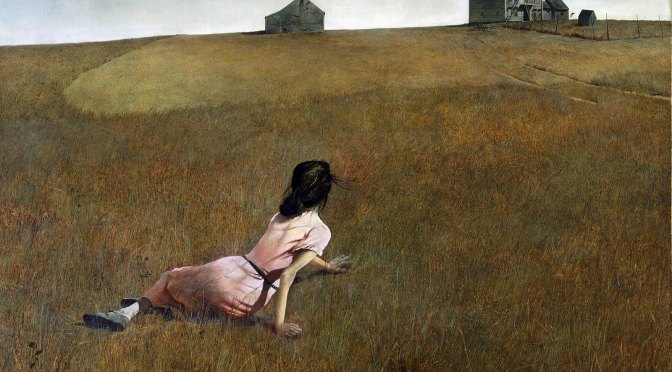
Christina's World
Christina’s World by Andrew Wyeth.

A year ago I was invited to teach one of those live painting classes where wine is served and people copy another artist’s work. Rather than choose some cheesy image I insisted we paint copies of the Andrew Wyeth painting known as Christina’s World. The people in the class started to freak out because it looked so austere and difficult. The panic got worse when I told them to first coat the canvas in bright red paint. Then we scuttled it over in green. And things turned brown. With the addition of a thin glaze of yellow the canvas started to look like a grassy hill. And that’s when the lights went on in all their heads.

We moved from a moment where everyone thought they would fail to a point where everyone knew they could succeed if they took a risk and followed along. By the end everyone had created a passable image of the Wyeth painting and more than one commented, “I never thought I could do this.”

That’s the real role of a teacher in this world. Helping people achieve things they never thought possible. And that’s the right kind of pride.

Right Kind of Pride Image

Christopher Cudworth is the author of the book The Right Kind of Pride on Amazon.com, a chronicle of cancer survivorship and meeting life’s challenges with practical and inspired purpose. This blog is in keeping with the philosophies of that book. Please give this a FOLLOW!