 A year or so ago, I stumbled on the YouTube website for Leonid and Friends, the Russia-based assemblage that recreates the music of the band Chicago. The first time I watched and listened to the video for the song 25 or 6 to Four I sat mesmerized. The vocals were clean and authentic. The guitar-playing, astounding. So were the drumming, the horns and the background vocals. “Who are these people?” I wanted to know.
I wasn’t alone. Fans of the group lined up on Youtube begging the group to come to America. In January 2019, that finally happened.
I saw them the second night they appeared in America. The first gig was in New York City. Then they came to the exurbs of Chicago in Rosemont for a performance at Joe’s Live. The site was perfect.
Sitting four rows back from the stage, I was pleased to see that we would not be required to stand the whole performance. The last few concerts I’ve attended almost required the audience to stand up the whole time, which I find unnecessary and distracting. All that shifting of feet to stay comfortable over a 1-2 hour performance is insane.
Plus the age of the audience in attendance was definitely skewed toward the over-50 crowd. In fact I learned that Joe’s normally doesn’t have seating, preferring to just flood the floor with concertgoers and let them sort it all out.
The audience was roundly excited for the show at any rate. I stood in line with the folks who did the advance public relations, including the band’s appearance on WGN TV
It’s an interesting phenomenon to travel internally from being a Youtube follower to sitting thirty feet from people you feel you’ve gotten to know, in that digital way, by watching them enthusiastically and masterfully play music in a way that helps you appreciate and rediscover the talent of a group that frankly for a while had become wallpaper for the soundtrack of life.
Instead, the music comes alive all over again. The ever-so-slight hint of Russian accent that comes through in some of the singers only makes you appreciate the effort that has gone into replicating Chicago’s music for an entirely new audience that is probably in part it’s increasingly old audience.
I say that age doesn’t matter when it comes to revelations such as these. It’s pretty hard to watch and listen to Leonid and Friends perform Questions 67 & 68 and not find yourself muttering, “Damn, that’s good.” From the opening guitar solo to the ascendant vocals, the intensity of the drumming to the clear and cogent intonations of the horns, this is some marvelous stuff.
Just how a band of Russians got together and created a catalog of high-fidelity recordings of an American group is a story that probably comes back to its founder, the apparent genius mind of Leonid Vorobyev himself. To everyone who follows the group, doing recordings of Chicago masterpieces is the right kind of pride, case closed.
Follow them at Leonid and Friends on Youtube or maybe you can catch one of their American tour dates. They’re even branching out into other classic songmaking with tunes by Earth, Wind and Fire, and others.
And here’s a prediction, the lovely Ksonena,a backup singer thus far for the band, may be headed toward her own brand of stardom in the near future. That’s my prediction anyway.
From all that I could see in their live performance, these are people having fun doing what they love. The horn section is talented, tight and hilarious, and the fact that none of them speak a word of English is irrelevant. They don’t need to talk. They speak with their trombone, sax and trumpet. Same with the drummer, the heart and soul of this band, who wound up a ten-minute drum solo during the concert by literally kneeling down to hammer our rhythms on the floor. And the guitar playing? Even diehard Chicago fans (I don’t qualify…but do enjoy their music) have to admit the solos are masterful and spot-on.
These people are into it.
The feedback from the crowd must have been gratifying for all them to hear. Mid-way through the concert the band’s originator Leonid spoke about their journey in halting English. He ardently thanked the crowd while admitting it was strange and wonderful to be playing in the namesake town of the group Chicago that has now made Leonid and Friends famous.
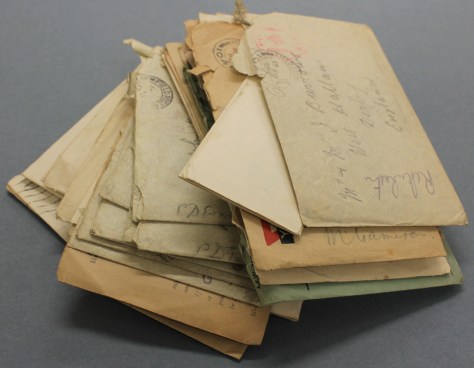 My brother recently found a treasure of letters sent to him over decades by our mother. He’s called me with insights about what she was thinking during different stages of her marriage to my father, which lasted more than fifty years.
 Prologue
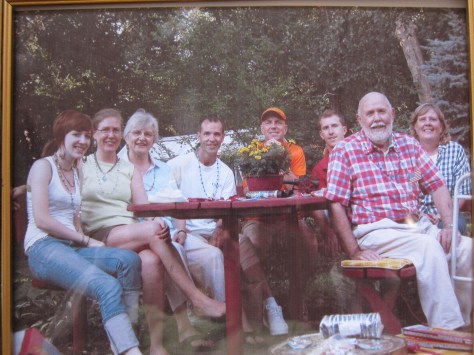 Recently my son Evan drove west to California for a new venture in his career. On the way, he stopped by the South Rim of the Grand Canyon. Approaching the park, the snow was two feet deep, he informed us. He arrived in time to see the sun setting.
 The choice to move from my home of twenty years was not an easy decision to make. It was the childhood home of my children, and a healthy degree of sentiment was attached to the place as a result. It was also the home where my late wife and I spent so many years, and she passed away within its walls.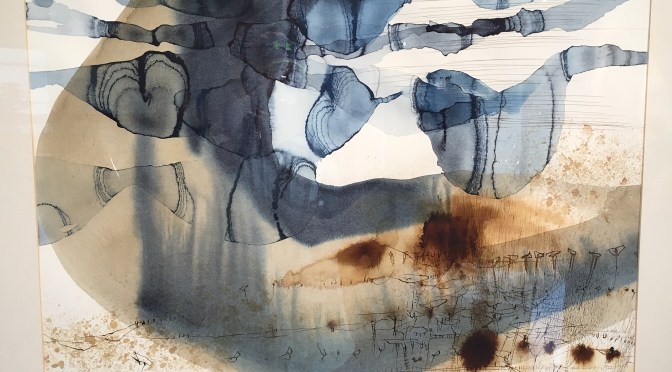
 Occasionally I see the work of another artist and feel compelled to tell the world about it. And while Ana Zanic of Geneva is doing quite well for herself with paintings now featured in shows that include galleries in Chicago, New York, Denver and Baton Rouge, that does not mean one cannot add to the discussion.
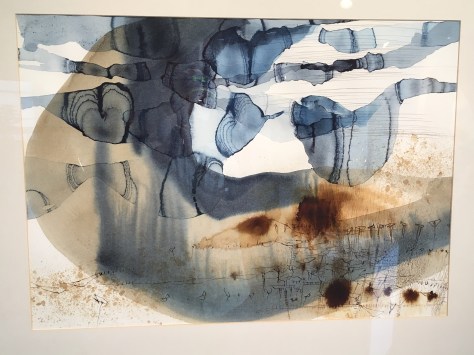 Suggestively, these same shapes could well be the processes that invented and expanded the universe, and from within these massive forms come Zanic’s textural commentaries. Tiny drawn figures seem to vacillate between material forms and energy. Sometimes they appear to be forests emerging from the earth. At other times, they seem to convey a population of thoughts or recollections. This is what makes her work so pleasing, accessible and yet mysterious at the same time. To complete this journey from thought to form, she has also created a series of pottery pieces that bear the same conversational inscriptions.
 It is high time that all of us come to grips with the fact that the world is not a “paint by number” place. Physics and evolution demand that knowledge. We also now know there is space between all matter, and dark matter beyond that. We even have the ability to shoot neutrinos through the earth. As it turns out, the pigment of our vision exists as much by force of imagination as it does in reality.
 It’s a gut-wrenching moment, saying goodbye to a child on a college campus. But some colleges really know how to handle it. To their eternal credit, I recall the method by which the University of Chicago manages that transition for parents and students. The entire crowd present for the opening remarks from the college president is marched around the block toward the Quad, where the kids are siphoned off and sent through a set of arches to be greeted by upperclassman who cheer their welcome. The parents are shunted off to a consoling feast of food and alcohol at the center of campus.
 On the way back from the studio today by bike, I pedaled past a familiar home. It was the house of a former soccer player, a kid that I coached through middle school who went on to play a few years of high school soccer. He was a talented player. Grew up kicking the soccer ball with his Latino family. In fact, his mother made me promise that I’d never hold him back from playing with members of his family even if it conflicted with one of our scheduled games.

 Now we live in a world where virtually everything we consume in terms of information is shared and likely plagiarized in some form from some other content. Real journalists puke at this notion. Real photographers too. But that’s how the world has evolved.
 The Right Kind of Pride